Decluttering Before a Move to Generate Cash
Selling your stuff before moving saves money twice over and can add thousands to your home's value.

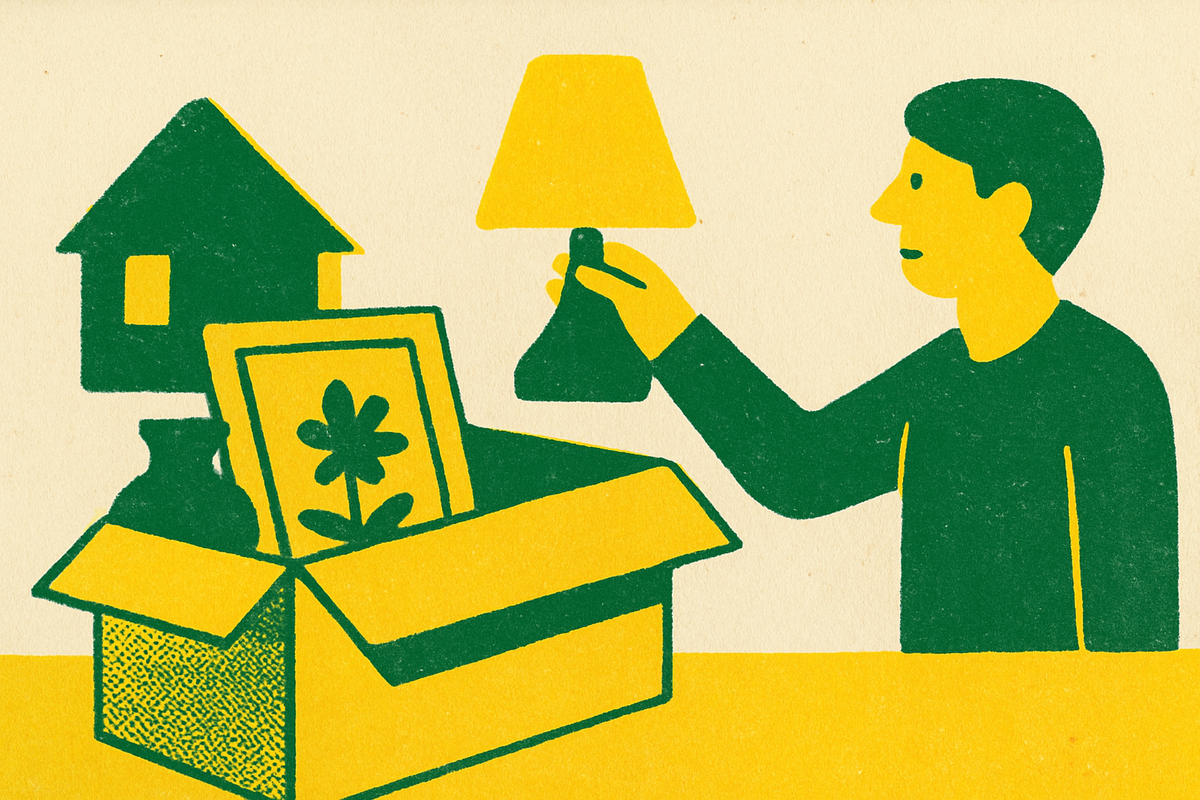
Moving turns clutter into cash faster than any New Year's resolution to "finally organize the garage" ever will. A truck is coming whether you're ready or not, so the only real question is what you do with the stuff sitting between you and an empty house. Sell it, and you win twice: once from the sale, once from not paying to haul it across state lines. A decluttered house reportedly adds close to $11,706 to a sale price on its own, according to a HomeLight survey of real estate agents, no staging budget required. Consider this less a side hustle and more a way to dodge paying movers to relocate things you were going to throw out anyway.
How to triage a house worth of stuff without getting paralyzed
Clutter is a decade of decisions you kept postponing, stacked in a closet. Face all of it in one weekend and you'll do what most people do: shut the door and go watch TV instead.
Sort everything into one of four buckets: keep, sell, donate, toss. Skip the fifth pile for "maybe," because that's where clutter goes to live forever. I learned this the hard way with a box of cables I "might need someday," moving it three times before finally admitting someday was never coming.
Start with the one-year rule: have you used it in the last twelve months? Professional organizers push further and ask if you even had the chance to use it in the last six, which is the sharper question. Plenty of things sit unused because life didn't call for them, not because you don't want them anymore.
If you're downsizing, borrow the container concept from professional organizers. Ask whether something deserves space in the new place, weighed against your feelings about keeping it in some abstract sense. A five-bedroom house moving into a three-bedroom condo means the condo sets the rules, not your feelings about the ottoman your aunt gave you.
Work the least sentimental spaces first, garage before nursery, junk drawer before the shoebox of old letters. Momentum is real, and by the time you hit the hard stuff, four rooms of proof that you can, in fact, get rid of things will carry you through.
Do it in sessions, not marathons. A weekend spent sorting the whole house sounds efficient, but it's how people burn out by hour three and shove everything back where it came from. Short sessions spread over a couple weeks also mean your sell pile gets identified early, and early matters, because listings need runway.
Quick rules for the sell/donate/toss split:
- Sell it if it works, carries a name brand or recognizable model, and shows gentle wear.
- Donate it if it works but isn't worth listing, or the resale value is basically pocket lint.
- Toss it if it's broken, expired, missing pieces, or so far gone the thrift store would wince.
Which rooms and item categories actually generate cash
Some rooms are goldmines, while others exist mostly to fill donation boxes.
The kitchen is high volume, low margin. Countertop appliances, mismatched dishes, the fourth spatula you don't remember buying move in garage sale bins, valued more for volume than for any single listing. The exception is anything specialty: a stand mixer or a nice espresso machine deserves its own photos and its own moment in the sun.
Living rooms and home offices quietly print money through electronics. TV remotes, old routers, calculators, low-fi digital cameras all sell better than people expect, partly because a certain crowd has decided grainy photos are cool again. Fitness wearables like Apple Watch or Fitbit hold value well too. Replacement parts are the sleeper category nobody thinks about: ZIK Analytics tracked over 1,200 parts sold on eBay in a recent 30-day window, totaling more than $24,000 at an average of roughly $8 each. Nobody's getting rich off one cable, but the math works once you stop treating an $8 sale as too small to bother with.
The garage is where tools punch above their weight. Names like DeWalt, Makita, and Milwaukee sell themselves, and buyers expect some wear on a drill, so condition standards are far more forgiving than they'd be in, say, fashion.
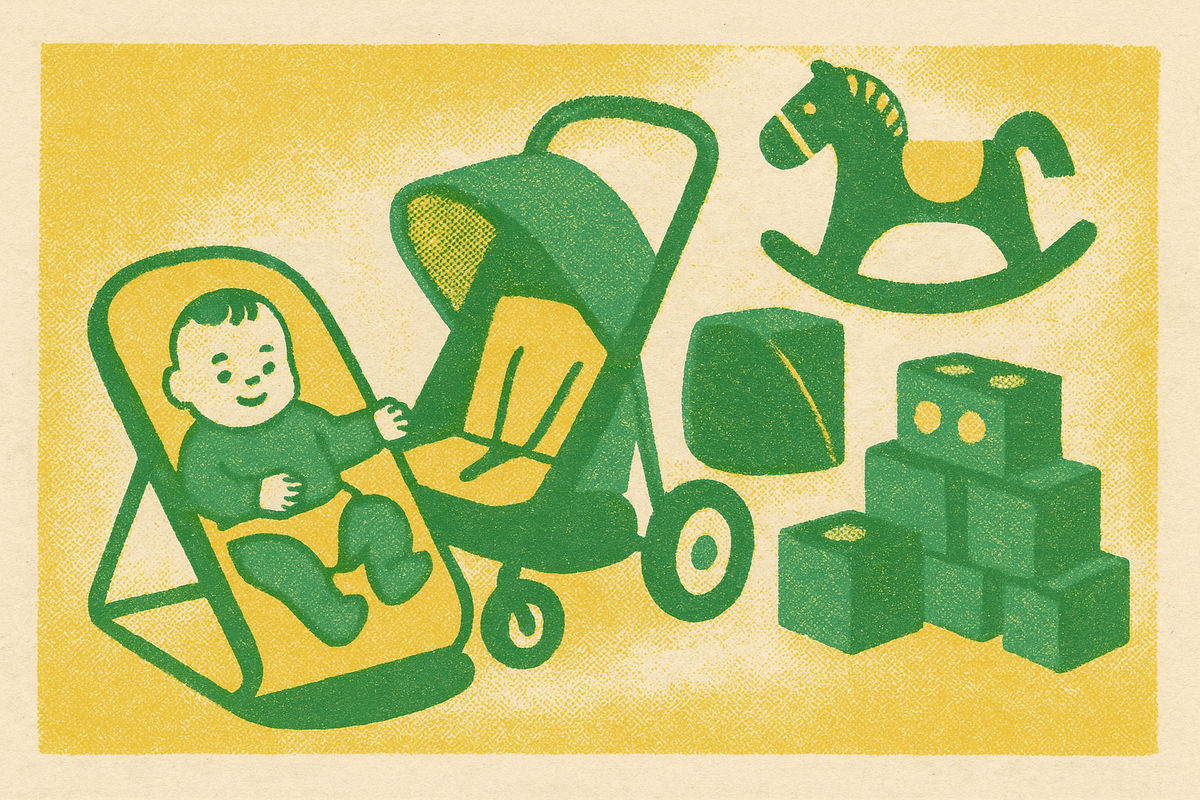
Kids' rooms hide the real surprises. Premium strollers and Montessori-style toys attract parents who'd rather buy secondhand quality than new plastic. Trading cards and retro consoles ride a nostalgia wave that can turn a dusty cartridge into a genuinely strange payday if it's rare enough.
Closets are brand-dependent territory. Fast fashion like H&M or Zara loses value almost as fast as you bought it, so price it to move, not to sit around looking hopeful. Mid-range labels (Banana Republic, J.Crew, Anthropologie) have loyal secondhand followings and more room to negotiate. Designer pieces need real research and honest condition checks. Sneakers from Nike, Adidas, Jordan, and New Balance dominate footwear resale, though counterfeits have gotten good enough that skipping authentication isn't really an option anymore.
Furniture is its own animal entirely. A couch that would cost a fortune to ship belongs on Facebook Marketplace, not eBay. Local pickup only, patience required, but the payoff is often excellent once the right buyer shows up at your door.
How to price used items so they actually sell
Guessing at prices is the fastest way to lose money reselling. Something close to 60% of new independent resellers lose money in their first three months, mostly from pricing off vibes instead of data.
Here's the distinction that actually matters: active listings show you what sellers hope to get, while sold listings show you what buyers actually paid. Pricing off active listings is like pricing your house based on three neighbors whose homes have sat on the market, unsold, for three years. Hope isn't a comp, no matter how nicely you photograph it.
Every major platform lets you check real sold prices. eBay lets you filter to "Sold items" for final transaction numbers, not wishful asks. Facebook Marketplace requires scanning your local feed for anything marked sold or pending. Poshmark shows sold listings with offer discounts baked in, and fashion tends to sell for more there than on eBay, since the buyers showed up specifically for curated clothing.
As a rough baseline, most everyday used goods in good shape go for a fraction of original retail. Push that up for high demand, down for wear or if you need it gone yesterday.
Leave yourself room to negotiate. If a certain number is your real floor, list above it, so the buyer feels like they won something when you "come down" to your actual number. Anchoring works, and it's a little manipulative, sure, but so is every price tag ending in $.99.
Condition is the lever that moves the needle most after the comp itself, since "like new" and "well used" can mean wildly different prices for the exact same model. Use your phone's flashlight, check every angle, photograph every scratch you find. Buyers who see the flaws upfront trust the listing more, and that trust is what closes a sale without a week of back-and-forth messages arguing over a scuff mark.
Know the signs you left money on the table: the item sells in under an hour, three people message at once, someone accepts your price without even trying to talk you down. All of that means you priced too low. In a normal selling context, fine, that's a lesson for next time. Before a move, with the clock running, a slightly underpriced sale that closes today beats a perfectly priced listing still sitting there on moving day.
Choosing the right marketplace for each type of item
No single platform is right for everything. Trying to force all your stuff onto one site is how good items sit unsold for weeks while you wonder what you're doing wrong.
eBay is built for electronics, tools, collectibles, anything with a model number a buyer would actually type into a search bar. With over 185 million active users worldwide, it's the deepest pool you'll find for niche or high-value items, the kind that need a buyer who might not exist within fifty miles of you. Its dispute resolution process also gives buyers confidence, which quietly supports higher prices. The tradeoff is fees: a final value fee around 13.25% in most categories plus a flat per-order charge, so build that into your floor price before you list, not after you've already spent the money in your head.
Facebook Marketplace is the better call for furniture, appliances, anything bulky where shipping would eat the profit alive. Reach is enormous (an enormous user base), and local cash pickup sales carry zero platform fees, so every dollar of the asking price stays yours.
Poshmark is fashion's home turf, especially mid-range and aspirational brands. Buyers there came specifically to shop curated clothing, and prices tend to run higher than eBay for exactly that reason.
For higher-value items, listing on more than one platform widens your buyer pool. Doing it by hand, though, rewriting the same description three separate times, is exactly the kind of busywork that makes people give up and just donate the thing. Listing tools designed to streamline cross-platform selling can help cut out the copy-paste grind that stops most sellers before they ever start. Vintage or one-of-a-kind pieces do best on platforms built for that hunt specifically, since a general audience won't pay a premium for something they don't recognize.
Getting listings up fast enough that money arrives before the truck does
Most people start listing too late. Moving logistics eat the attention that selling actually needs, and by the time boxes are taped shut, there's no bandwidth left to write a single description, let alone twenty.
Work backward from moving day. Items need real time, days, sometimes weeks, to find the right buyer. Start listing the moment you're evaluating a room, not after you've already packed it into a box labeled "misc."
Friction is the real killer here. Writing a title, a description, and honest condition notes for twenty different items is enough work that most people box it all up for Goodwill instead of bothering. Tools that help draft listing text from basic item details reduce much of that friction, so a first-time seller can get something live far faster than starting from scratch.
Photos matter more than prose for most buyers. Natural light, a clean background, a few angles, one close-up on any flaw, that's what converts a scroll into a sale faster than any clever description ever will, and it costs you nothing but ten extra seconds.
Whatever doesn't sell online becomes garage sale inventory, the clearing mechanism for everything else. Group low-value stuff into bins at one flat price so buyers don't have to think. Sticker things slightly above your real floor so people feel like they negotiated, then slash prices in the final hour when you'd rather have the trunk space than the last five dollars. A sold lamp beats a lamp you're now hauling to the donation center yourself.
Scams deserve to be taken seriously, not treated as background noise. Online marketplace fraud is one of the fastest-growing fraud categories the FTC tracks, and losses tied to social media platforms alone have run into the billions in recent years. For local sales, stick to cash or verified payment at pickup, meet in public or right at your door, and never ship before payment clears. For online sales, ship only to confirmed addresses, and keep transactions inside the platform's own payment system so you've got recourse if something goes sideways.
Whatever's left after the online sales and the garage sale gets donated for the tax deduction, or scheduled for bulk pickup. The real goal was never a perfect price on every item; it was an empty house. The sellers who come out ahead started early, priced off real sold data, listed fast, and cleared the rest before the truck ever pulled up.