Facebook Marketplace Local Pickup Safety Rules
Verify accounts and meet in public—cash only, never inside your home.
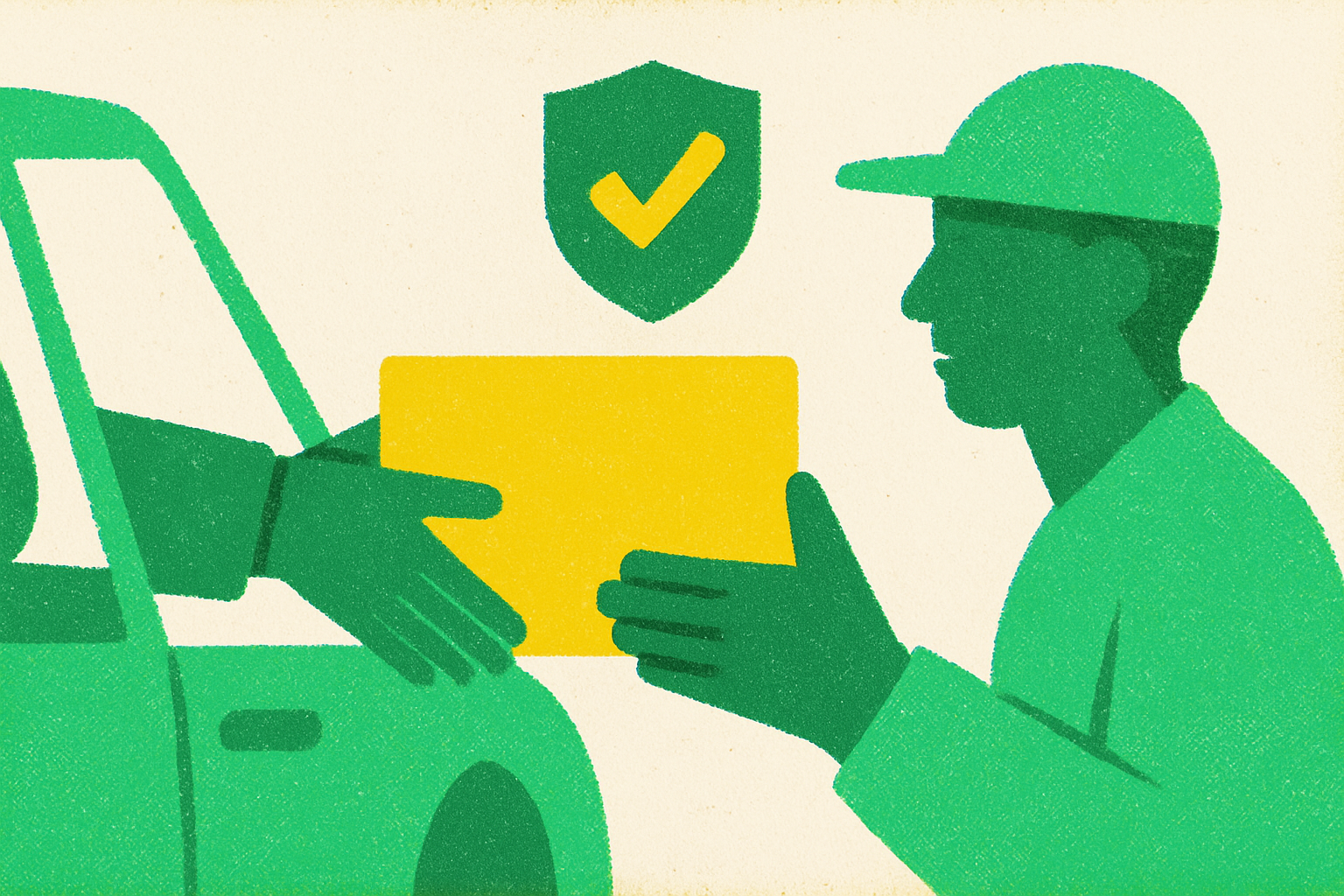
Facebook Marketplace local pickup is free, which is exactly why it's the default choice for anything bulky, heavy, or too cheap to justify shipping. That same free-for-all setup means nobody's checking IDs at the door: no verification, no dispute mediation, no seller protection once you agree to meet a stranger in person. Everything that keeps that handoff safe is a rule you build for yourself, because the platform sure isn't building it for you.
Here's the thing about a billion-plus monthly users: scale cuts both ways. It's why you can sell a used treadmill in an afternoon, and it's also why a meaningful slice of the people messaging you were never real buyers to begin with. A share of Facebook's user base logs in for Marketplace and nothing else, which sounds harmless until you realize that's exactly the crowd with the least social accountability. No mutual friends, no group chats, no reason to behave. Just a login and a motive.
Screening a buyer before agreeing to meet
Before you agree to anything, look at the account like you're vetting a roommate. When was it created? A profile that popped up last week and is already messaging you about your dresser fits a pattern worth noticing.
A few quick checks, none of which take more than two minutes combined:
- Does their listed city roughly match where you're selling? A "local" buyer three states away is a contradiction worth questioning.
- Run their profile photo through Google Lens. Stolen headshots and stock photography show up fast once you know to look.
- Check for ratings or reviews from past transactions. A real history is one of the only signals on this platform you can actually trust.
- Watch for the account with zero posts, zero mutual friends, and a photo that looks like it came from a LinkedIn headshot studio. Real people are messier than that.
And keep every conversation inside Messenger. The second someone asks to move to text or WhatsApp, ask yourself why they'd want a conversation with no record. There's rarely a good answer. Good looks like this: a local account, some transaction history, photos of an actual human, and zero pressure to rush. That's it. That's the bar.
Choosing where to meet — and what "safe" actually means
Skip the philosophy debate and go straight to a police station Safe Exchange Zone if your department has one. Plenty do, and they're built for exactly this: a marked parking spot, usually with a camera rolling, specifically for Craigslist and Marketplace handoffs.
No zone nearby? A busy gas station, a grocery store lot, or a bank lobby during business hours all work fine. The logic isn't complicated: pick anywhere with other people around and a decent chance of a security camera, and you've made yourself a bad target. Bad actors want privacy, not witnesses.
Two rules that aren't optional. Never meet at the buyer's house or somewhere they pick that you don't know. Bring a spouse, a friend, anyone who turns "one person" into "two people," because that alone changes how a stranger sizes you up, so don't go alone. Daylight helps too. A well-lit lot at 6 PM is not the same as that same lot at 6 AM, even if it's technically the same spot.
How to handle home pickup without inviting strangers inside
Big stuff, like sofas or gym equipment, is where the risk actually lives, mostly because it can't fit in a trunk at a gas station. That means the pickup happens at your house, and the buyer often pushes to come inside "just to check it out." Skip that request.
Contactless is the move: item goes in the driveway or garage, buyer never crosses your threshold. It keeps things efficient without being rude. And whatever you do, don't run this solo. Have someone else home with you, a partner, a neighbor, anyone with a pulse who isn't you.
On the address: give a nearby cross street first rather than your full address the moment someone says they're coming. Once they confirm they're actually en route, then share the exact address. It's a small delay that costs you nothing and limits what a ghosting buyer, or a buyer who was never real, actually learns about where you live. Keep pets locked away too, and don't let anyone wander past the item they came for. Meet, transact, done.
Payment at pickup — what to accept and what to refuse
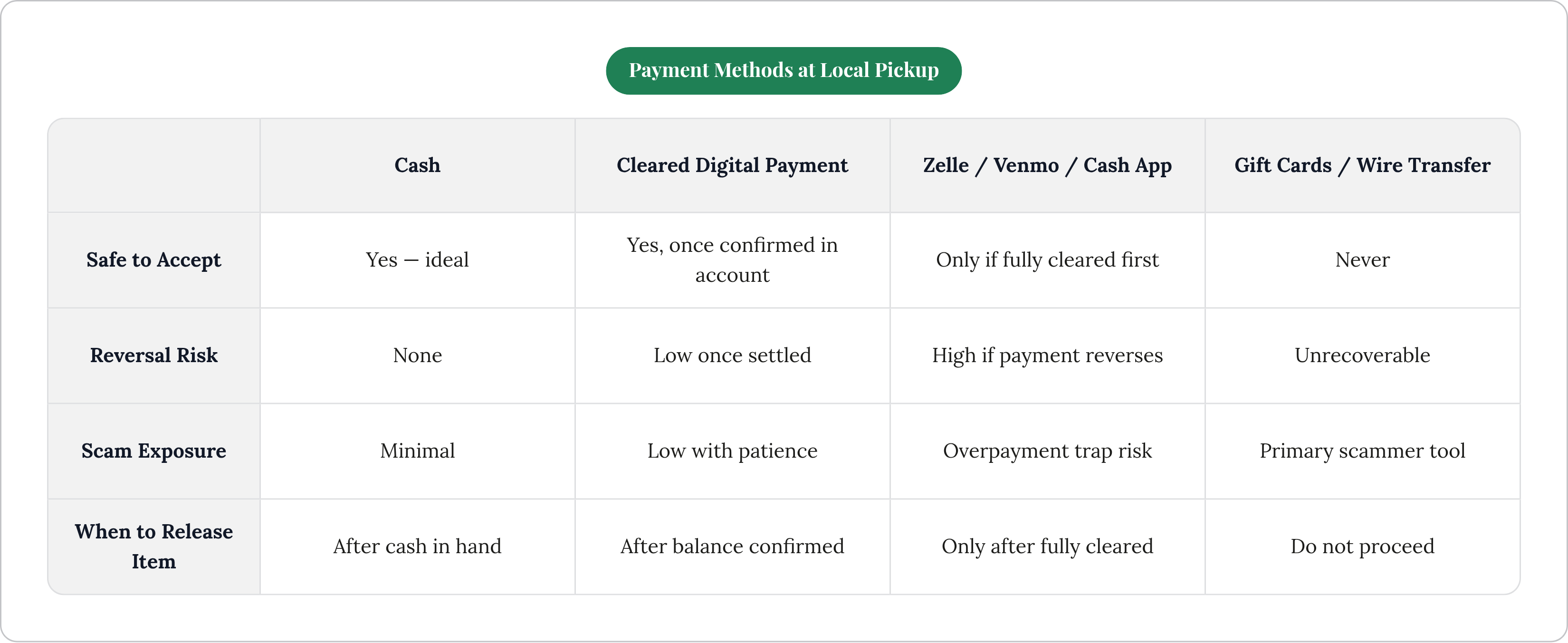
Cash wins for local pickup, full stop. No app, no pending status, no reversal window, and counterfeit risk for a used dresser or a bike is close to nothing.
If you're taking digital payment instead, it has to be fully cleared before the item leaves your hands. A "sent" notice or a screenshot doesn't count; only a balance actually sitting in your account does. Screenshots are free to fake; bank balances are not.
Some payment types are effectively unrecoverable the second they leave the buyer's account: Zelle, Cash App, personal Venmo or PayPal, wire transfers, gift cards. None of these belong at a pickup, because once that money's gone, it's gone for both of you, and scammers know that better than anyone.
Watch for the overpayment trap specifically. Buyer sends more than the asking price, says "oops, wrong amount," asks for a partial refund. You send it back, feeling helpful, and a few days later the original payment reverses. Now you're out the refund and the item. Wait until the original payment has fully, actually cleared before refunding anything. And possession should only move after the money's confirmed sitting in your account, never while something's "processing."
One more thing worth saying plainly: peer-to-peer apps don't charge sellers an "upgrade fee" to receive money. If you get an email claiming otherwise, dressed up to look like it's from Zelle or Venmo, treat it as a scam wearing a name tag.
The scam patterns most likely to target local sellers
Scam losses tied to social platforms hit $2.1 billion in 2025, roughly eight times what they were back in 2020, and Facebook leads the pack for where people report running into scammers. Six in 10 surveyed Americans say they've encountered one there. This has become an everyday risk on Marketplace, not a fringe one.
The patterns repeat themselves like a bad rerun:
Fake payment confirmation is the classic. Buyer says they sent the money, shows you a screenshot or a forged "confirmation" email, and leans on you to hand the item over right now. The money was never real.
The Zelle or Venmo "upgrade" scam shows up as an official-looking email claiming your account needs an upgrade before you can receive payment. You pay the "fee," and it goes straight into a scammer's pocket, not yours.
Phishing links through Messenger mimic Facebook itself, or a shipping carrier, or a payment app, usually with a domain that's misspelled just enough to slip past a tired eye. Click it, log in, and you've handed over your own account for the scammer's next round.
Vehicle listings deserve their own warning label. VIN cloning, where a scammer slaps a legitimate VIN onto a stolen car so it comes back clean on a history check, is a real and growing problem. One 2025 case involving cloned truck VINs on the platform cost buyers more than $220,000 combined. That scale points to organized operations, not small-time cons.
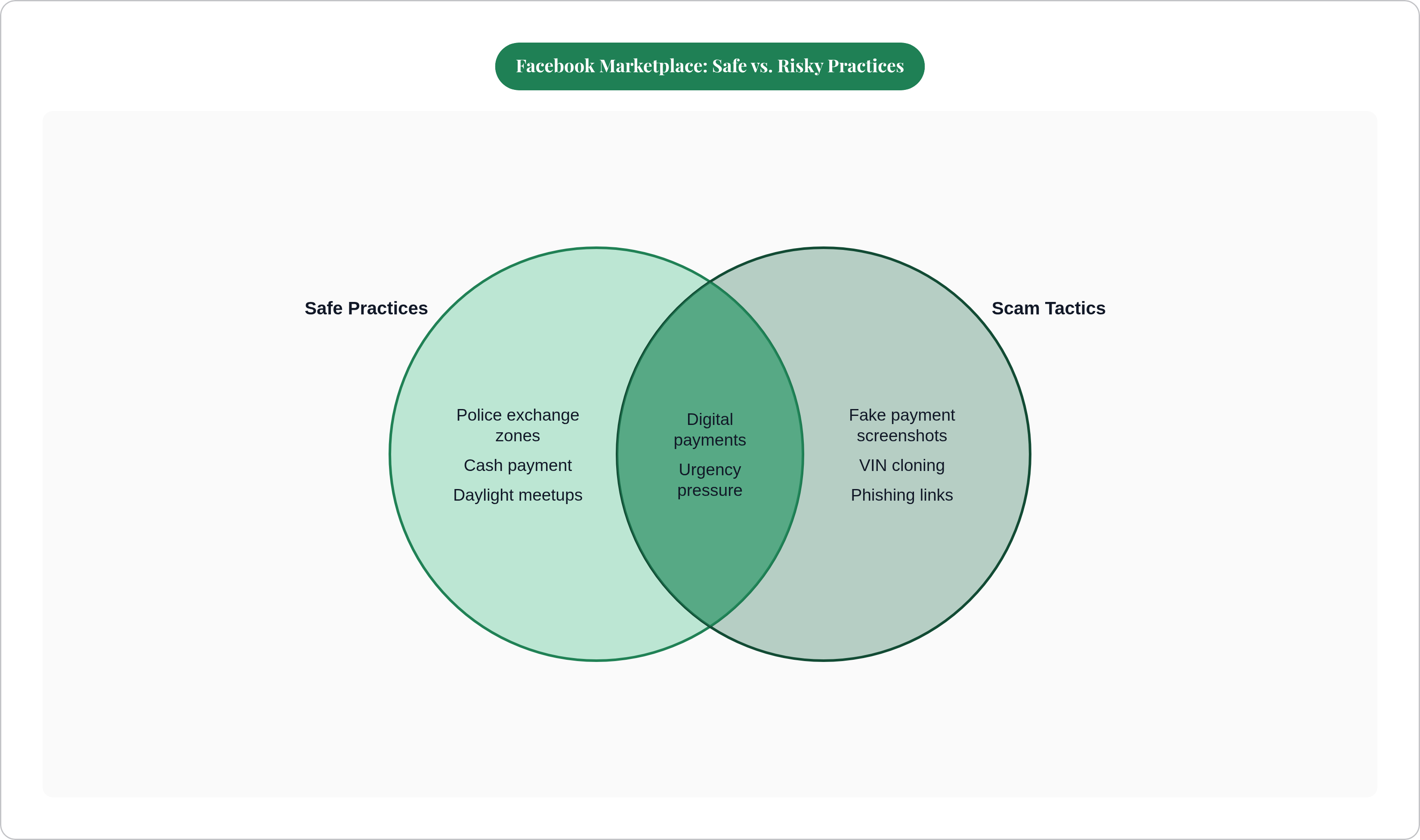
Strip away the details and every one of these runs on the same fuel: urgency, a reason the normal rules supposedly don't apply to you, and pressure to act before you can double-check anything.
Red flags that should stop a transaction before it starts
Some signals are about the account: brand new, stolen or stock photo, no ratings anywhere, a listed city that doesn't match yours.
Some are about how they talk to you. Pushing to leave Messenger immediately. Sending a link out of nowhere. Language that reads like it was copy-pasted from a script (because it was). Or, my personal favorite tell, someone who "urgently needs" your item but can't answer a single basic question about it.
Some show up in the deal itself: an offer above asking with zero negotiation, a sudden "I'm sending someone else to grab it," or a manufactured deadline like "it has to be today." And some show up in how they want to pay: gift cards, wire transfers, an app you've genuinely never heard of, a screenshot instead of an actual cleared payment, or a request to "release" the item before funds clear.
One flag alone is worth a pause. Two together is your answer, and the answer is no. Scammers count on you feeling bad about backing out of a deal that's gone sideways. Walking away costs you nothing. Handing over the item only to find out later the payment was never real costs you everything.
What to do if something goes wrong
Move fast. You've got roughly 24 to 48 hours where speed still matters, so don't sit on it.
Cut off contact with the buyer immediately. Don't try to negotiate your item back, don't play detective, don't confront anyone in person. Report both the listing and the account directly through Facebook Marketplace's reporting tools, then call your bank or payment provider right away, since some reversals are only possible in a narrow window before the money's truly gone.
File a report with the FTC, and if it involves fraud or identity theft, file with the FBI's Internet Crime Complaint Center (IC3) too. If you shared anything personal in the process, your address, your phone number, an ID photo, it's worth checking whether that information has turned up in a data broker database or somewhere murkier.
Before you report anything, grab your evidence: screenshots of the full conversation, the original listing, whatever payment confirmation you got (real or fake), and any contact info the buyer gave you. You want a paper trail before you make a single call.
Pricing your item correctly before the buyer ever shows up
Price it right and you attract serious local buyers who show up when they say they will. Price it too high and you get hagglers and ghosts. Price it suspiciously low and you attract exactly the kind of opportunist this whole article's been warning you about.
Start with sold comps, not active listings. Active listings mostly reflect wishful pricing; on eBay, filter to "Sold items" to see what people actually paid, and on Facebook, look for items marked sold or pending. For most everyday used goods, 20 to 40% of original retail is a solid starting range, adjusted up or down for condition and how much demand there is locally.
Got the original box, the charger, the remote? Include them. Original accessories can add another 10 to 20% to what you'll realistically pull in. Build in 15 to 20% of negotiating room above your true walk-away number too, because Facebook buyers haggle as a matter of sport, not necessity. A small trick that actually works: price just under a round number, $195 instead of $200, so you show up in more filtered searches.
If two weeks pass with no bites, drop the price about 10% and relist. An item sitting unsold in your listing racks up clutter with a price tag, while a sold item is simply out the door. And if researching comps and writing listings sounds like a part-time job you didn't sign up for, tools like Reclaim can pull real market data and draft the listing for you, which saves the hour you'd otherwise spend guessing before your first buyer even shows up.