What to Sell When Moving to a Smaller Home
Mark your calendar 60 days early, start in low-emotion rooms, and use the four-box method.
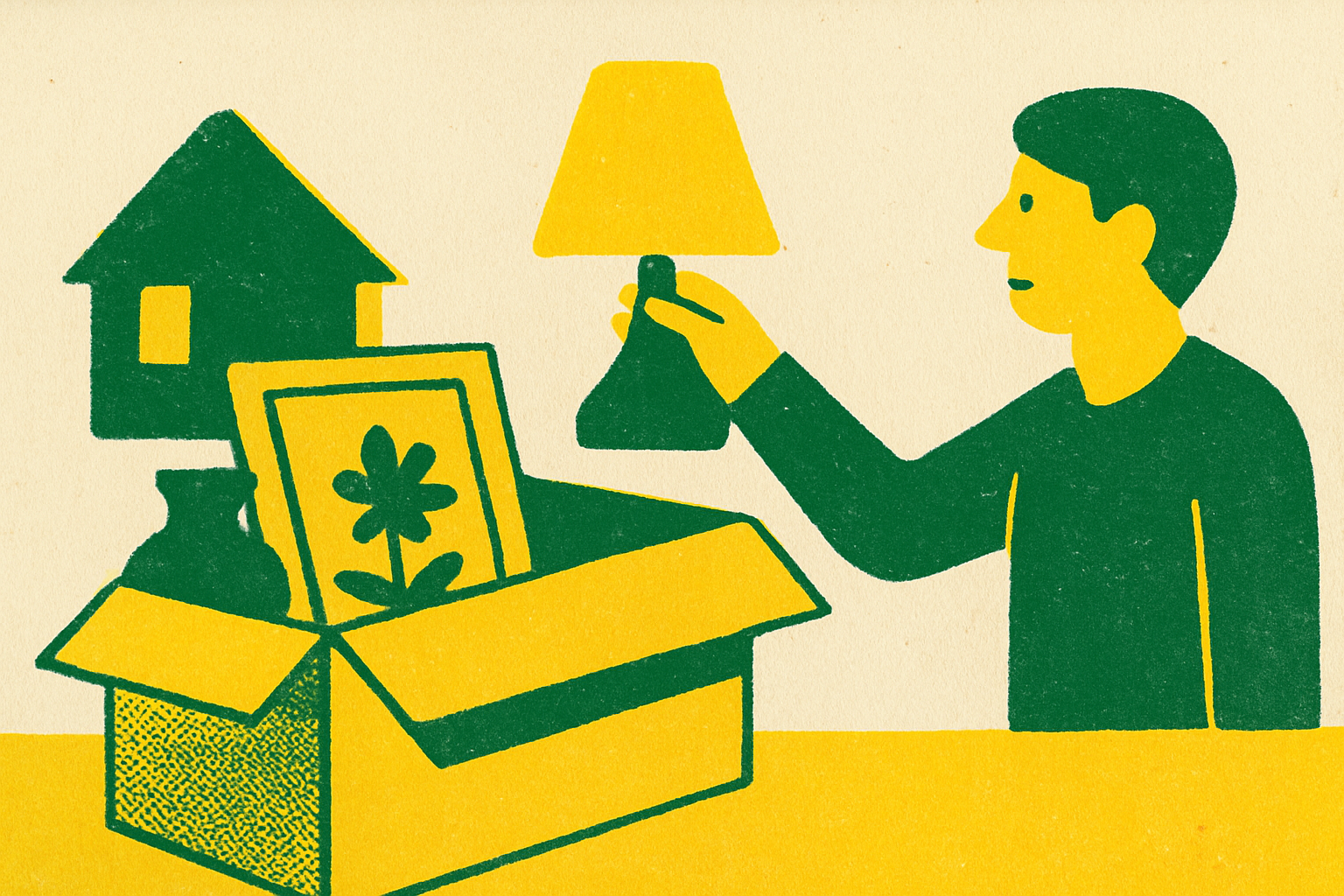
The window between "we need to downsize" and "the movers are here" is shorter than it feels, and most people burn the first two weeks just staring at the problem. Here's what the timeline actually looks like when you map it honestly:
- Under 1,500 sq ft, moderate clutter: 2 to 4 weeks to declutter, plus 1 to 2 weeks to clean and prep
- 1,500 to 2,500 sq ft, heavy clutter: 4 to 8 weeks
- Over 2,500 sq ft, or decades of accumulation: 2 to 4 months, often with outside help
Mark the calendar 60 days before your target listing date. That buffer is the minimum needed to sell, donate, and clean in sequence rather than all at once. When people try to do all three simultaneously, what happens is that donation bags end up full of things that should have been listed. Every time.
The four-box method is the operational backbone that works: keep, sell, donate, discard. You apply it room by room. Each item gets a box. You make the decision once and you don't revisit it.
Start in the low-attachment rooms: bathrooms, laundry, garage storage shelves. These build momentum before you hit the emotionally loaded spaces. Tackling a bedroom full of sentimental objects on day one is exactly how the whole project stalls.
On outside help:
- Professional organizers run roughly $50 to $150 per hour. Full-house projects typically take 20 to 40 hours.
- A certified appraiser ($150 to $400 per hour) pays for itself immediately if the home has paintings, jewelry, silver, vintage watches, or mid-century furniture. These are the items most likely to leave for nothing without an expert eye on them.
- Estate sale companies handle volume. They take a significant cut, but a well-run sale of a large home can pull in $5,000 to $30,000 or more.
The math behind all this is real, by the way. More than half of Americans sold something secondhand in 2025, and the vast majority bought something secondhand that year, per the recommerce industry's annual report. Tariffs on new electronics, appliances, and imported goods have pushed retail prices up somewhere between 8 and 15 percent, which makes used items meaningfully more attractive to buyers. And if you're selling the home itself, top real estate agents surveyed by HomeLight estimated that decluttering can add thousands of dollars to a sale price. The payoff is double: cash from the items, better number on the listing.
Every item in a downsizing home has exactly four places it can go: with you, sold, donated, or dumped. The sections below are designed to make those decisions once, clearly, before anything disappears by default.
What the Living Room Typically Holds That Buyers Actually Want
The living room concentrates two of the strongest resale categories in the house: furniture and electronics. Don't rush through it.
Furniture
The most sought-after secondhand furniture category right now is authentic mid-century modern. Even pieces that need light restoration can net two to three times what you'd expect. Things to look for:
- Teak and walnut pieces
- Solid-wood dressers with dovetail joints
- Eames-era accent chairs
- Bar carts
- Vintage brass or gold mirrors
- Antique trunks
- Discontinued Pottery Barn and West Elm pieces (they hold value better than most people realize)
Furniture margins can reach five to ten times original cost, but they require patience. Price shippable pieces for the national market. Price bulky items for the local one.
What not to bother listing: IKEA furniture. Heavy, expensive to ship, low demand. A $200 IKEA bookshelf fetches $30 to $50 on Facebook Marketplace. Rarely worth the hauling effort.
Electronics
Retro and vintage electronics are a genuine boom category. Film cameras, turntables, cassette decks, vintage stereo equipment, and CRT televisions (actively sought by retro gamers) deliver strong returns on working units.
Modern electronics depreciate fast. Research sold prices, not asking prices, and move quickly rather than holding out for maximum value.
One thing people consistently miss: accessories. Chargers, cables, remotes, and cases sell in volume and often get dumped right along with the device. Don't let that happen.
What the Kitchen Is Worth Going Through Carefully
Real estate agents flag the kitchen as one of the two rooms most critical to declutter before listing a home. Cleared countertops, nothing on top of the fridge. It matters to buyers walking through.
But the kitchen is also a resale opportunity, especially in small appliances.
High-demand items right now:
- Vitamix blenders
- Air fryers
- Espresso machines
- Stand mixers (KitchenAid especially)
Functional small appliances in this tier deliver solid margins. The key qualifier is that they have to be fully functional and ideally include original accessories. A blender missing its lid is a donation, not a listing.
What isn't worth listing: generic no-brand appliances, anything visibly stained or with worn seals, duplicate basics like the extra toaster or the old coffee maker with no brand recognition.
Cookware: Quality cast iron, All-Clad, and Le Creuset sell reliably. Big-box store nonstick pans generally don't.
The kitchen is also where people store things that belong in higher-value categories. Check every drawer and cabinet. Unused gadgets, electronics accessories, and collectibles end up in kitchen cabinets constantly. Don't miss them.
What to Pull From Bedrooms and Closets Before Packing
Bedrooms concentrate clothing, shoes, and accessories. Brand and condition determine almost everything here.
Clothing
Not all of it is worth listing.
- Skip: Contemporary fast fashion. H&M, Zara, Forever 21. These depreciate fast and rarely justify the effort.
- Worth listing: Mid-range brands like Banana Republic, J.Crew, and Anthropologie.
- Prioritize: Premium athletic wear (Lululemon), vintage and Y2K pieces (baggy jeans, vintage Nike and Adidas streetwear), and luxury designer items (Louis Vuitton, Gucci, Chanel).
- Reliable mover: Kids' clothing in gently used condition. Holiday apparel sells well in season.
Shoes
Shoes are often more valuable than the clothing hanging next to them. Nike, Hoka, and On Cloud sneakers consistently show up at the top of resale demand lists. Condition matters, and the original box matters. Don't throw away the box.
Closet accessories
Check for designer handbags, vintage jewelry, and watches before assuming the closet is just clothes. These can be the most valuable items in the bedroom and the easiest to undervalue.
Bedroom furniture
Solid-wood dressers with dovetail joints, vintage bed frames, quality nightstands. Worth listing. Particleboard furniture is not.
One practical note: the bedroom is emotionally the hardest room. Do it after you've built momentum from easier spaces. The risk of keeping things out of sentiment that would actually sell well is highest when you're tired.
What the Garage, Basement, and Storage Areas Tend to Hide
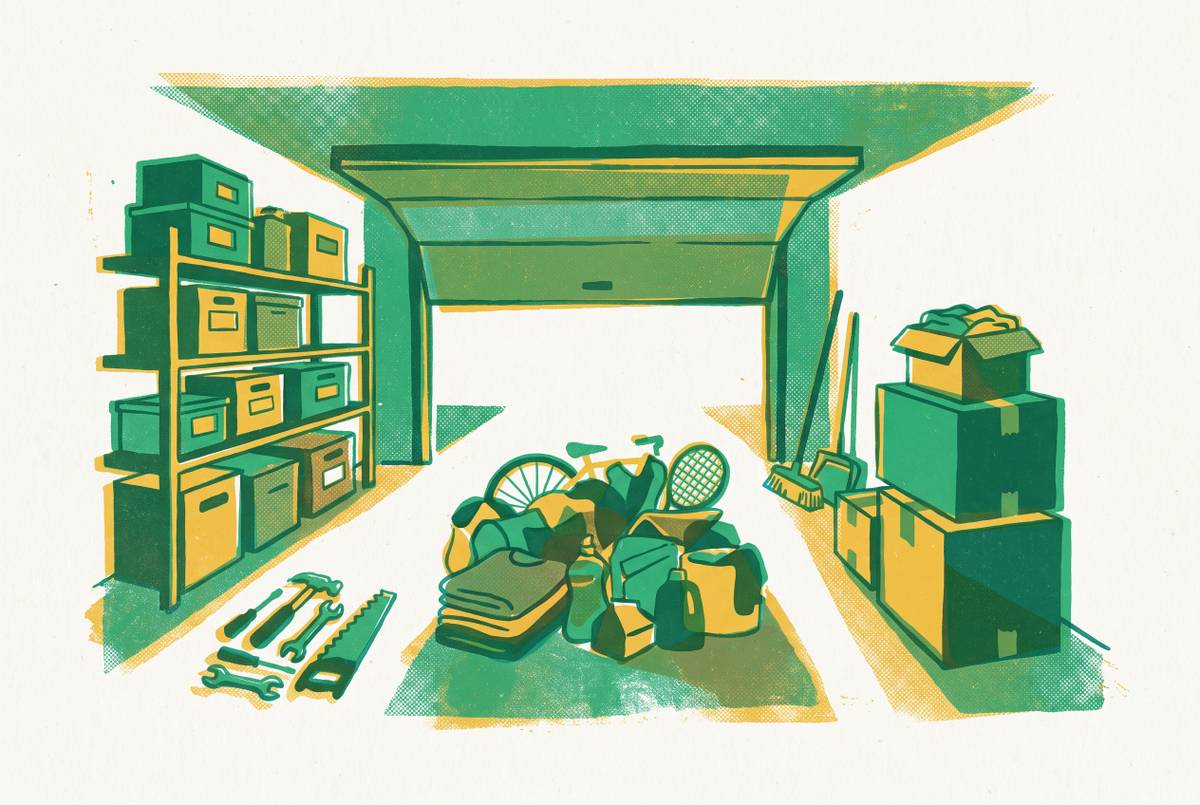
This is where the real surprises live. Garages and basements accumulate some of the strongest resale categories outside of clothing: electronics, sports gear, tools, gaming equipment, collectibles.
Gaming and retro electronics
Often stored in boxes, often forgotten. NES, Game Boy, and early PlayStation systems drive strong nostalgia demand. Resellers regularly report significant returns on working vintage gaming hardware. Turntables, film cameras, and vintage stereo components follow the same pattern.
Collectibles
This is the highest-risk category for accidental donation. Things to look for:
- Trading cards
- Sealed board games
- Limited-edition toys and Funko Pops
- Vinyl records
- Comics and pop culture memorabilia
- LEGO sets. Especially complete ones with instructions and original boxes. Complete sets with original packaging command premiums that genuinely surprise most people the first time they look them up.
Complete sets and rare editions command dramatically more than common equivalents. A certified appraiser is worth considering if the storage area contains decades of accumulated items. The hourly cost can pay for itself many times over on a single misidentified piece.
Sports and outdoor equipment
Bikes, golf clubs, ski gear, fitness equipment. These sell well locally. They are too bulky and too functional to donate when they still work. List them locally. Price them to move.
Tools
Quality hand tools and name-brand power tools hold value. Generic or worn tools don't.
The rule for all storage areas: anything in original packaging, anything sealed, anything with a recognizable brand name. Look up sold prices before deciding something is a donation.
How to Figure Out What an Item Is Actually Worth Before Listing It
This is the single most important skill in the whole process, and most people skip it entirely.
Sold prices. Not asking prices.
On eBay, filter completed listings to "sold." The asking price of unsold items tells you nothing about what buyers will actually pay. An item listed at $200 for eight months that never sold is not evidence of a $200 item. It's evidence of bad pricing.
On Facebook Marketplace, search the item and look at recent local sales rather than active listings.
Category-specific depreciation:
- Electronics lose value fast. Price to sell quickly rather than holding out.
- Furniture takes longer to find the right buyer, but margins can be excellent when the piece is genuinely desirable.
- Collectibles are the most volatile. Condition and completeness drive price more than anything else.
Grade condition honestly. Overpricing for condition is one of the most common reasons items sit unsold for weeks. If the comparable sold item was in better shape than yours, adjust down. Skipping that step is what makes all the research useless.
Most people price from what they paid, what they wish it was worth, or whatever the platform auto-suggests. None of those reflect actual market demand. Some AI-assisted listing tools can identify an item from a photo, assess condition, and surface pricing grounded in actual sold market data. That gives a first-time seller the same starting point as an experienced reseller, without the years of pattern recognition it normally takes to build that instinct.
Which Marketplace to Use for Which Category of Item
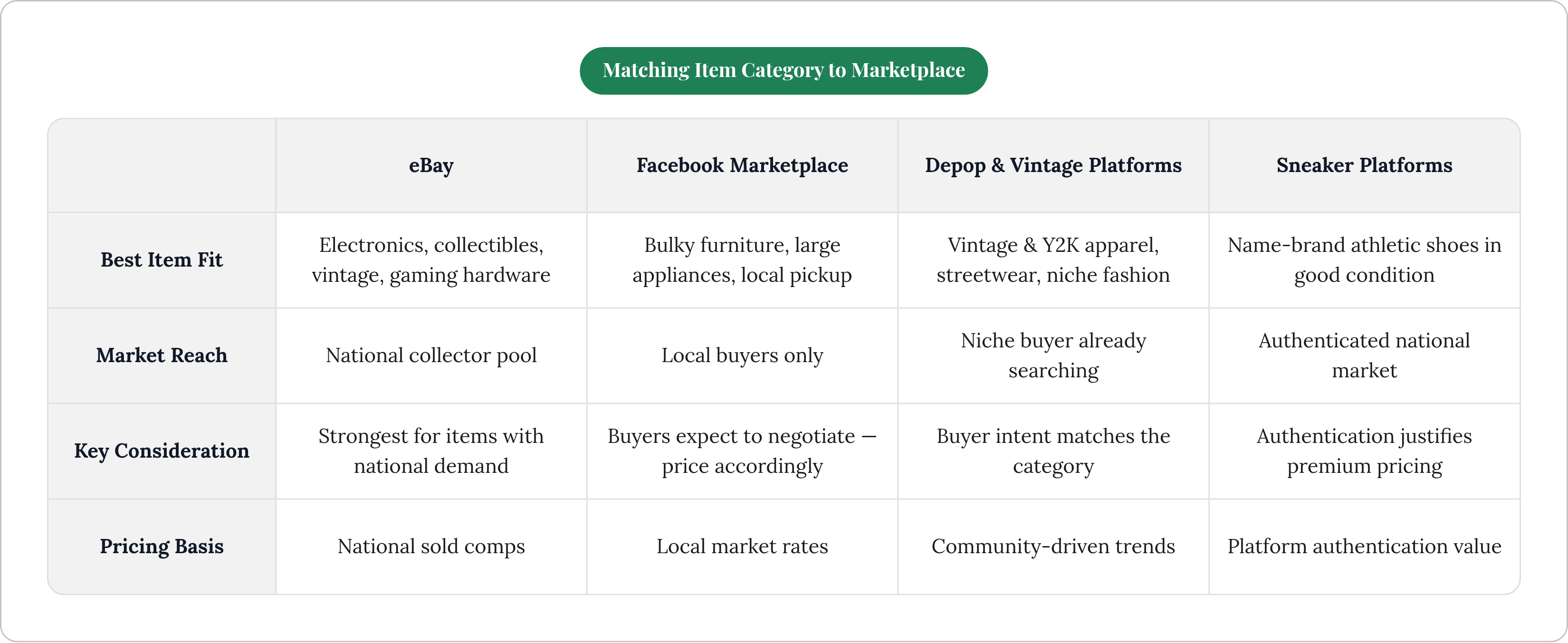
No single marketplace is best for every category. Matching item to platform is what determines whether something sells in a day or sits for six weeks.
- eBay: Widest national reach. Strongest for electronics, collectibles, vintage items, gaming hardware, and anything with a national collector market. Per ZIK Analytics data, electronics accessories alone account for significant sales volume on the platform in any given month.
- Facebook Marketplace: Best for bulky furniture, large appliances, and local pickup items where shipping would eat the margin. Buyers expect to negotiate. Price accordingly.
- Depop and similar vintage platforms: Vintage and Y2K apparel, streetwear, niche fashion. The buyer is there specifically looking for that category.
- Dedicated sneaker platforms: Authenticated footwear commands higher prices from buyers who trust the authentication process. Worth it for name-brand athletic shoes in good condition.
The case for listing on multiple platforms at once: an item listed in one place has one pool of potential buyers. The same item listed across several platforms reaches the right buyer faster. The practical problem is the overhead. Most sellers pick one platform and underperform because relisting on three platforms feels like too much work at the end of a long decluttering day.
Some tools remove that friction by letting one photo generate a listing pushed across multiple marketplaces simultaneously. That's the overhead that normally causes people to default to one platform and leave the rest of the market untouched.
Shippable items like small electronics, clothing, and collectibles can reach national pricing. Furniture and large appliances almost always require local pickup and local market pricing. Know which category you're in before you set the price.
The Items Most Commonly Donated or Dumped That Should Have Been Sold
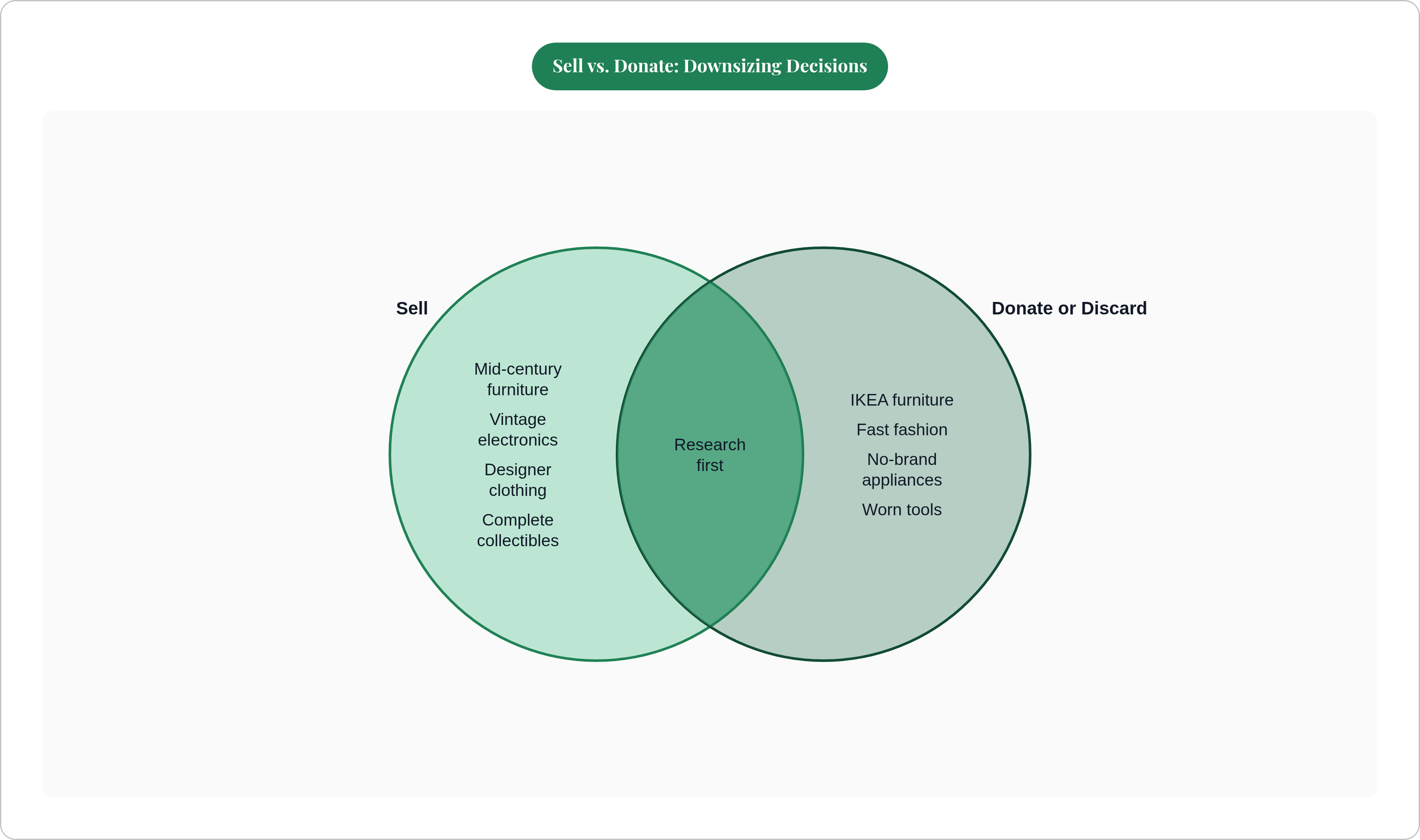
The most expensive downsizing mistake isn't selling something for too little. It's selling nothing at all because the decision felt too complicated in the moment.
Here are the items that leave for free most often, and shouldn't:
- Vintage and retro electronics stored in garages. Turntables, film cameras, vintage audio equipment. Working units in this category return multiples of their perceived value. They get stacked in boxes and donated because no one thinks to look them up.
- Sealed or complete collectibles. Board games, LEGO sets with instructions, trading card collections. The completeness is where the value lives. A missing piece can cut the price in half. A complete set can sell for multiples of what you'd guess.
- Designer and athletic clothing buried in closets. A Lululemon top or a pair of Nike sneakers in good condition has a real market. These should never go to Goodwill by default.
- Mid-century furniture mistaken for just "old furniture." Teak and walnut pieces from the right era are actively sought. Particleboard from the same decade is not. The difference matters enormously and isn't always obvious at a glance.
- Quality small appliances assumed to be unsellable. A working Vitamix or espresso machine is a listing. Not a donation.
The fix is simple, even if it requires a little discipline. Look before you donate. Check sold prices on eBay before anything with a brand name goes in the donation bag. Thirty seconds of research on the right item can change a nothing outcome to a meaningful one.
The room-by-room pass catches what a general sweep misses. Do it before the boxes come out. The cash is already in the house.