Decluttering a Garage for Maximum Resale Return
Selling garage items strategically beats a driveway table every time.
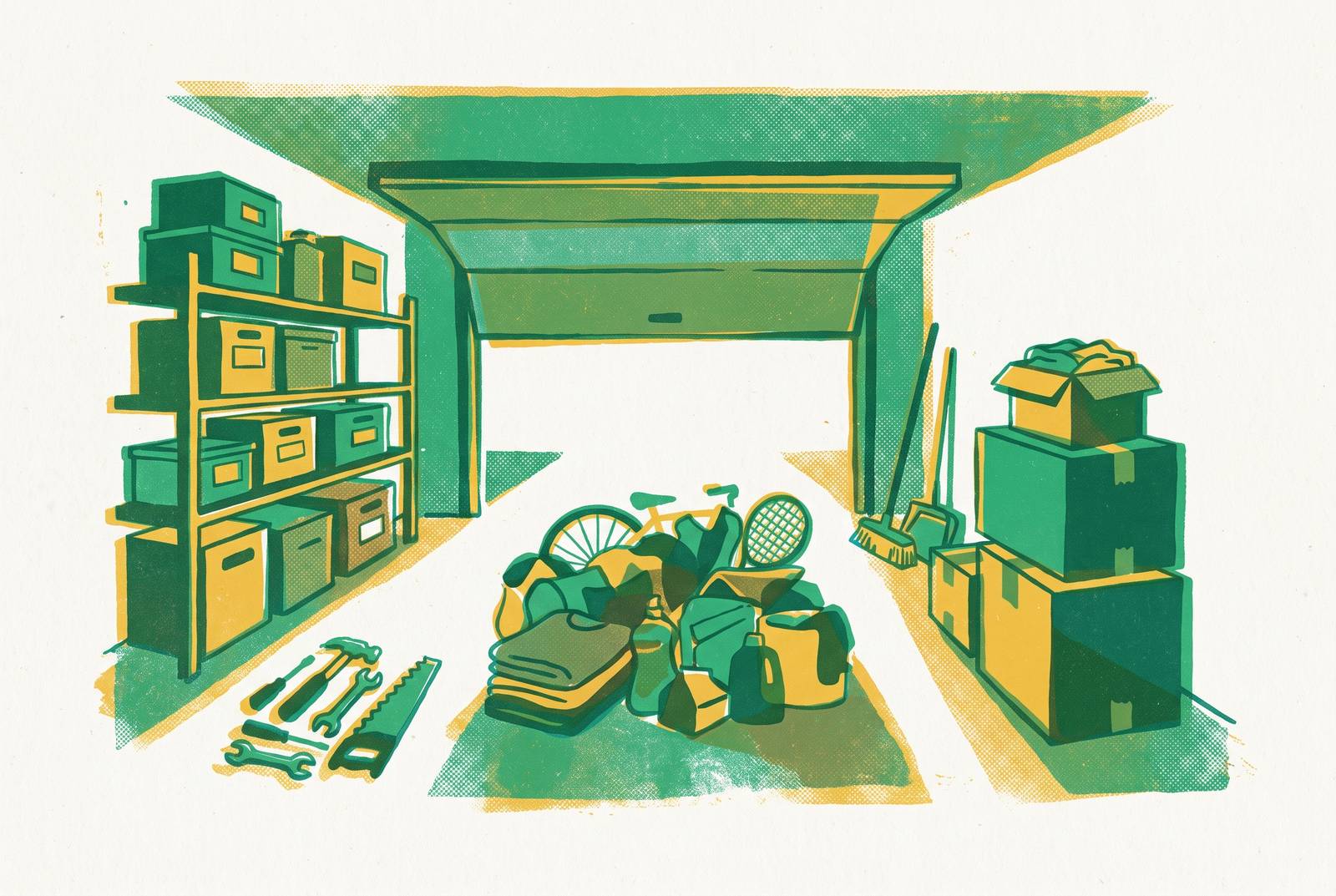
Your garage cleanout is a revenue project, not a trash run. The secondhand market hit $594 billion worldwide in 2025 and keeps growing over 13% a year, which means the tools, electronics, and sporting goods sitting on your shelves are exactly what buyers are hunting for online right now. Treat the cleanout like a sale from the first box you open, and every decision downstream changes: what you keep, what you list seriously, and what you dump on a table for a buck.
There's a real-estate angle too. "Garage" landed in Zillow's top 10 most-searched home features in both 2023 and 2024, so a cleared, organized space does double duty: cash now, higher home value later. This piece walks through the sort, the channel decision, the pricing method, and the listing habits that turn a cluttered garage into actual money.
Working through the garage zone by zone before anything gets priced
Pricing before sorting is how good items end up buried under bad ones. Do the sort first. Break the garage into zones: power tools and hardware, sporting goods, automotive, holiday and seasonal, electronics, furniture, clothing and shoes, and the pile of boxes nobody remembers packing.
Work each zone with three piles only: sell, keep, toss. Skip the "maybe" pile. Most maybe piles sit untouched for years and quietly turn into a bigger sorting problem later.
A useful filter: if you haven't touched it in the past year, it's a sell candidate. "Might need it someday" is the phrase that fills garages in the first place, so don't let it win twice.
A few spots people skip without meaning to:
- Drawers and bins full of cables, chargers, and small accessories. These get searched for constantly online and take five minutes to list.
- Original packaging sitting near an item. Keep it together. Box and manual included can lift the price more than people expect.
- Partial sets, whether tools or golf clubs. Figure out if you can complete the set before you list pieces separately. A full set beats scattered parts almost every time.
- Anything you're storing for a neighbor or a sibling. Flag it now, or it'll get priced by accident, and that's an awkward phone call.
Once the sort's done, group the sell pile by category. That's what makes the next step, deciding where each item gets listed, actually manageable. Photograph things before you move them. A drill sitting on the workbench where it lives, or a mixer still on the shelf, often sells better than a staged photo on a white sheet. Context reads as honest.
Deciding which items deserve a marketplace listing versus the driveway table
The most common mistake in a garage sale: everything, including the good stuff, ends up on a folding table where foot traffic sets the ceiling. A guy walking his dog past your driveway isn't going to pay $80 for a cordless drill, no matter what it's worth on eBay.
Channel routing isn't about ranking items. It's about matching each one to wherever it sells fastest at the price it deserves. Route these to a real marketplace listing:
- Anything with a brand name, model number, or collector identity that buyers actually search for by name
- Electronics you've confirmed power on and work
- Name-brand power tools (DeWalt, Milwaukee, Makita)
- Collectibles like trading cards, vintage toys, records, and sports memorabilia, since a driveway buyer has no way to know what these are worth
- Complete sets still in original packaging
Route these to the garage sale table instead:
- Common household goods, décor, plain kitchenware
- Bulky items not worth the shipping hassle, like broken-down furniture or partial sets
- Clothing with no brand value, sold by the armload rather than the piece
Some things shouldn't get individual pricing at all. Group cables and chargers by type. Bundle small tools that would price under a dollar on their own. Kids' books and DVDs move faster with "fill a bag for five bucks" than with individual stickers, because nobody wants to negotiate over a paperback.
The test for every item: would someone type this exact thing into a search bar? If yes, it belongs somewhere that search reaches. And if you find something that might be worth real money (an old coin, a stack of baseball cards, a weird vintage radio) spend five minutes checking sold prices before you route it anywhere. That quick check has turned plenty of "garage sale junk" into someone's rent money.
Which marketplace fits which garage category
Platform choice comes down to where the buyer for that specific item is already looking, not which app you personally like using.
eBay works best for anything with a clear brand or model identity: collectibles, retro electronics, trading cards, items where a national pool of buyers matters more than local convenience. Fees run roughly 10 to 12%.
Facebook Marketplace is strongest for furniture, big appliances, and tools, basically anything where local pickup beats shipping a 40-pound table saw across the country. Fees for local sales run from nothing up to about 10%, and it's also where casual buyers scroll without a specific item in mind, which helps categories that don't get searched by name.
Live auction platforms can work well for trading cards, Funko Pops, and vinyl, where competitive bidding may push the final price above a fixed listing.
Craigslist remains an option for cars, heavy equipment, and oversized items where local classifieds still have an audience.
Poshmark and similar apparel apps make sense for name-brand clothing and shoes, especially with a fashion-savvy buyer base. Fees land around 20%, so the item needs enough value to make that cut worthwhile.
Nothing stops you from listing the same item on two or three platforms at once. The only real obstacle is the hassle of juggling apps, and that's a patience problem, not a strategy problem.
Using sold data to set prices that hold up in negotiation
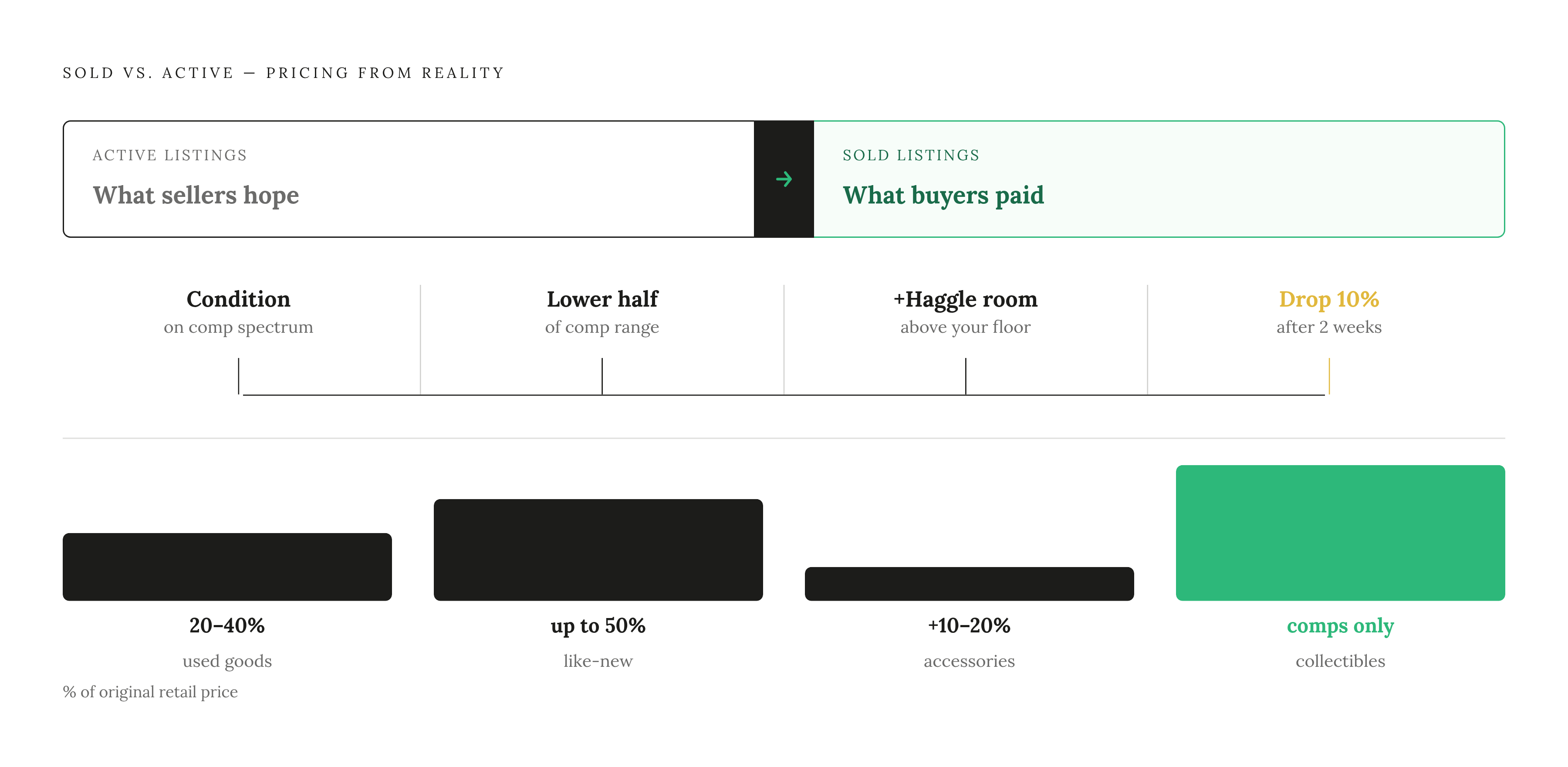
Here's the rule that matters more than any other in this whole process: price from sold listings, never active ones. Active listings show what a seller hopes to get. Sold listings show what a buyer actually paid. Only one of those numbers is real.
On eBay, filter to "Sold Items" and search the exact brand and model. On Facebook Marketplace, look through the local feed for anything tagged "Sold" or "Pending." That's your ground truth.
From there:
- Pull a handful of sold comps for the same item, or the closest match you can find
- Note where those comps fall across condition, and place your item honestly on that spectrum
- Set your target inside the range the comps define, leaning toward the lower half if you want it gone faster
- Build in some room above your real floor, especially for anything going to a driveway table, since haggling there is close to certain
A few starting benchmarks, useful as a first pass and not gospel: most everyday used goods land around 20 to 40% of original retail. Like-new condition can push closer to 50%, with room to negotiate down. Electronics depreciate fast, so lean on comps rather than a flat percentage of retail. Collectibles can go the other direction entirely and appreciate, so don't price those off retail at all.
Don't forget the extras. Chargers, remotes, manuals, and original boxes can add 10 to 20% to what you'd otherwise get, so list exactly what's included every time. If a listing sits for two weeks without movement, drop the price around 10% and check back in. Stale online listings pull in lowball offers; stale driveway tables pull in nothing but foot traffic and dirty looks. For the driveway itself, price for speed, not margin. The goal there is clearing the table by sundown.
If manual comp-hunting sounds like a second job, some pricing tools now scan sold comps across platforms from a single photo and spit out a suggested price. Worth trying if you're selling casually and don't want to run a search for every item in the garage.
Category-by-category guide to what garage items actually sell for
Electronics. Retro consoles (NES, Game Boy, early PlayStation) carry real nostalgia value, carrying 50 to 200% profit potential. Unsexy stuff holds value too: remotes, routers, calculators, older digital cameras. Point-and-shoot cameras from the 2000s (Canon PowerShot, Nikon Coolpix) have gotten a strange second wind from younger buyers chasing a low-fi photo look, so check comps before assuming they're worthless. A working VCR (Sony, Panasonic) can bring $50 to $100 on eBay, which surprises most people who were about to leave it at the curb. Bundle cables and label exactly what they fit. Specificity is the whole sales pitch there.
Power tools and hardware. Name brands (DeWalt, Milwaukee, Makita) hold value well on both eBay and Facebook Marketplace. Test that it powers on before listing, and say so if it doesn't. For partial sets, weigh whether finishing the set with one missing piece is worth the hunt before listing incomplete. Even small replacement parts can move fine as standalone eBay listings.
Sporting goods and outdoor gear. Bikes, golf clubs, fishing gear: keep these on Facebook Marketplace for local pickup and skip the shipping headache. Brand and condition drive the price far more than category does. A mid-range branded item in good shape beats a generic item almost every time.
Furniture and large appliances. Facebook Marketplace dominates here, purely because nobody wants to ship a couch. Premium kitchen gear (KitchenAid mixers, Vitamix blenders) holds value better than people assume, so check comps before defaulting to some low number out of habit. Staging matters more in this category than any other; a clean photo in decent light will outsell a cluttered garage shot every time.
Clothing and footwear. Designer and name-brand pieces belong on a dedicated apparel app or eBay, not a driveway table. High-end sneakers can be profitable, but authentication matters. Buyers expect some proof of where the shoes came from. Vintage and Y2K pieces (90s Nike, Adidas, vintage denim) get searched constantly and routinely go for less than they're worth at garage sales. Anything generic with no brand identity: bag it and price it by the pound at the sale instead of listing piece by piece online.
Toys, collectibles, and trading cards. Collectible toy sets in complete condition are worth checking on eBay before you touch a price tag. Trading cards can do well in live auction formats, since competitive bidding may push prices past what a fixed listing would get. Vintage toys still in original packaging are some of the most underpriced items at garage sales anywhere, full stop. Coins, stamps, and sports memorabilia deserve a quick appraisal if you're unsure about condition or rarity before you list them for anything.
Running the garage sale itself so fast-move items actually move
April, May, and September draw the most garage sale traffic. Weekends pull roughly 30% more foot traffic than weekdays, and Saturday remains the default for a reason nobody's bothered to argue with in decades.
Set up by category, not by which shelf things came off of. Buyers browse by type, so tools together, kitchenware together, toys together. Price everything visibly. An unpriced item slows a browser down, and a slowed-down browser is a browser who leaves. Put your high-value pieces near the entrance, and don't be shy about a tag that says "sells online for $X, priced here to move fast." That's not bragging, that's information a buyer wants.
Build in some haggle room on driveway tags, because negotiation is part of the ritual out there. If something's still sitting untouched after the first two hours, move it to a bundle table by midday. "Fill a bag for five bucks" clears decision fatigue faster than any individual price tag could.
For getting people to show up in the first place: Nextdoor, local Facebook groups, and a couple of signs at nearby intersections do most of the work. Mention categories in the post ("tools, electronics, vintage clothing") to pull in buyers who actually want what you have instead of people just killing a Saturday morning.
Whatever doesn't sell, don't haul it back into the garage you just cleared. Line up a donation pickup ahead of time, or list the leftovers online that same night.
Writing listings that convert browsers into buyers
A fairly priced item with a bad listing still just sits there. The listing has to do the job a good salesperson would do in person, minus the person.
Lead the title with brand, model, and condition. Use the words a buyer would actually type into a search bar, not a clever description you thought was catchy. Nobody searches "gently loved workhorse drill," and if they did, I'd want to meet them.
For photos: shoot in natural light, and skip the garage shelf as a backdrop if you can help it, since a plain background reads cleaner. Get the front, the back, any wear or damage, the model or serial number, and every accessory that's included. Showing defects up front, rather than letting a buyer find them later, cuts down on disputes and builds the kind of trust that gets you a sale without twenty questions first.