How to Declutter When You Are Emotionally Attached to Items
Identify the emotion behind your clutter, and letting go becomes manageable.
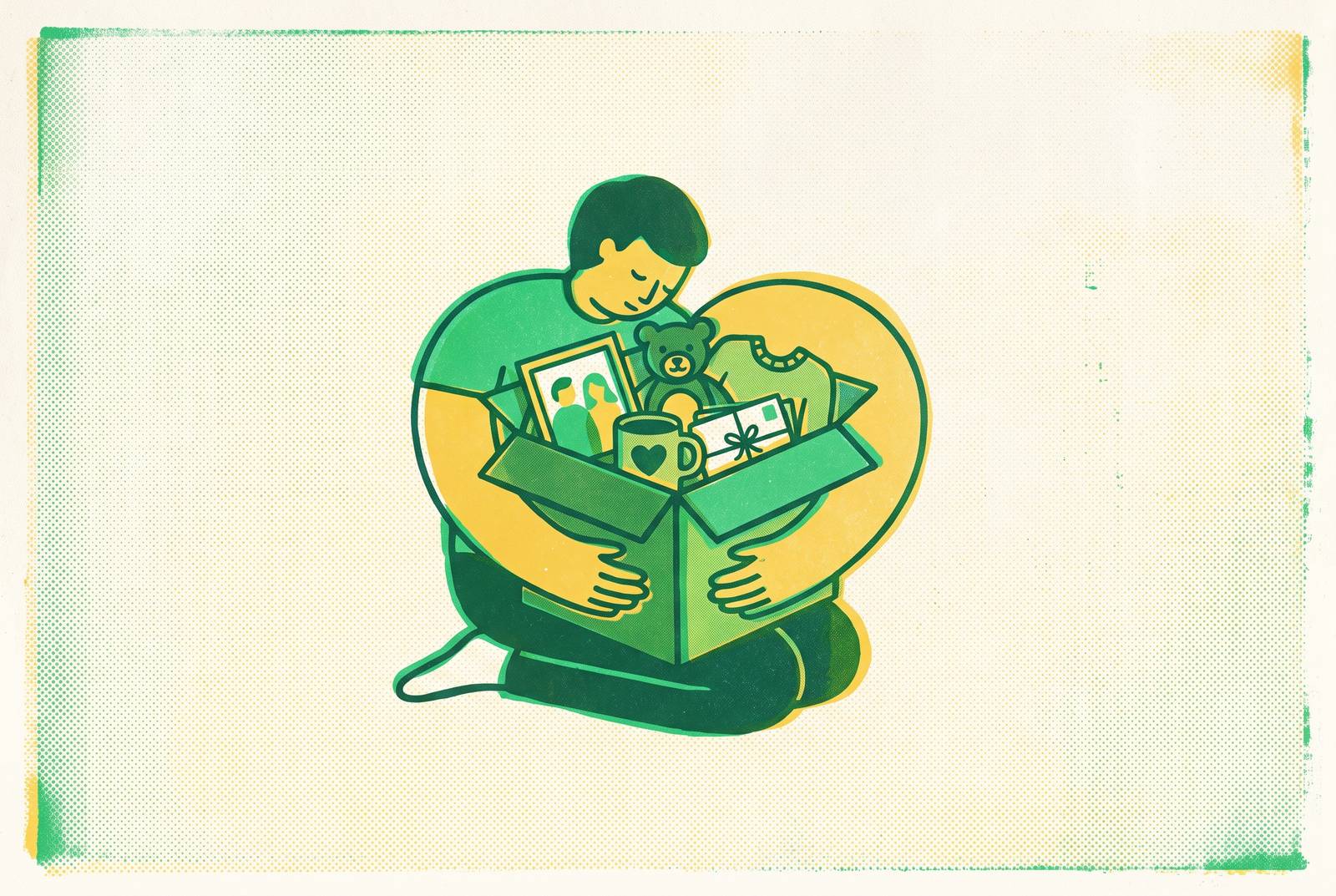
Emotionally loaded clutter isn't a willpower problem. It's a naming problem: nobody stopped to ask what the item actually represents, and until that happens, no amount of "just get rid of it" advice works. Every object in a junk drawer or a closet or a garage is doing psychological work, standing in for a memory, an identity, or a future that never happened. Once you know which one you're dealing with, the practical part gets a lot easier.
The three emotional categories that cause most of the sticking points
Guilt is the sunk cost trap. That dress with the tags still on, the tech gadget you're keeping "just in case", the treadmill that became a coat rack: the money's already gone, but keeping the item feels like it's somehow protecting the investment. It isn't. Guilt also shows up hard around gifts, because tossing the item feels like tossing the person who gave it to you. It's not. Those are two separate things wearing the same coat.
Nostalgia is a case of mistaken identity, where the object gets confused for the memory itself. People hang onto a torn sweater a friend knitted them or a faded birthday card because some part of the brain believes that letting the object go means letting the memory go with it. It doesn't work that way. The memory lives in you, not in the fabric or the cardstock, and that distinction is worth saying out loud because most people have never had anyone say it to them directly.
Identity attachment is about who you were, or who you meant to become. Trophies from a sport you quit two decades ago. The guitar. The running shoes bought during a burst of optimism in January. Letting these go can feel like admitting a version of yourself has closed up shop, and that's a small grief, genuinely, even if the item itself is worthless. These attachments get sharper during transitions: a divorce, a layoff, a move, retirement. The stuff becomes proof that the old life happened.
Most cluttered spaces are a blend of all three categories. But usually one runs the show, and figuring out which one is what tells you which strategy actually has a shot.
What clutter actually costs you, mentally and practically
The average Canadian reportedly spends around 2.5 days a year hunting for stuff that's gone missing in their own home. That's not a typo, and it's not really about the missing item. It's a decent stand-in for the actual tax clutter puts on attention and time every single day.
Clutter isn't neutral. It sits in your visual field and competes for brain space constantly, which raises cortisol and keeps the nervous system from ever fully powering down. A cluttered room doesn't let the brain rest, even when you're technically relaxing on the couch in the middle of it.
Then there's decision fatigue, which is the real reason most declutter attempts die halfway through a Saturday. Sorting through a closet means making hundreds of tiny keep-or-toss calls back to back, and that burns through the brain's decision-making capacity fast. People don't quit decluttering because they lack grit. They quit because their brain hit a wall that had nothing to do with commitment.
Clutter also functions like a flashing neon to-do list bolted to the wall of your bedroom. Every pile is an unresolved decision, and unresolved decisions produce low-grade anxiety on a loop, day after day, whether you're consciously noticing it or not.
There's a financial angle too, and it's a blunt one. Moving costs add up fast, and every box you don't need to move is money you don't need to spend. Clear the clutter before the truck shows up, not after.
Why starting with the hardest items guarantees failure
The instinct is always to go straight for the heaviest stuff first: grandmother's china, a deceased parent's belongings, the shoebox of childhood mementos in the attic. That instinct is wrong, and it's wrong in a predictable way.
High emotional intensity plus zero practice making these decisions equals paralysis. Not laziness, paralysis. The session ends in tears or gets abandoned entirely, and the shame from that failed attempt makes the next attempt even harder to start.
Graduated exposure works better. Start with the stuff that has no emotional charge at all: duplicate kitchen tools, the phone charger for a phone you don't own anymore, clothes that haven't fit since a different presidential administration. Clearing a drawer of garlic presses builds the same muscle you'll need later for the box of old letters, just at a much lower stakes level.
A rough order that holds up:
- Purely functional items with zero memory attached
- Lightly sentimental items: old magazines, decor from an apartment you don't live in anymore
- Deeply personal items, given their own unhurried session, not squeezed in at the end of a tired afternoon
Sentimental items aren't a sign you've failed at decluttering. They're the final round, and you earn your way there by clearing the easy stuff first.
Practical techniques matched to each type of emotional attachment
For guilt. Keeping the unworn dress doesn't get the money back. It just adds storage cost to the original financial loss. The one-touch rule helps here: pick the item up, decide right then (keep, donate, sell, discard), and don't put it back down "to think about it," because re-handling an item just re-triggers the guilt loop without resolving anything. The one-year rule is a solid guilt bypass too: if it hasn't been used in a year, the "just in case" argument doesn't hold up statistically or otherwise.
For nostalgia. Take a photo of the item before it goes: childhood artwork, concert tickets, a handwritten letter, an heirloom that doesn't fit the apartment. The photo keeps the memory retrievable, and the object no longer has to carry weight it was never built to hold. When it comes to a loved one's belongings, pick a handful of pieces that actually mean something for a memory box, rather than keeping every last item out of guilt. Marie Kondo's approach of holding the item, thanking it, and then releasing it gives the moment a bit of ceremony, which makes the letting go feel less like an abrupt trash-bag decision and more like an actual goodbye.
For identity. Run the future self test: would you choose this item for the life you're actually living now, not the one you planned five years ago? Journaling helps as a diagnostic here, oddly enough. Write down why you're holding onto the thing, and the answer usually tells you whether it's honoring something real or just anchoring you to a version of yourself that already moved on. The unused paint set doesn't indict you as a person who failed at painting. Handing it to someone who'll actually use it is a better ending for the paint set than a shelf in the garage.
A few tools help no matter which category you're wrestling with. Picture the calm, usable room you're working toward, clearly, and use that image as an anchor when a decision stalls. Put on music, light a candle, build in a small reward after each session, because rituals lower the psychological weight of the task. Bring in a friend for a second opinion on whether you'll actually use that bread maker again. And take a photo of the space before and after: seeing the visual proof of progress does more for momentum than most pep talks.
How to handle the hardest category: items that belonged to someone you've lost
This category carries layered weight: grief, guilt about letting go, and a real fear of forgetting the person if the objects disappear. None of that is irrational. All of it makes the sorting slower than usual, and that's fine.
Keeping every single item that belonged to someone isn't the same as honoring them. The volume of stuff in a storage unit doesn't measure how much you loved someone. Curate instead of choosing between keep-everything and discard-everything. Pick a small number of items that genuinely capture the relationship, then give them a proper home, a memory box or a small display, rather than burying them in a bin in the basement where they'll never be seen again.
For anything with broader family significance, photograph it and offer it to relatives before deciding its fate. Someone else might cherish that item in a way that never occurred to you, and passing it along turns the decision into something closer to a gift than an abandonment.
Timing matters more here than anywhere else in this process. There's no correct pace. Doing this work too soon after a loss tends to produce regret, decisions made in a fog that don't hold up later. Some distance usually makes the choices clearer. If the inability to release anything from a deceased person's belongings persists for a long stretch, or the distress from even attempting it feels disproportionate, that's a conversation for a therapist, not an organizer.
Turning the items you release into something that works for you
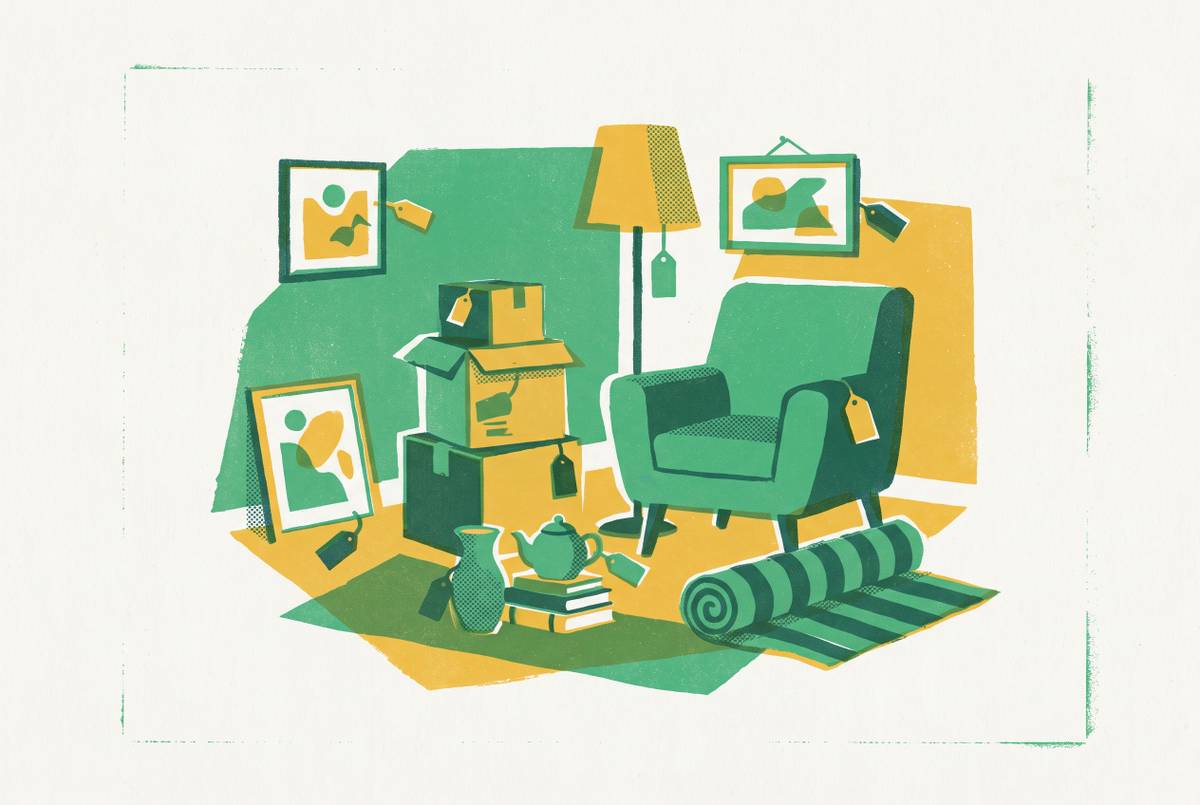
Selling an item does something psychologically that tossing it in a bin bag doesn't: it sends the thing to someone who actually wants it, which closes the loop in a way garbage day never will.
Selling secondhand isn't a niche activity anymore. Per the OfferUp Recommerce Report, 93% of Americans bought something secondhand in 2025, and 54% sold something of their own. That's the mainstream, not the exception.
Most first-time sellers get the pricing wrong in the same way: they look at what other people are asking, not what things actually sold for. Asking prices are aspirational fiction half the time. eBay's "Sold Items" filter shows the real number in a couple of minutes, and that's the figure worth anchoring to.
Condition changes the math too. Don't price a scuffed-up item against a mint comparable, that's just setting yourself up for a listing that sits for weeks. Including the original box, charger, or accessories can add 10 to 20% to what the item actually sells for.
Here's the part that kills most resale intentions before they start: the friction. Writing a description, researching a fair price, picking a platform, taking decent photos, all of it adds up to feeling like a part-time job, so the item just sits in the closet indefinitely, half-sorted. AI-powered tools cut that down to a single photo: the item gets identified, its condition graded, a listing drafted, and a market-based price suggested, which removes most of the expertise barrier that stops first-timers cold. Whatever can't sell, donate it. The goal is clearing the item with a clean conscience, not squeezing maximum revenue out of every sock.
Building a rhythm that keeps the clutter from returning
The one-in, one-out rule is blunt and it works: something new comes in, something old goes out. It stops accumulation at the source instead of trying to fix it after the closet's already full again.
Weekly micro-sessions beat marathon declutter weekends almost every time. One drawer, fifteen minutes, done. Decision fatigue never gets the chance to build up and shut the whole project down.
Before a purchase, pause for a second and ask where the item will actually live in a year, and whether future-you is going to want to deal with it eventually. That one habit, practiced consistently, prevents a shocking amount of clutter from ever entering the house in the first place.
Extend the journaling habit past the initial sort too. Periodic check-ins on which rooms or drawers start to feel heavy again catch the emotional buildup before it turns into a full weekend project.
Life transitions deserve their own timeline. Moving, divorce, retirement, kids leaving home: build the decluttering window into the transition plan instead of bolting it on at the last minute. Starting well before a move gives enough runway to sort without rushed, regretted decisions made at 11pm with boxes due the next morning. And clearing things out early, before a home even hits the market, makes staging and cleaning genuinely easier down the line.
None of this is a one-time event that gets checked off a list. It's an ongoing practice of asking what each object is actually doing for the life being lived right now, and letting that answer, honestly given, make the decision instead of guilt or habit making it by default.
Sources
- Getting Rid of Emotional Attachments to Items | The Storage Space
- Finding Freedom from Clutter: Overcoming Emotional Attachments and Resistance
- orderisbliss.com
- How To Let Go Of The Emotional Attachment To Your Possessions | declutterbuzz.com
- How to Declutter When You Feel Emotionally Attached to Everything – Decluttering Mom
- Decluttering Psychology: Overcoming Emotional Barriers to Letting Go
- multicalculators.com
- How to Declutter Sentimental Items — The Psychology of Letting Go