Room-by-Room Declutter Checklist for Sellers
Split your sell pile wisely and price from sold listings, not wishful thinking.
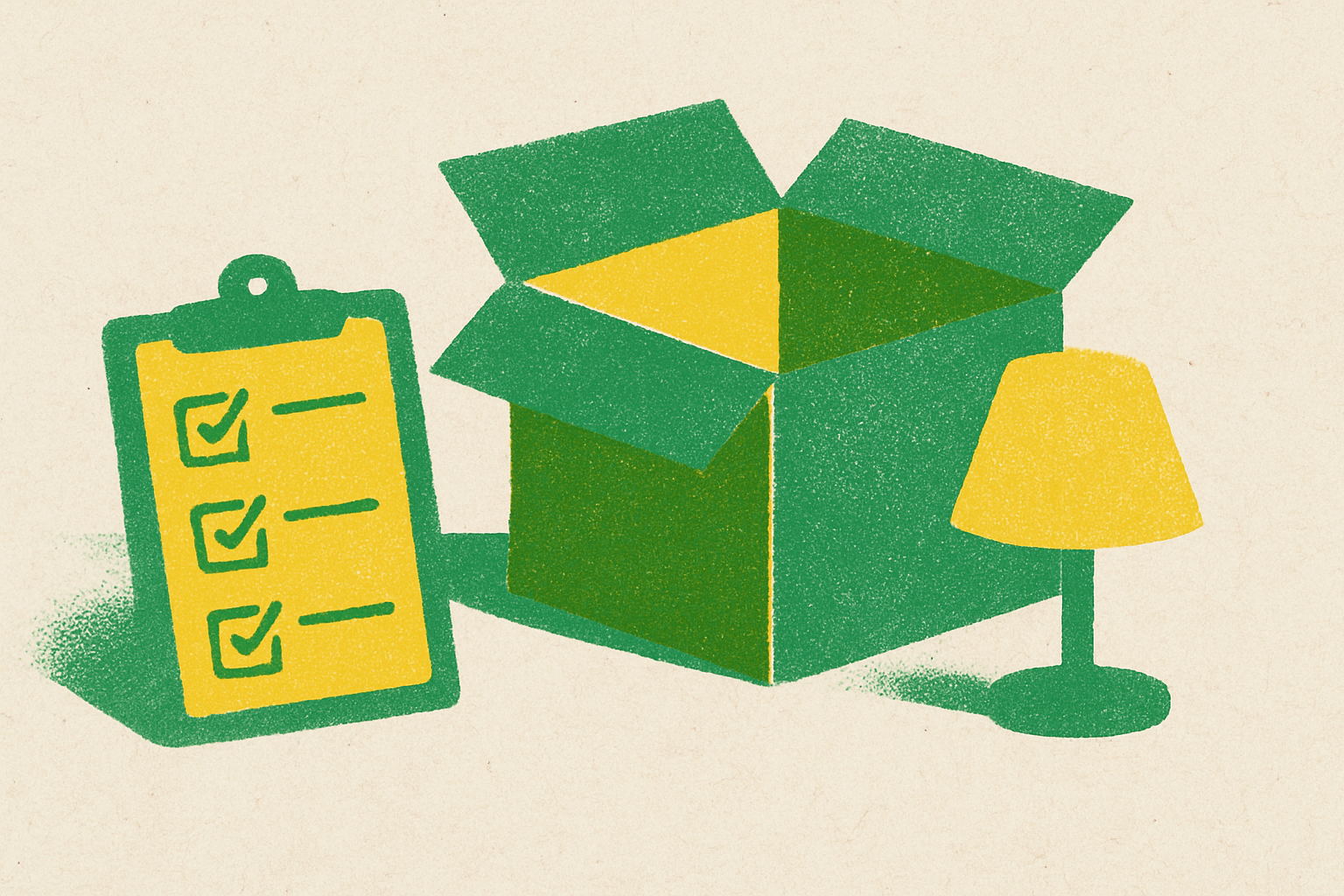
The standard four-basket method still works as a starting point: "Put Away," "Throw Away," "Put in Storage," and "Sell/Donate." Simple. Fast. Gets you moving without overthinking it.
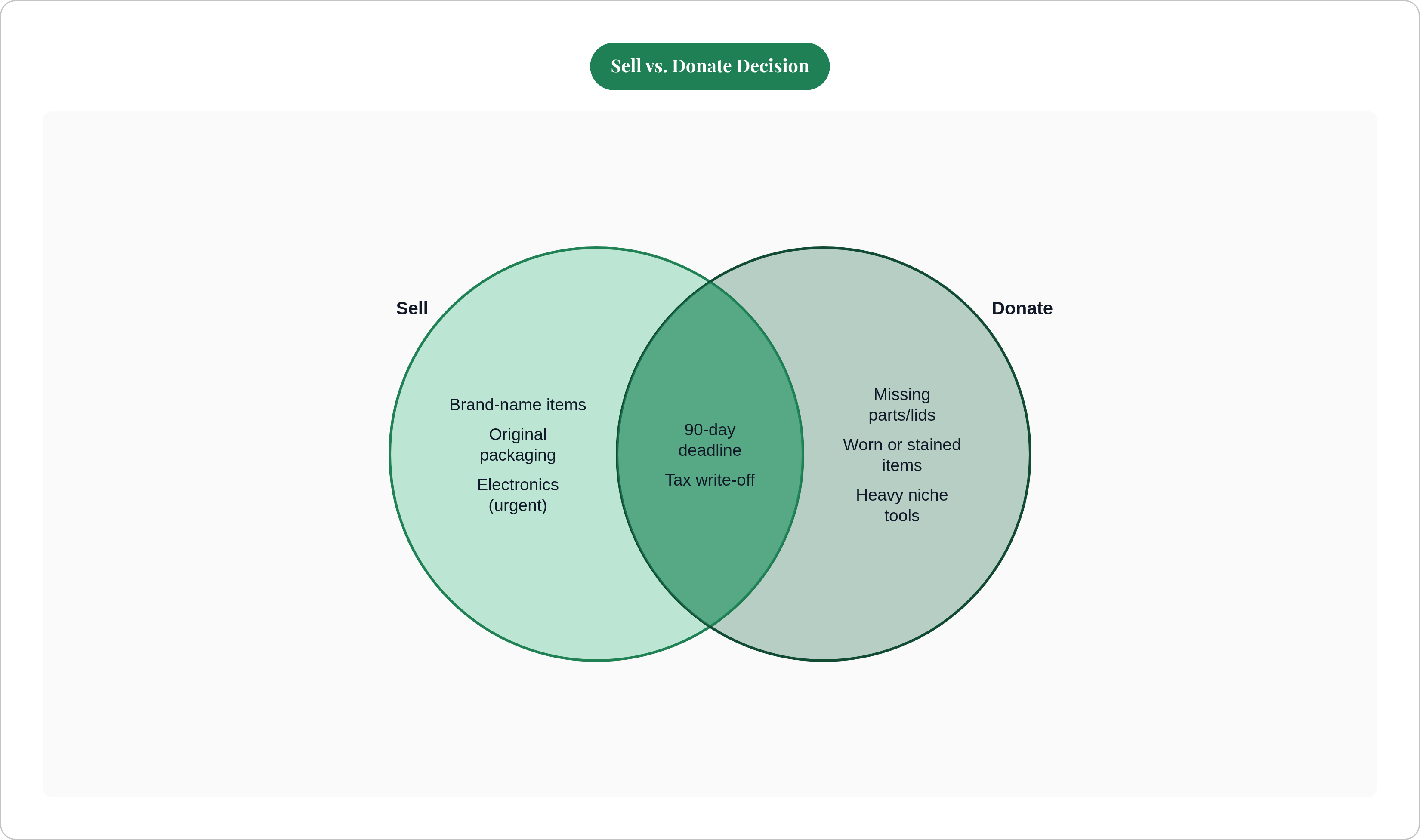
But if you're actually trying to extract value, you need one amendment. Split that last basket into two distinct piles.
- Sell: Items worth the effort to photograph, write up, and list.
- Donate: Items better handed off for a tax write-off than a listing fee.
That split sounds minor. It isn't. It changes every decision you make at the sorting stage, and it keeps you from building a sell pile full of things that will never actually sell.
Here's how to make the call in the moment, without agonizing over every object.
The 20/20 rule is your fastest fence-sitter test. If you could replace the item for $20 or less, or replace it in under 20 minutes, it goes in the discard pile — like a bad first draft, it's just not worth revising. No deliberating. This one rule alone will save you from photographing a dozen things that earn you four dollars apiece.
Do the math at the sorting stage, not later. Most used everyday goods sell for 20 to 40 percent of what they originally cost. Run that number in your head. If the result wouldn't feel worth the time it takes to list the thing, donate it now and keep moving.
Set a 90-day hard deadline before you start. Before the item has been sitting in a corner for two months — set it before. If something hasn't sold within 90 days of listing, you donate it and take the write-off. Decide this upfront so it isn't a judgment call you revisit every time you walk past the pile.
Keep original packaging, accessories, manuals, and chargers. Including them can add a real bump to your final price, sometimes 10 to 20 percent. Whether you actually have them should factor into which pile an item lands in at the sorting stage, not as an afterthought when you're already writing the listing.
How to price anything you pull out of any room
There is one rule here that matters more than everything else: price from sold listings, not active listings. What a seller is asking and what a buyer actually paid are completely different numbers. One reflects hope. The other reflects the market. Only one of them is useful to you.
On eBay, filter to "Sold items." On Facebook Marketplace, look for items marked sold or pending. That data is what you're working from.
Google Lens is a fast first move before you even get to sold listings. Point your phone at any branded item. It returns an accurate product name in seconds, which you can then plug into eBay to pull real comps. Skipping this step and guessing at a product name costs you time and often results in a bad price.
AI valuation tools have gotten genuinely accurate on common items, reliable enough to make confident on-the-spot pricing decisions for everyday categories without manually researching every single thing. That matters when you're sorting a whole house, not just a junk drawer.
Once you have a price in mind, build in a 10 to 15 percent negotiation buffer above your true walk-away number. This is especially true on Facebook Marketplace, where making an offer is just part of the culture. Price accordingly and let people feel like they won something.
Then set a repricing schedule and stick to it:
- No sale in two weeks: Drop roughly 10 percent.
- No sale by 60 days: Drop 15 to 20 percent.
- No sale by 90 days: Donate and write it off.
The longer an item sits unsold, the more it quietly eats into the time you saved by listing it in the first place.
Bedroom: the room most sellers underestimate
Bedrooms feel personal, so sellers skim the surface and move on. That's a mistake. The bedroom is often the highest-value room in the house per square foot of closet space, and it's where jewelry, designer accessories, quality linens, and forgotten electronics accumulate without anyone really noticing.
High-value targets to pull and actually look at:
- Jewelry and accessories, including costume jewelry (bundles move well)
- Designer or name-brand clothing and shoes
- Quality bedding and linens in good condition
- Unused or duplicate small electronics: chargers, earbuds, fitness trackers
- Watches, sunglasses, and handbags
Closet rule: Aim to remove at least 50 percent of what's stored there. This pays off twice. Buyers open closet doors, and visible space reads as value when you're selling the home. You're solving two problems at once.
Condition is what actually determines whether clothing sells. Anything worn thin, pilled, or stained goes straight to donate, no negotiation. Vintage and Y2K fashion, limited-release pieces, and anything with a visible brand logo earn real premiums when the condition holds up. Photograph labels and tags prominently. Don't hide the logo in a corner of the frame.
For clothing listings, group similar sizes or brands into bundles. One listing instead of twelve. Buyers hunting for a haul will pay more per item than most individual listings would earn, and you spend a fraction of the time listing it.
Kitchen: high traffic, high yield, faster to sort than it looks
Start with countertops. Small appliances that haven't been touched in months are the first and easiest sell candidates. If it's been sitting there collecting dust since last winter, it's a listing, not a kitchen tool.
Cabinet audit targets:
- Duplicate appliances (two toasters, two coffee makers, pick one)
- Single-use appliances (panini press, bread machine, juicer; be honest with yourself here)
- Mismatched or excess dishes, glasses, and cookware
- Unused gadgets taking up drawer real estate
Brand matters more in kitchens than in almost any other category. KitchenAid and Dyson products retain value and have loyal buyer bases. Before you donate anything with a recognizable name on it, spend 30 seconds on eBay sold listings. That habit has a way of changing your mind.
Photograph small appliances plugged in and running when possible. It removes the buyer's biggest concern immediately: does it actually work? A photo of a blender sitting on a counter answers nothing. A photo of it running answers everything.
What to donate without listing: mismatched plastic containers without lids, anything missing parts, anything you can't fully describe as "complete and working." The sell/donate split saves serious time in kitchens. Don't fight it.
One practical bonus: the cleared kitchen counter is the best photographing surface in your house for items from other rooms. Flat, bright, neutral. Once the kitchen is done, that surface becomes your studio.
Living room and common areas: bulky items that sell locally
The living room and dining room carry the most visual weight in listing photos when you sell the home. Clearing them first improves those photos and gives you clean space to photograph your own resale items. Two problems, one effort.
High-value targets:
- Furniture in good condition (sofas, side tables, shelving, dining sets)
- Lamps and decorative lighting
- Wall art and mirrors
- Board games, books, and media (DVDs, vinyl records)
- Decorative items and collectibles
Furniture and large items belong on local marketplaces. Facebook Marketplace and local buy/sell groups are the right channel. Buyer picks up. No shipping. No trying to figure out how to box a sectional sofa — that's a puzzle with no good solution, like trying to gift-wrap a kayak.
Collectibles are genuinely unpredictable. Some categories appreciate. Others are nearly unsellable despite looking like they should be worth something. Check eBay sold listings before assuming either way. The research takes 30 seconds and saves you the hassle of a listing that sits forever.
Items that feel decorative but carry hidden value: quality audio equipment, vintage home goods, mid-century furniture. Run a Google Lens check before anything in this category hits the donation pile.
Kids' rooms and playrooms: bundle strategy over individual listings
Kids' rooms accumulate fast, and most individual items have low enough value that listing them one by one will eat your entire week. The answer isn't skipping the room. The answer is bundling.
High-value targets worth listing individually:
- Lego sets by theme or as complete sets (they hold value remarkably well and have a dedicated buyer base)
- Gaming consoles and games (retro systems like NES, Super NES, Nintendo 64, and Game Boy stay in steady demand)
- Montessori and educational toys from recognizable brands
- Name-brand kids' clothing in good condition
Bundle everything else. Group toys by type or age range. Group clothing by size and gender. Buyers hunting for a haul will pay more per item than individual listings would earn, and you write one listing instead of thirty. That math adds up fast when you're staring at a room full of plastic.
The brick-and-mortar shortcut: Once Upon a Child pays cash on the spot for kids' clothes, toys, books, and baby gear. They typically pay 30 to 40 percent of their expected resale price. That's not a great margin, but it beats spending two hours listing individual items that sell for three dollars apiece. When you just want the room cleared, it's a real option.
If you have storage and aren't in a rush, toys picked up in summer can sell at a meaningful markup in Q4. Worth flagging. Worth acting on if you have the patience for it.
Home office and tech: fastest-depreciating items, highest urgency to list
Electronics lose value faster than almost anything else in your home. This is the room most sellers save for last. It should be the first room they actually deal with.
Used electronics sell for 30 to 60 percent of retail at best when listed promptly. That range shrinks every time a new model releases. Every month you wait, the price floor drops a little more. There's no version of "I'll get to this eventually" that works out well for electronics.
High-value targets:
- Smartphones (even older models sell; check eBay sold listings by exact model and storage size before pricing)
- Laptops and tablets
- Monitors, keyboards, and peripherals
- Cables, adapters, and accessories (bundle these rather than list individually)
- Office furniture if it's in good condition
Practical prep before listing any electronics: factory reset all devices. Gather original chargers and cables. Photograph the screen turned on. That last step alone removes a significant amount of buyer hesitation, and it takes about 10 seconds.
AI photo-identification tools are especially accurate on branded electronics with visible model numbers. It's one of the easiest categories to value from a single photo, which means you can move through this room faster than almost any other.
Garage, basement, and storage spaces: the hardest rooms and the most overlooked value
Sellers who've been in a home more than ten years often find their most valuable inventory here. They also find their most overwhelming spaces. Those two facts are directly related, and neither one cancels out the other.
Buyers will open the garage door. They need to see functional, usable space. Thinning this room helps the home sale and generates sellable items simultaneously. You are working two problems at once, which is the best possible situation when you're short on time.
High-value targets:
- Power tools from known brands (DeWalt, Milwaukee, and Makita hold value well; generic tools, less so)
- Outdoor and sporting equipment (bikes, kayaks, camping gear, golf clubs)
- Lawn and garden equipment in working condition
- Holiday and seasonal decor (check for vintage or collectible pieces before donating anything)
- Boxes of stored items that haven't been opened in years
That last category has its own rule. If a box hasn't been opened since your last move, open it now. These are the most likely sources of items that were set aside as valuable and then completely forgotten. Treat every sealed box as a mystery worth solving, because occasionally it actually is.
For large equipment, local pickup via Facebook Marketplace removes the shipping problem entirely. List it, price it right, and let the buyer handle transport. Don't make this harder than it needs to be.
The donation threshold is higher in this room than anywhere else. Tools in poor working condition, items too heavy to ship and too niche for local demand, things that have been sitting in a corner since the previous owner left them: these are better donated than listed. Don't let the garage become a graveyard of optimistic listings that never move.
Turning sorted items into actual listings without the process stalling
The most common failure point in this entire process isn't motivation. It's friction. Items get sorted into the sell pile and sit there for months because listing feels like a separate, effortful project that never quite makes it onto the calendar.
The sort creates intent. The listing creates cash. They are not the same thing, and one doesn't automatically lead to the other.
Batch photography is how you break the stall. Clear one consistent surface (the kitchen counter is already done, remember), set up once, and photograph every sell-pile item in a single session. One setup. Every item. Done in an afternoon. It removes the "I'll do it later" loop because there is no later anymore. It's already on the schedule.
What a good listing actually needs:
- Accurate item name (use Google Lens if you're not sure)
- Condition stated honestly, not generously
- What's included: accessories, original packaging, chargers
- A price anchored to sold comps, not what you paid for it in 2019
AI listing tools can take a photo of an item and generate an identification, condition grade, and full listing description. That removes the manual writing step that stops most casual sellers cold. Reclaim, a mobile app that turns a single photo into a priced, written listing published to both eBay and Facebook Marketplace in one tap, is one option built specifically for casual sellers who don't want to write anything manually. eBay's AI-powered listing tool does this natively in the app for items sold on its platform. If writing listings is your personal sticking point, that's the tool to reach for first.
Match your marketplace to your item type:
- Large furniture and local pickup items: Facebook Marketplace
- Electronics, collectibles, and brand-name clothing: eBay, for a wider buyer pool
- Kids' items in volume: local buy/sell groups or Once Upon a Child for speed
The 90-day rule from the sorting section applies here too. Set a hard end date at the time of listing and put it in your calendar. Before the item has been sitting in a corner for two months — right now, before you forget. Honor it when it comes.