Free Websites to Sell Items Online
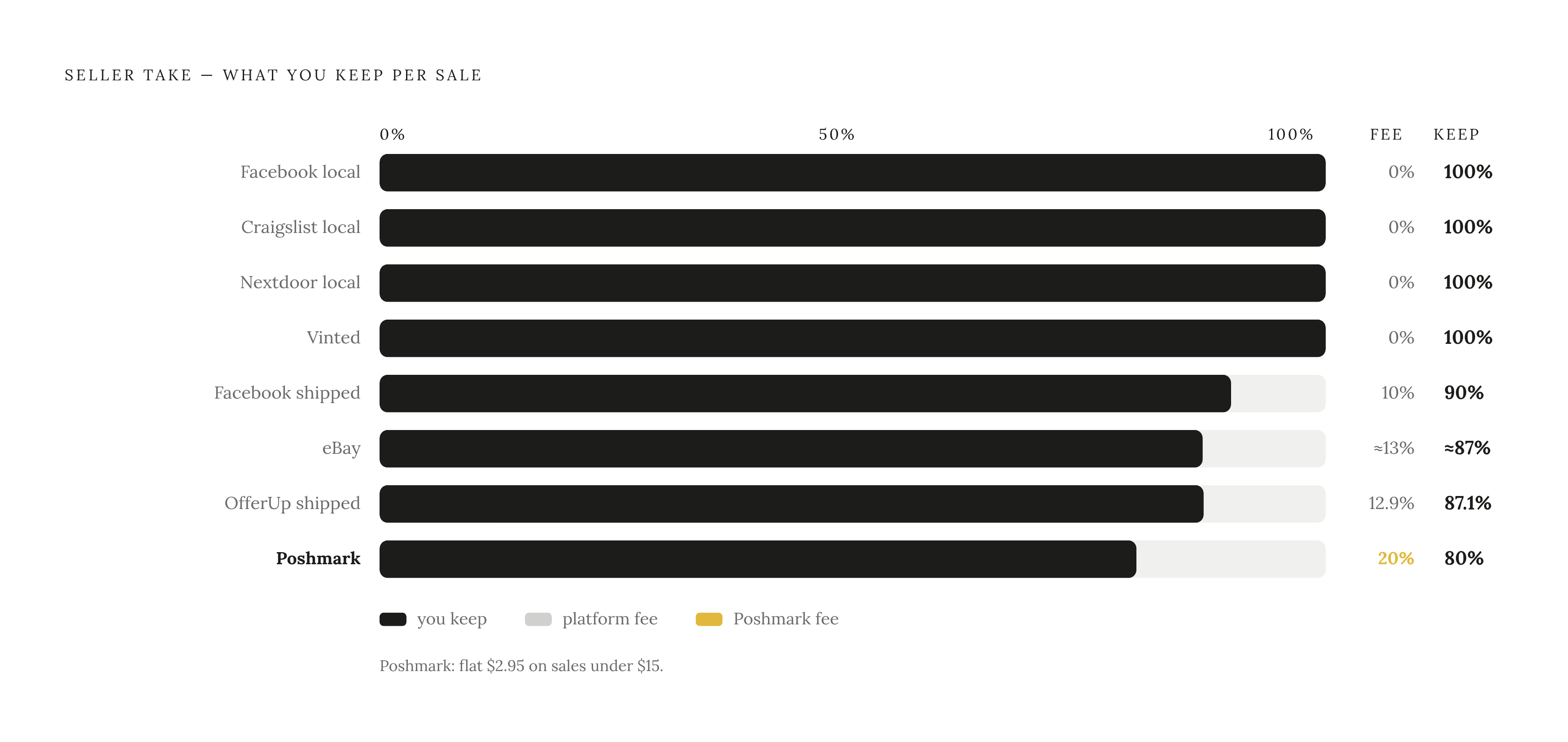
Most "free" platforms charge commissions that can eat 10 to 20 percent of your sale.

"Free" in online selling almost always means free to list. It does not mean free to transact. Think of it like an iceberg: the listing is the tiny tip above water, and the commission is the mass lurking beneath.
Most major marketplaces let you post at no upfront cost, then take a cut only after something sells. No sale, no fee. That sounds clean until you see those commissions sitting anywhere between 10 and 20% of the sale price. Know that number before you set your asking price, not after someone has already messaged you an offer.
Two exceptions worth flagging early:
- Local pickup sales on Facebook Marketplace, Craigslist, and Nextdoor are genuinely free, start to finish. No commission if there is no shipping involved.
- Vinted charges sellers zero fees. The cost burden shifts entirely to the buyer instead.
Every other platform in this piece takes a cut after the sale. Build that fee into your asking price before you list, and work backward from what you actually want to clear. Pricing any other way is just optimism with a time limit.
Platforms built for local, in-person handoff: Facebook Marketplace, Craigslist, and Nextdoor
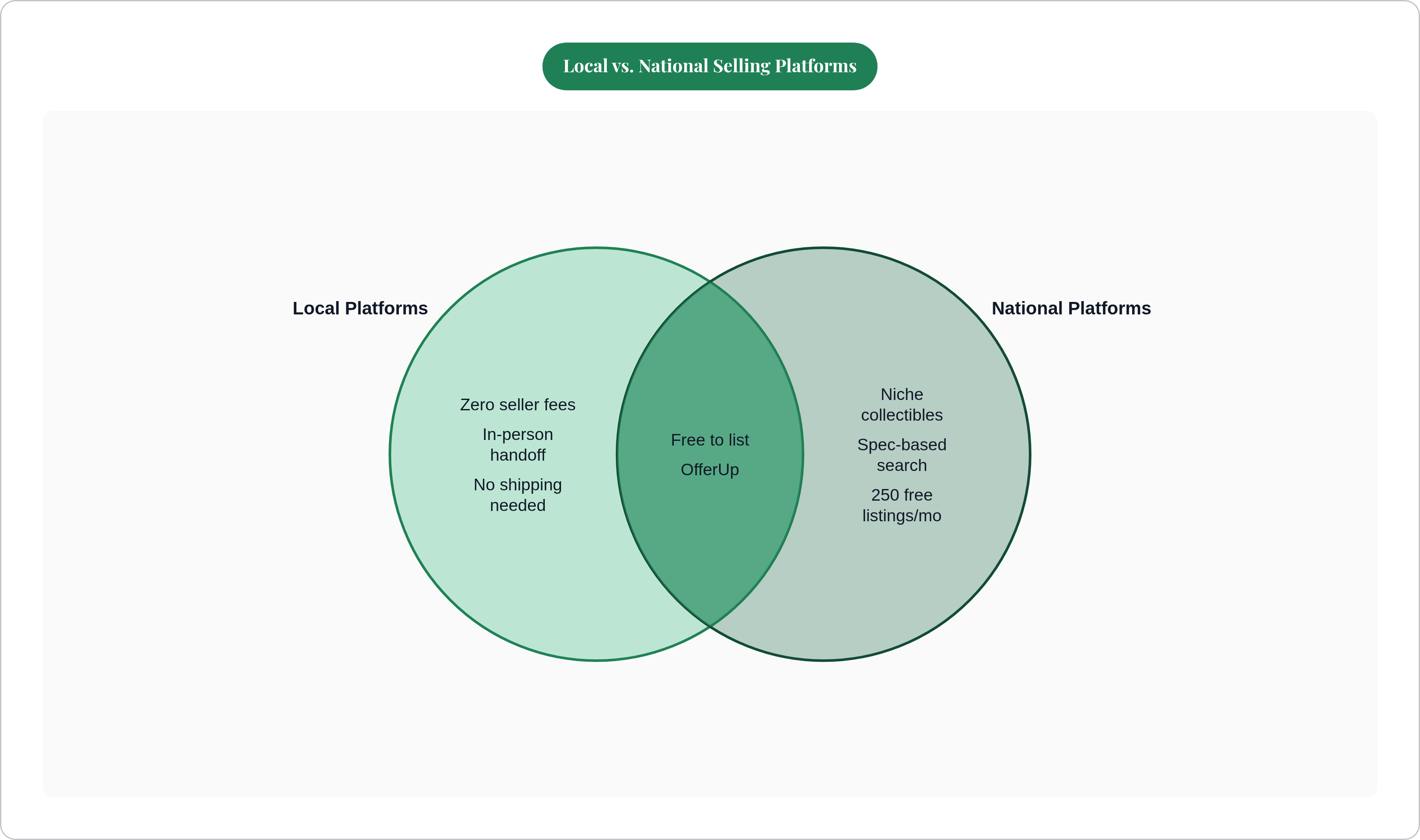
The cleanest path to zero fees is also the most obvious: sell locally, meet in person, skip the commission entirely. For bulky, heavy, or fragile items, this is often the most practical choice. Once you price out what shipping a couch or a riding mower actually costs, local handoff stops being a preference and starts being the only option that makes any financial sense.
Facebook Marketplace
Facebook Marketplace has over a billion users. The audience is already there, already on their phones, already searching. For local pickup, listing and selling are completely free. The 10% fee only kicks in if you use Facebook Checkout for shipped sales, so stick to local pickup and the platform costs you nothing.
Furniture, appliances, baby gear, large electronics. Those are the items that belong here. Anything where shipping costs would eat the profit, or where a buyer reasonably wants to see it in person before handing over cash.
On this platform, a clean photo and a firm price will do more work than any description you write. Buyers browse visually and message fast. A blurry photo with a vague price gets skipped. A clear photo with a real number gets a message within the hour. I have watched decent items sit for two weeks because the seller used one dim, angled photo and wrote "make offer." Same item, better photo, asking price in the title. Gone in a day.
Craigslist
Craigslist is older, plainer, and still very much alive for the right categories. Listings in most household categories are free. (Vehicles, jobs, and services charge fees, but that is a different conversation if you are clearing out a garage.) Listings stay active 30 to 45 days depending on your location.
There are no seller profiles here and no feedback system. Trust gets built through clear photos, straightforward communication, and agreeing to meet somewhere public. Buyers on Craigslist expect to negotiate, so price slightly above your floor and let that conversation happen naturally.
Because search here is entirely text-based, keywords matter more than anywhere else. Put the brand, model, size, and condition right in the title. Burying those details three sentences into the description means most buyers will never see them. The title is the only thing most buyers read before deciding whether to click.
Appliances, vintage furniture, tools, anything large or oddly shaped that would be a shipping nightmare. Craigslist still handles that category better than most.
Nextdoor
Nextdoor is the most accountability-forward of the three. Users are verified to a real address, which means the person messaging you about your patio set is genuinely your neighbor, and that community layer carries real weight as a feature.
The trade-off is reach. Nextdoor is intentionally small. It is not the right place for rare collectibles or anything with a national buyer pool. It is ideal for kids' bikes, outdoor furniture, garden tools, and the kind of stuff a family two streets over would actually want. Transactions here are fast and low-drama, which is its own kind of value.
The common thread across all three local platforms: they reward items that are heavy, cheap to photograph, and painful to ship. The friction that would otherwise make selling those things unprofitable mostly disappears.
eBay and OfferUp: when your item has a buyer somewhere in the country, not just down the street
Some items have a tiny local market and a large national one. Specific model numbers, niche electronics, collectibles with a particular following. Local platforms will underserve those items badly, and you will end up taking less than you should because the right buyer simply was never going to drive to your neighborhood.
eBay
eBay gives casual sellers 250 free listings per month before any listing fees apply. For most people clearing out a house, that ceiling is irrelevant. Total fees for most categories run around 13% per sale once you combine the final value fee and payment processing. Meaningful, but not a surprise if you know it going in.
Electronics, collectibles, hard goods, anything with a model number that buyers search for by specification. That is where eBay earns its place. The auction format is worth using when you genuinely suspect something is rarer or more desirable than you realize, but for most items a fixed-price listing is simpler and faster.
eBay also has the deepest sold-price history of any platform, which makes it useful as a pricing research tool regardless of where you ultimately list. More on that below.
OfferUp
OfferUp is mobile-first by design. Listing from your phone is the intended workflow, not a workaround. Local sales are free. Shipping transactions carry a 12.9% service fee, which puts it roughly in line with eBay for shipped items.
What makes OfferUp genuinely useful is the flexibility. You can list for local pickup and leave it open to shipping if no nearby buyer materializes. It bridges both markets without forcing you to commit upfront.
General household goods, mid-range electronics, items that sell locally or nationally depending on who is looking. That is the OfferUp sweet spot.
The fee math between eBay and OfferUp for shipped sales is similar. The real difference is how buyers behave. eBay buyers search by specification and usually know exactly what they want. OfferUp buyers browse more casually. That distinction should actually change how you write your listing title.
Fashion-specific platforms and why clothing sells differently than everything else
Clothing is the dominant resale category by a wide margin. The buyers are numerous and motivated. And unlike someone shopping for a used blender, a meaningful chunk of secondhand clothing buyers are specifically seeking out resale over retail, for reasons beyond price alone. That shifts the dynamic in ways that matter for how you present and price things.
The fashion resale ecosystem has also fractured into distinct niches. Listing the same item on the wrong platform is a real mistake. Slower and less profitable than it needs to be.
Poshmark
Poshmark takes 20% of the sale price, or a flat $2.95 for items under $15. That is a real cut. The upside is that fashion items on Poshmark often sell for more than comparable listings elsewhere, because the audience expects to pay for curation and presentation.
Shipping is handled automatically. A prepaid label goes to the seller after the sale, the buyer pays a fixed $6.49 shipping cost, and the package needs to stay under five pounds.
Community activity drives visibility here, and that part is not optional if you actually want things to move. Sellers who share their own listings and engage with others surface more often in search. The sellers who do well on Poshmark treat it more like tending a small storefront than posting a classified ad and walking away.
Name-brand clothing, shoes, bags, home decor. Items where brand recognition and condition photos carry most of the weight.
Vinted
Vinted is the only major fashion resale platform where sellers keep 100% of the sale price. Zero seller fees. All costs, including buyer protection and shipping, land on the buyer.
The trade-off is real. Buyer fees can make Vinted items feel more expensive to price-sensitive shoppers, which can slow things down at certain price points. But for sellers moving a lot of items, the zero-fee structure adds up fast in your favor.
Everyday used clothing, shoes, and accessories at accessible price points. That is where Vinted works best.
Depop
Depop functions more like Instagram than a traditional marketplace. Discovery is social, not search-driven, and that changes what matters. Photography and aesthetic presentation count for more here than on any other platform in this piece. A great photo of a mediocre item will outperform a mediocre photo of a great item, reliably and repeatedly.
Vintage, Y2K, and streetwear aimed at buyers who are shopping for style identity, not just a bargain. If an item has a visual story, Depop is where that story actually gets rewarded.
The practical split for clothing: Poshmark for brand-name pieces where you want the highest per-item return; Vinted for volume where keeping every dollar matters; Depop for vintage or distinctive pieces with a strong visual angle.
Etsy and Whatnot: platforms built for specific item types, not general selling
Some items disappear on general marketplaces. They get buried among mass-produced goods and generic search results. A few platforms exist specifically to serve buyers who already know they are looking for something unusual, and finding those buyers is worth the extra step.
Etsy
Etsy had nearly 87 million active buyers as of late 2025. That is a large, purchase-ready audience looking specifically for handmade goods, vintage items, and distinctive finds. Specifically handmade, genuinely vintage (20 years or older), or craft supplies — general secondhand and random household goods do not belong here.
Listing costs $0.20 per item, plus transaction and payment processing fees on top. The barrier is low enough that it rarely factors into the decision.
Jewelry, ceramics, art, vintage home goods, anything with a maker story or genuine age. If your item belongs on Etsy, the platform's built-in audience is genuinely valuable. If it does not belong there, the listing will just sit quietly and go nowhere.
One pricing note worth knowing: Etsy does not display sold prices directly. "Best Seller" badges and third-party research tools can help identify what actually moves at what price point, but the data is less transparent than on eBay.
Whatnot
Whatnot is live auction. Sellers go on camera and auction items in real time to a live audience. When multiple bidders compete live, rare or desirable items can exceed what any fixed asking price would have captured. That ceiling is real, and it is one of the more genuinely interesting dynamics in secondhand selling right now.
Trading cards, Funko Pops, vinyl records, collectibles where buyer excitement and competitive bidding are part of the experience. That is the Whatnot audience.
The honest caveat: Whatnot rewards sellers who show up consistently and build a following. It is not designed for someone with one or two things to move. The format suits sellers who know exactly what they have, know who wants it, and plan to be back next week with more.
Neither Etsy nor Whatnot is where you start if you are clearing a garage. Both platforms reward specificity, and both will greet you with complete silence if your item does not belong there.
How to figure out what your item is actually worth before you list anywhere
The most common pricing mistake is looking at what other sellers are asking instead of what buyers are actually paying. Those are different numbers, and on some platforms the gap between them is genuinely embarrassing.
Active listings show what sellers hope to get. Sold listings show what buyers actually paid. Across eBay in particular, asking prices can run 30 to 80% higher than what actually sells. If you use active listings as your pricing benchmark, you will almost certainly overprice your item and then spend two weeks wondering why nobody is biting.
Using eBay's sold listings as a free pricing tool
eBay's sold-price history is one of the most useful free tools available to any seller, regardless of which platform you ultimately list on.
Search for your item on eBay, then look for "Sold Items" under the "Show Only" filter in the left sidebar. Every price you see there represents a real buyer paying a real amount. That is your actual market, not the wishful thinking column.
If you are browsing "Completed Listings" instead of "Sold Items," pay attention to the colors: red prices indicate listings that ended without a sale, and green prices indicate a completed transaction. Always confirm you have the right filter active before you anchor to a number.
One caveat worth knowing: when a seller accepted a Best Offer, eBay's standard sold view shows the original asking price with a strikethrough, not what was actually paid. That number can be meaningfully misleading. To see the real transaction price, use Terapeak Product Research, which is available in the Research tab of eBay Seller Hub. It shows actual accepted offer prices and sell-through rates, and it is free to eBay sellers.
The same logic applies everywhere else. Poshmark and Depop both show sold-price history on item pages. Look at that data before you set a price, not after two weeks of silence have already told you something is off.
And always build the platform fee in before you post. If eBay takes around 13%, a moderate asking price nets you noticeably less after fees. Work backward from what you want to clear, not forward from whatever sounds like a round number.
Reducing the friction that stops most people from listing in the first place
The secondhand market is growing. The platforms are accessible. Buyers are actively looking. The bottleneck is almost never the demand side. It is the listing itself, sitting undone on a to-do list next to "call dentist" and "organize the junk drawer."
Most people who intend to sell never actually do, because the process compounds in a way nobody warns you about. Photograph the item. Figure out what it actually is. Research a fair price. Write a description. Pick a platform. Then repeat that entire cycle for everything else in the pile. The stack of good intentions just sits there, like a garage sale that never quite made it to the driveway.
Photo-first listing tools
Some tools are designed around this specific problem. You take a photo, and the AI identifies the item, assesses condition, writes the listing description, and suggests a price based on real market data. No research sprint. No writing from scratch. The same listing can go to multiple marketplaces from a single photo without re-entering information for each platform separately.
For first-time sellers who are genuinely unsure what they have or what it is worth, that kind of shortcut has real value. The alternative is an hour of eBay rabbit holes that usually ends with a price that is either too high or too low and a description that reads like a ransom note.
Habits that make the process sustainable
A few simple shifts reduce the drag significantly:
- Photograph items in batches. Set aside one session to work through a pile rather than stopping to photograph each thing as you go. Momentum is real.
- Check sold comps on eBay before you post. It takes five minutes and saves the frustration of anchoring at the wrong number before your first lowball offer rolls in.
- Match the item to the platform before you list. Vintage clothing on Craigslist and kids' outdoor toys on Depop are both wrong fits. A minute of platform matching saves days of waiting for a buyer who was never coming.
- Start with the platform that fits the item best. If it does not sell there, move it. Platform loyalty is not a strategy when you are just trying to clear some space.
The gap between "meaning to sell this stuff" and actually selling it is almost entirely a process problem. Fix the process and the rest follows.