Where to Sell Used Clothes for Cash
Different platforms attract different buyers willing to pay different prices for the same piece.
This is the part most sellers never figure out, and it costs them.
The secondhand clothing market is big and getting bigger. U.S. online resale alone is projected to hit $40 billion by 2029, growing at 18% annually. A 2025 OfferUp survey found that 54% of U.S. adults sold at least one preowned item in the past year. Most of them left money on the table. Not because they did anything dramatic wrong. Because they defaulted to one platform for everything and called it a day.
Think of each resale platform like a different neighborhood shop. Same jacket walking through the door, completely different customer on the other side of the counter. The person scrolling Facebook Marketplace at 9pm is not the same person searching eBay for a specific vintage piece by brand and year. They want different things, they'll pay different prices, and pretending otherwise is expensive.
Here's who's actually on each platform:
eBay buyers already know what they want. They're searching for it by name.
Facebook Marketplace users are browsing local deals by price. Brand loyalty isn't really part of it.
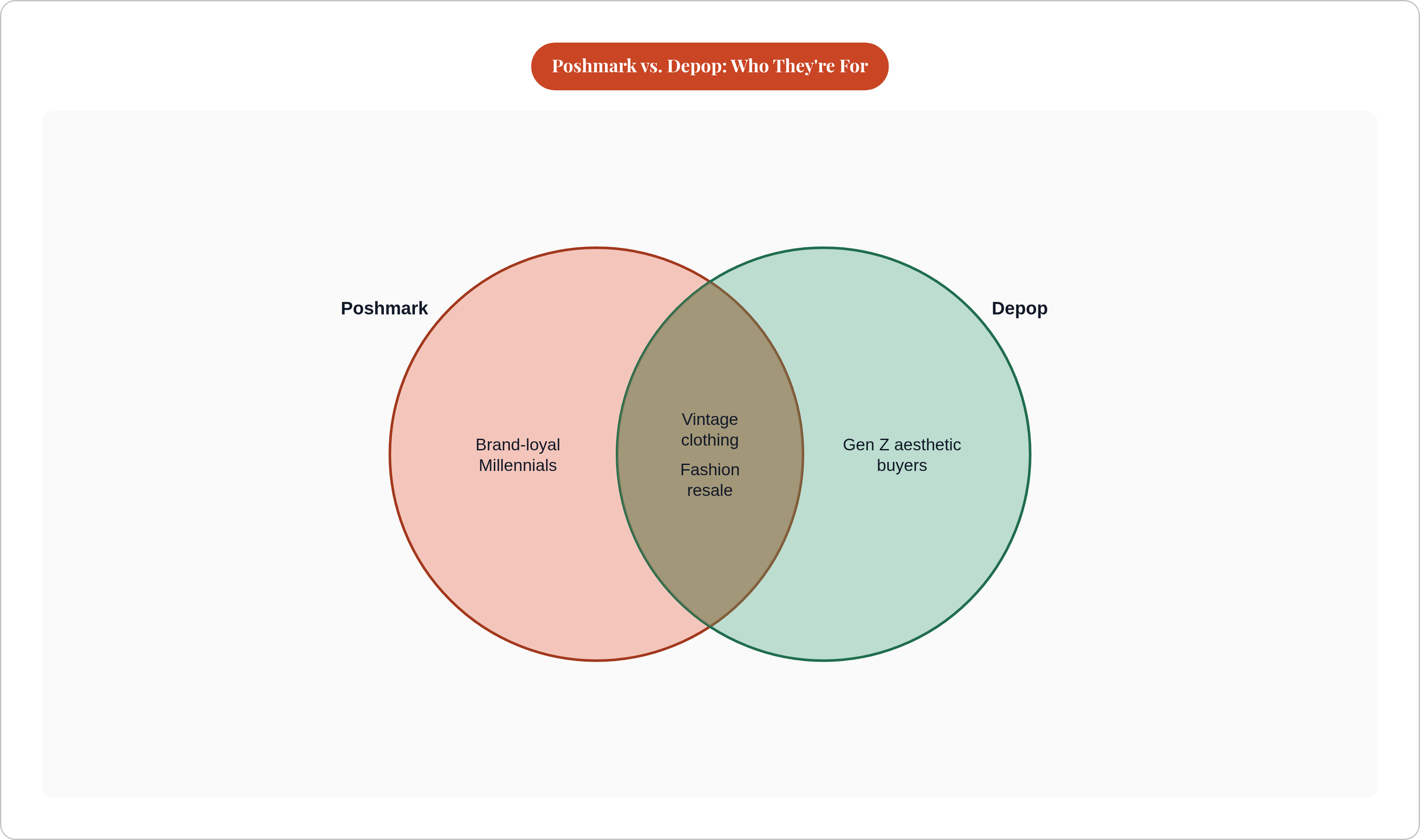
Poshmark's roughly 80 million users skew Millennial and shop by label. They follow specific brands and search for ones they already trust.
Depop's roughly 30 million users are predominantly Gen Z, hunting for vintage and streetwear, and they will pay for the right aesthetic.
Different platforms, different buyers, different price ceilings. The real skill isn't listing. It's matching.
One thing before we get into platforms: stop pricing from active listings. Active listings show seller optimism. Sold listings show what buyers actually paid. An item with fifty listings at a high asking price and sold comps at $40 is a $40 item, regardless of what the hopeful sellers think. eBay has the largest sold listing database of any resale platform. Before you list anything, anywhere, go there first. Filter by sold. That's your baseline.
Facebook Marketplace for Local, Everyday Clothing You Want Gone Fast
Facebook Marketplace has roughly a billion users across 70 countries. Even in a mid-size city, the local reach is real. And for certain types of clothing, local reach is all you need.
When you sell in person, you keep the full proceeds of the sale. No fees. A shipped option exists, but Facebook charges fees on those transactions, and for lower-value items that changes the math pretty fast.
Where it makes sense:
Everyday brands like Gap, Old Navy, H&M, and Target house brands
Kids' clothing, which moves fast locally and doesn't warrant the shipping hassle
Bundled lots ("6 pairs women's jeans, size 8, $30 for all of it")
Anything heavy or bulky where shipping costs eat the margin before you even start
Buyers here aren't searching by brand. They're scrolling photos and filtering by price. Items priced right move fast. Items priced too high just sit there. The upside is real: cash in hand, same day, no packaging, no post office.
Where it falls short: there's no brand-premium audience here. If you have a Lululemon hoodie or a vintage Levi's jacket worth real money, Facebook Marketplace is not where that value gets realized.
eBay for Vintage, Niche Brands, and Anything with a Specific Buyer Somewhere in the World
eBay's roughly 182 million active buyers give it something no other platform can touch: depth. For items with a specific, searchable identity, that depth is everything.
Say you have an American vintage piece from the 1980s. The right buyer is in Berlin. Facebook Marketplace can't reach them. Poshmark won't either. eBay can. It's a needle-in-a-haystack situation where eBay just happens to stock the world's largest haystack, and the buyer is already in there, searching for exactly what you have.
Where it makes sense:
Vintage and Y2K clothing
Niche brands with a dedicated following
Menswear, which is underserved on most fashion-forward platforms
Anything rare, collectible, or specific enough that the right buyer exists somewhere, just not necessarily near you
The auction format is worth knowing about. For genuinely rare or sought-after items, letting buyers compete can push the final price above any fixed listing. For common items, a fixed price makes more sense. Fees run roughly 10 to 20% depending on category and seller tier, and eBay offers a set number of free listings per month.
One pricing note specific to eBay: don't average the full range of sold prices. Look at the most recent cluster of sales. That reflects current demand, not what something sold for two years ago when the market was different. Price at the median of those recent sales and ignore the outliers on either end.
Where it falls short: listing on eBay takes more setup than other platforms, and fashion-forward buyers often browse Poshmark or Depop before they ever open eBay.
Poshmark for Contemporary Brands and Designer Pieces with an Audience That Shops by Label
Poshmark's audience is brand-loyal in a way that's different from anywhere else. These are shoppers who type "Lululemon Define jacket" or "Free People flowy dress" into the search bar because they already know what they want and they're looking for it at a better price. That's a different buyer psychology than someone browsing by price or scrolling by aesthetic, and it creates real price support for the right items.
Mid-range contemporary brands, athleisure, accessible designer pieces. These categories have loyal followings on Poshmark that consistently hold prices higher than you'd see for the same item on eBay.
Performs well:
Lululemon, Free People, Anthropologie
Banana Republic, J.Crew, Madewell
Designer handbags and accessible luxury
Doesn't get rescued by Poshmark's audience:
Fast fashion (H&M, Forever 21, Zara). These depreciate quickly everywhere, and Poshmark's audience is not the exception.
Poshmark takes a significant cut of the sale price, which is the highest fee of the major fashion resale platforms. Buyers pay a flat shipping fee, which removes the logistics from your side entirely. For luxury pieces, Poshmark offers authentication services, which matters when buyer trust is the actual barrier to a sale.
The platform also rewards active sellers. Sharing listings, sending offers to people who've liked your items, staying visible. Sellers who list and disappear often wonder why nothing moves. That's usually why.
Where it falls short: 20% adds up fast. And if you're selling vintage band tees or streetwear, the audience here isn't looking for that.
Depop for Vintage, Y2K, and Streetwear Aimed at Gen Z Buyers
Depop is its own thing. The buyers are younger, the aesthetic rules are different, and discovery works more like Instagram than a traditional marketplace. Algorithmic, visual, scroll-driven. If your listing doesn't stop someone mid-scroll, it doesn't exist.
Gen Z buyers on Depop will pay above-market for pieces that fit the platform's visual culture. A 2002 band tee. A pair of vintage Carhartt pants. A Y2K slip dress. These aren't just clothes to Depop buyers. They're a whole vibe, and buyers will pay real money to wear the right one.
The fee structure is more seller-friendly than Poshmark. Depop takes a lower percentage of the sale price. The tradeoff: you handle your own shipping. No prepaid label system. You box it, weigh it, ship it.
Photos matter a lot here. A well-styled, well-lit photo in the platform's visual language outperforms a flat, technically accurate photo every single time. Natural light, an interesting background, styled on a person or hanger rather than laid flat on a floor. Small thing. Noticeable difference.
The Poshmark vs. Depop decision is actually pretty simple:
Lululemon legging? Poshmark.
2002 band tee? Depop.
Brand loyalty versus aesthetic appeal. Know which one your item is selling on.
Where it falls short: requires more effort on presentation and shipping than Poshmark, and the buyer pool is smaller than eBay for anything niche or searchable.
ThredUp and The RealReal When You Want Cash Without Doing the Selling Yourself
Sometimes the pile is just too big. The idea of photographing 40 individual items sounds exhausting, and you know it won't happen. ThredUp and The RealReal were built for exactly this situation.
ThredUp
ThredUp's Clean Out Kit model is simple. They send you a bag, you fill it, you ship it back, they handle everything else. Listing, pricing, photography, selling. You wait.
Here's what that actually looks like in practice: payout ranges widely, and lower-value everyday items often yield very little. Roughly 38% of accepted items don't sell within the consignment window, and items that don't sell either come back to you or get donated. The timeline from sending your kit to seeing any earnings runs around 10 to 14 weeks.
Best fit for ThredUp: a full closet cleanout where time is the real constraint and you're okay trading maximum payout for zero effort.
The RealReal
The RealReal operates at a different level. Luxury and designer consignment, with in-house authentication. That authentication matters for high-value pieces where buyer trust is the actual barrier. Commission to sellers can reach a high percentage for high-value items, though terms vary by piece and seller tier.
Both platforms trade payout for effort. A seller who photographs and lists their own items will almost always net more. The question is whether your time is worth the difference, and sometimes it clearly is.
Selling in Person at Resale Stores for Instant Cash Without Any Listing
Walk in, hand over the clothes, walk out with cash. No listing, no waiting, no shipping. That's the appeal, and for the right situation it's the right move.
Resale chains and what they're best for:
Buffalo Exchange: pays a percentage of the selling price in cash the same day, or a higher percentage as store credit
Uptown Cheapskate: cash on the spot; does well with brands like Madewell and Nordstrom
Clothes Mentor: buys women's clothing and accessories immediately; strong for Lululemon and Lilly Pulitzer tier pieces
Once Upon a Child: buys children's clothing and gear for immediate cash at locations across the U.S. and Canada
The tradeoff is worth being honest about. Stores buy at a steep discount to what they'll resell for. That's the model. You are paying for convenience and immediacy. Stores are also selective. What they accept depends on season, current inventory, and the buyer's taste that particular day. You can walk in with a bag of perfectly good clothes and leave with half of it still in the bag. It happens.
Local consignment shops add another variable: no payout until the item sells, and acceptance is subjective.
Best fit: brand-name pieces in excellent condition where getting money today matters more than maximizing what you eventually receive. In-person resale works best as a complement to online selling, not a replacement. Right call for the right items. Not the whole strategy.
Matching What You Have to Where You Should Sell It
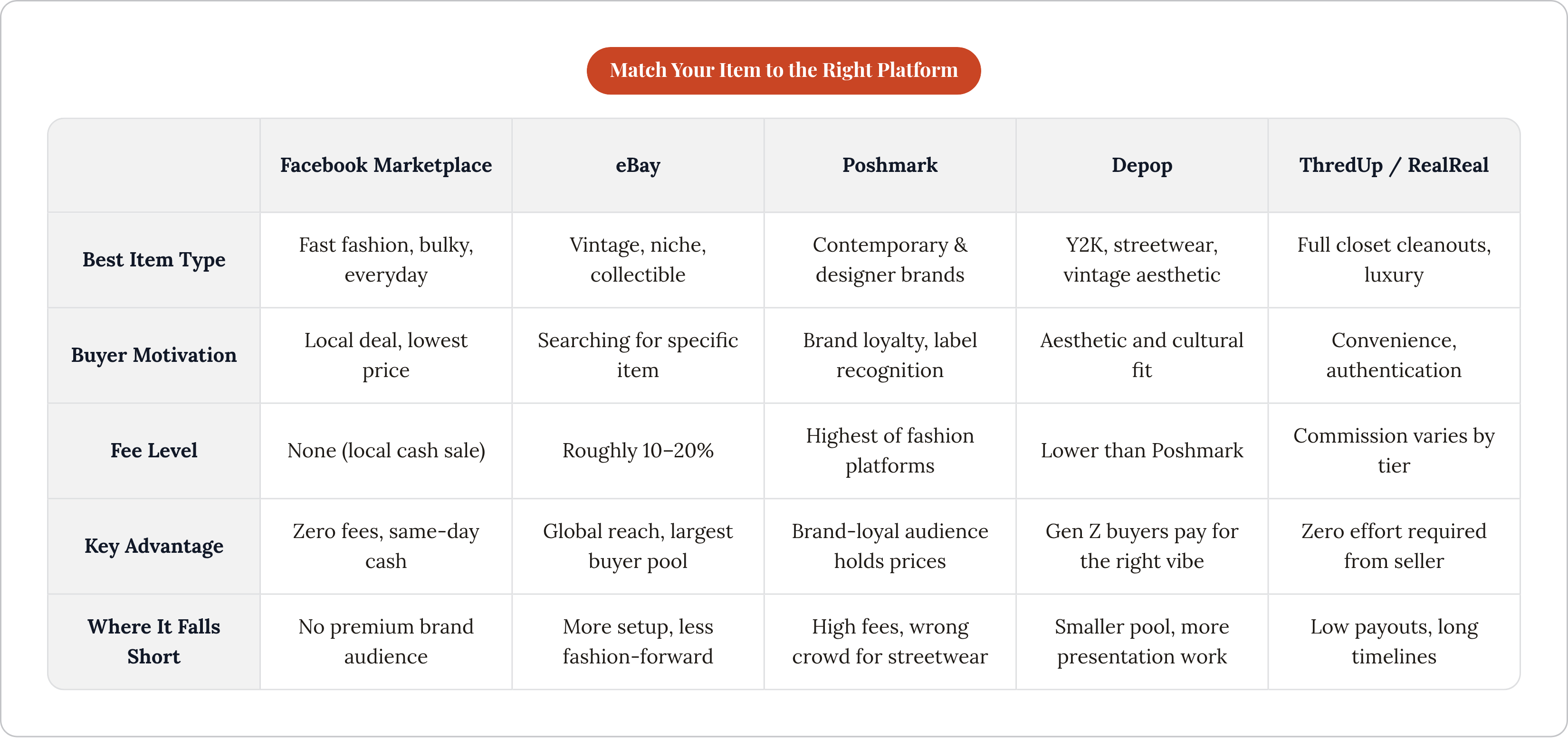
Here's the whole thing condensed into one place.
| What you have | Where to sell it | |---|---| | Fast fashion (H&M, Zara, Old Navy) | Facebook Marketplace local bundles or Uptown Cheapskate for instant cash | | Contemporary mid-range brands (Lululemon, Free People, J.Crew) | Poshmark first | | Vintage, Y2K, streetwear | Depop for aesthetic buyers; eBay for niche or rare pieces with global reach | | Niche, collectible, searchable items | eBay | | Designer and luxury | The RealReal for authentication; Poshmark for accessible luxury | | Full closet cleanout, time is the constraint | ThredUp |
Most people with a mixed wardrobe end up using two or three platforms at once. That's the right move, not a sign that things are getting complicated.
Facebook Marketplace handles bulky, low-value, or heavy items sold locally with zero fees
eBay or Poshmark handles higher-value, shippable pieces worth the extra effort
ThredUp or a resale store catches whatever doesn't warrant individual listing
The switching cost between platforms is real. Tools that let you list across multiple platforms from a single set of photos cut that friction significantly, which is what makes the multi-platform approach actually sustainable instead of just theoretically smart.
How to Price What You're Selling So You Don't Leave Money on the Table
Two pricing mistakes show up constantly.
The first is pricing from retail memory. What you paid for something three years ago tells you almost nothing about what it's worth in the secondhand market today. Depreciation in apparel resale is steep and fast, especially for non-vintage contemporary clothing.
The second is pricing from active listings. Active listings show what sellers hope to get. Sold listings show what buyers actually paid. Those numbers are often very far apart.
How to price correctly:
Go to eBay. Search by brand, garment type, size, and "preowned."
Filter by sold listings. Not active. Sold.
Look at the last 10 to 15 sales. Find where prices cluster. Ignore the outliers on either end.
That cluster is your baseline. Now adjust for platform.
Platform adjustment matters. Fashion items on Poshmark and Depop often sell for more than eBay equivalents because the audience has higher willingness to pay for style. Facebook Marketplace and in-person buyers expect prices below eBay comps.
Adjusting for condition:
Like new or never worn with tags: price at or near the top of your sold comp range
Excellent used condition, minor wear: price at the median
Good condition, visible wear: price 20 to 30% below median comps
Noticeable flaws (stains, pilling, damage): disclose clearly and price accordingly. Buyers find it anyway, and disputes aren't worth the headache.
Fabric matters too. Cashmere and silk consistently command more than equivalent cotton pieces. Polyester blends sit at the bottom of the value range across almost every resale platform.
One last rule: if something has been listed for three to four weeks without a sale, the price is wrong. Drop it by a modest percentage and reassess. If it sits again, drop further or move it to a different platform. Stubborn pricing is how items sit forever and eventually get donated for free anyway. A lower sale beats no sale every time.