How to Bundle Low-Value Items to Make Them Worth Listing
Bundling low-value items transforms unprofitable inventory into a listing worth your time.
The U.S. secondhand market is on track to hit $61 billion in 2026, up from $56 billion in 2025, a jump of nearly a tenth. And yet most sellers still have a drawer of chargers, a bin of kids' books, or a pile of graphic tees they've never bothered to photograph. That drawer isn't a motivation problem. That drawer isn't a motivation problem, it's math.
Anything priced at just a few dollars fails a simple mental test before a seller even opens their camera app. Photography time, writing a title and description, packing it up, hauling it to a mailbox, and paying the platform's cut can add up to more than the item will fetch on its own. Do that math honestly and a cheap phone case starts to look less like income and more like a chore with a coupon attached.
Poshmark makes this arithmetic brutally clear. Items under $15 get hit with a flat $2.95 fee. On a $10 top, that fee can represent nearly 30 cents of every dollar gone before shipping even enters the picture. Listing that shirt alone isn't a bad idea, it's a losing one. Bundling is a survival requirement on that platform. It's the only version of the math that works.
What bundling does for a low-value item's economics
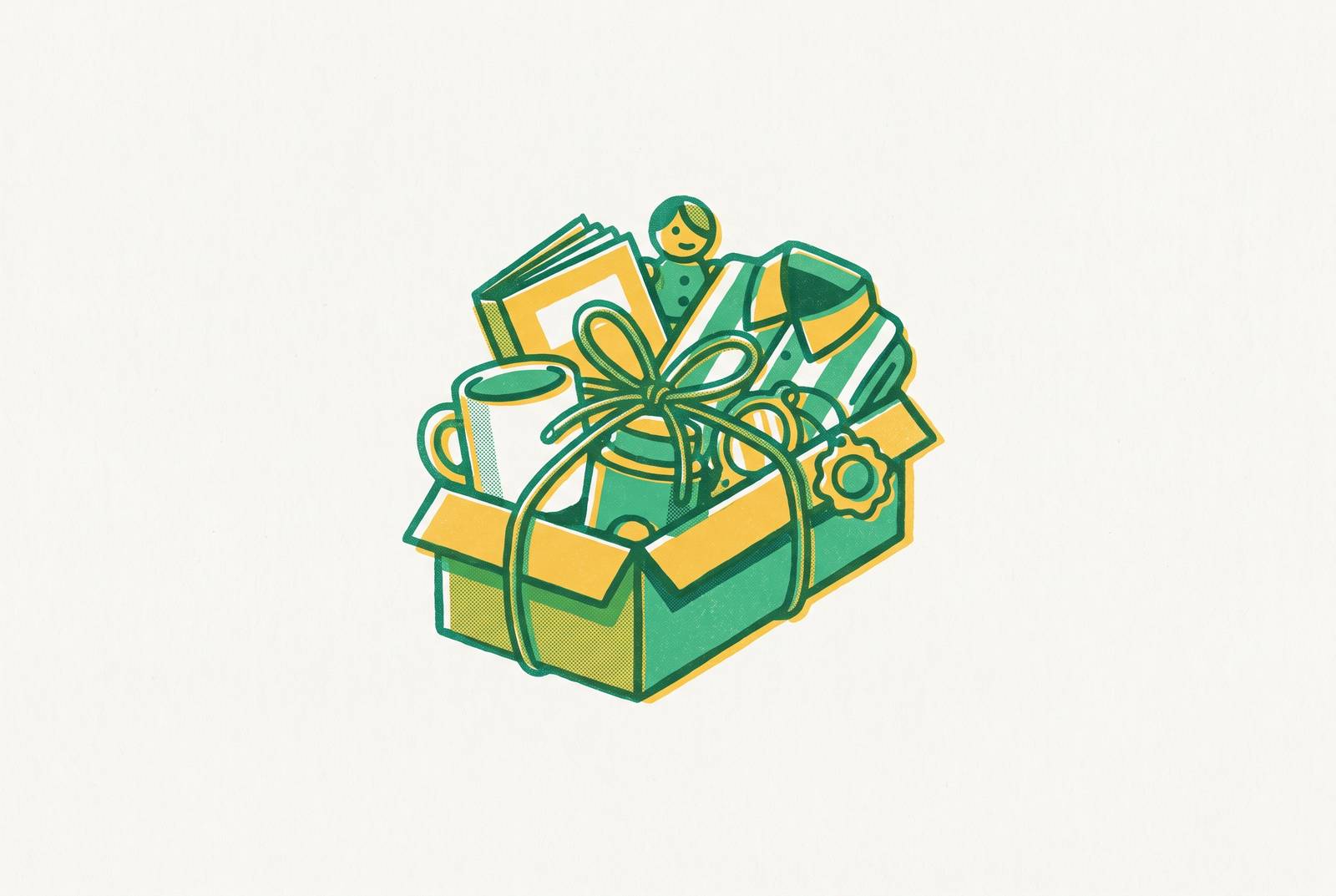
Bundling means grouping several items into one listing, sold together as a package, usually at a price a bit below what the pieces would cost separately. The buyer feels like they're getting a deal. The seller's actual workload barely moves.
Photographing five items together takes about as long as photographing one. Writing one description covers all five. Packing five items into a single box means paying for one shipping label instead of five. The fixed costs of listing get divided across more product, and the per-item economics flip from a loss to a real profit.
Buyers benefit too, and not just from the discount. One purchase decision instead of five. One shipping charge instead of five separate ones stacking up in a cart. Bundling quietly solves decision fatigue and shipping sticker shock in the same move, which is why buyers gravitate toward lots even when the per-item price isn't dramatically lower.
Think of it as selling a capsule. Nobody wants to sift through forty individual listings to build a home gym. Hand them the mat, the bands, and the water bottle in one box, and the curation work is already done. People pay for that, even if the objects themselves are unremarkable.
Which items belong together: the logic of a well-matched bundle
Not every combination of stuff in a closet counts as a bundle. There's a logic to it, and it comes down to three patterns.
Complementary-item bundles group things that serve the same activity or moment. A yoga mat, resistance bands, and a water bottle become a "home gym starter" set. Phone cases, chargers, power banks, screen protectors, and car mounts become an accessory bundle for one specific device. Unused small kitchen appliances plus a matching dish set, common in a downsizing household, become a kitchen starter kit. The items don't need to match in price or category, they need to match in use case.
Category-lot bundles go the other direction: same type of item, different quantity. Baby clothes sorted by size, kids' books grouped by reading level, graphic tees bundled by size. Buyers shopping these categories already expect to buy in bulk, so a lot listing meets them where they are instead of asking them to build one item at a time.
Replacement parts are a strong example of this in practice. ZIK Analytics data shows more than 1,200 replacement parts sold on eBay in a single 30-day window, averaging close to $8 each. Sold alone, that's a rough business. Sold as a device-specific bundle (all the parts a phone repair shop needs for one model, say), and it's a targeted purchase with obvious buyer intent.
Stagnant-inventory bundles pair something that isn't moving with something that is. The slow item rides along on the fast item's visibility, and the fast item is what actually justifies the listing existing.
What kills a bundle: items with no shared logic, wildly different sizes or weights that break the shipping math, or one item that's clearly worse condition than the rest. That one bad apple doesn't just sit quietly in the box, it drags the perceived value of the whole set down with it. Buyers notice the weak link before they notice the deal.
Pricing the bundle: using sold data instead of guessing
An asking price is not a sold price. Plenty of listings sit for months at a number nobody's willing to pay. Sold prices are the only real signal of what the market actually clears at, and they're usually lower than what's currently listed.
eBay's "Sold Items" filter is the fastest way to check this. Search the exact item, filter to sold listings only, and see what it actually went for, not what three other sellers are hoping for. Run this check on each item headed into a bundle before setting a combined price.
The pricing sequence is simple:
Find the sold price for each item individually. Add them together, that total is your floor, not your ceiling. Price the bundle at a real discount from that sum. Buyers need to feel like grouping these items saved them actual money, or the bundle offers nothing over listing separately.
Leave room to negotiate too. Marketplace buyers message with lowball offers constantly, it's basically a reflex at this point. Price slightly above the true minimum, and a $5 discount request doesn't eat into the margin, it just closes the sale.
Depop offers a useful benchmark here: 15% off for two or more items is what How to Bundle on Depop in 2025 describes as the sweet spot for automatic cart discounts, enough to feel real without giving away the farm.
Choosing the right platform for each bundle type
Fees change the calculus depending on what's in the box.
Facebook Marketplace charges nothing for local pickup deals, which makes it the obvious home for bulky, awkward-to-ship bundles: furniture sets, large kitchen appliances, baby gear that would cost more to ship than it's worth. Shipped sales on the same platform run a 5% fee, still lean.
eBay runs closer to 13.6% in final value fees plus a small per-order fee. That's steeper, but it buys the widest buyer pool for small, shippable bundles, replacement parts, electronics accessories, collectibles, anything that fits in a flat-rate box and benefits from a global search audience.
Poshmark's flat $2.95 fee on items under $15 makes bundling close to mandatory for clothing. A low-priced top listed alone can see the fee consume a significant share of the sale price. The same top folded into a much larger bundle barely notices the 20% cut.
Matching platform to bundle type comes down to a few patterns:
Poshmark has bundling built into the platform itself, both buyer-initiated and seller-initiated, which makes it the natural fit for clothing lots, accessory sets, and shoe pairs. Depop offers two paths: an automatic cart discount that's mostly set-and-forget, or a manual custom listing where the seller controls weight and price directly, better suited to heavier bundles where shipping cost actually swings the math. eBay stays the default for anything small and shippable with broad appeal, electronics accessories, device-specific parts, collectibles. Facebook Marketplace earns its keep on bulky, local-only bundles, books, toys, kitchen gadgets, anything where shipping would cost more than the item.
Location matters more on Facebook Marketplace than most sellers expect. Rural listings tend to move tools, ATVs, and farm equipment bundles, while urban markets favor furniture and electronics. Same platform, different inventory logic depending on the zip code.
And cross-listing the same bundle across several of these platforms from one workflow has become standard practice. Manually re-uploading photos and rewriting descriptions app by app is exactly the kind of overhead that eats the time savings bundling was supposed to create in the first place.
Writing the bundle listing so buyers see the value immediately
The title has one job: name what's actually in the box. "Nike Hoodie + Adidas Shorts Bundle, Size M/L" pulls search traffic that "Clothing Lot" never will, because buyers search for brands and sizes, not vague category words. If the bundle has a theme, say so directly: "Home Gym Starter Bundle, Mat, Bands, Bottle" tells a scrolling buyer everything they need in five seconds.
The description should list every item by name, one at a time, no ambiguity about what ships versus what's just background in a photo. State the condition of each piece individually rather than one blanket "good condition" covering five different items in five different states of wear.
Mention what these items would cost new or bought separately. That's where the sold-data research from the pricing step earns its keep twice, once for setting the price, once for justifying it in the copy. A buyer who sees "these three pieces run $45 new, bundle price $22" understands the deal instantly, no math required on their end.
Anticipate the obvious questions before they get asked in a message. Which device do these accessories fit? What are the measurements? What's actually included versus what's just staged in the photo for scale? Answering these upfront cuts down on back-and-forth and prevents the sale from stalling out over a question that a single extra sentence would've solved.
For photos, one flat-lay shot with everything arranged together makes the bundle feel real and complete rather than a list of promises. Follow it with close-up shots of anything that has condition detail: a scuff, a loose thread, a scratch on a case. Depop's manual bundle placeholder image (the "bundle for @username" version) signals a custom deal is in progress, but the actual product photo should still show the real items, not stand in for it.
A buyer can't pick these items up and turn them over in their hands. The listing has to do that work instead, which means the listing itself functions as the product. Buyers aren't just buying objects, they're buying the decision the seller already made about what goes together.
Category-specific bundle ideas to put this into practice immediately
Electronics accessories. Electronics is the largest single category on eBay by listing share, at 16.4% of all items. Bundle phone cases, chargers, power banks, screen protectors, and car mounts by compatible device, so someone searching "iPhone 15 accessories" finds everything in one shot. Replacement parts follow the same logic: that ZIK Analytics figure of over 1,200 parts sold in 30 days at an average near $8 confirms strong demand, individually marginal, but grouped by device model, suddenly worth listing.
Clothing and footwear. Apparel and accessories make up 13.8% of eBay listings, and that country's secondhand apparel sales grew 15% from 2024 to 2025, roughly four times the pace of general retail apparel. Same-size lots (three tops, two pairs of jeans), themed sets (Y2K denim, athleisure), or single-brand cohorts (all Lululemon, all Nike) all work here. Poshmark's native bundle feature makes it the natural home for these, and a bundle priced well above $15 beats watching a flat $2.95 fee chew through a solo $10 listing.
Toys, games, and collectibles. Trading cards grouped by set or era, action figures grouped by franchise, board games with every piece confirmed present, Funko Pops grouped by theme. Collectors want completeness. eBay remains the main marketplace for these, while Whatnot works as a live-sale option for cards, Funko Pops, and vinyl when a seller can run an engaging auction format.
Home goods and kitchen. Matching dish sets or glassware from a downsizing household, small appliances used once or twice (bread makers, juicers, air fryers) bundled with their related accessories, unused gadgets pulled from the same drawer. Kitchenware tends to perform reliably on resale platforms, mostly because replacement cost is high and used condition barely dents demand for most of it.
The common mistakes
The single biggest one: bundling items with zero relationship to each other just to hit a round number. A phone charger, a candle, and a paperback book in one box isn't a bundle, it's a garage sale table wearing a bundle's clothes. Buyers can tell the difference immediately, and a listing like that undersells every item in it.
Pricing off asking prices instead of sold prices comes in a close second. It inflates the perceived floor and leaves the bundle sitting unsold while the seller wonders why nobody's biting.
Skipping individual condition notes causes real friction too. A buyer who gets a bundle and discovers one item is scuffed, when the listing only said "good condition" as a blanket statement, leaves a return request and a lower rating behind. Naming the flaw upfront costs one sentence. Not naming it costs a return.
And then there's the platform mismatch: trying to ship a bundle of textbooks and kitchenware across the country when it should've been a local Facebook Marketplace pickup, or listing a low-priced top solo on Poshmark and wondering why the payout barely covers the padded envelope. The fee structures reflect exactly which listings need to be bundles and which platform each bundle belongs on. They're telling sellers exactly which listings need to be bundles and which platform each bundle belongs on. The sellers who read that signal keep the drawer of chargers moving. The ones who ignore it keep restocking the drawer.