Home Goods and Kitchen Items With Surprising Resale Value
Vintage Pyrex and cast iron can sell for hundreds if you know what collectors actually want.
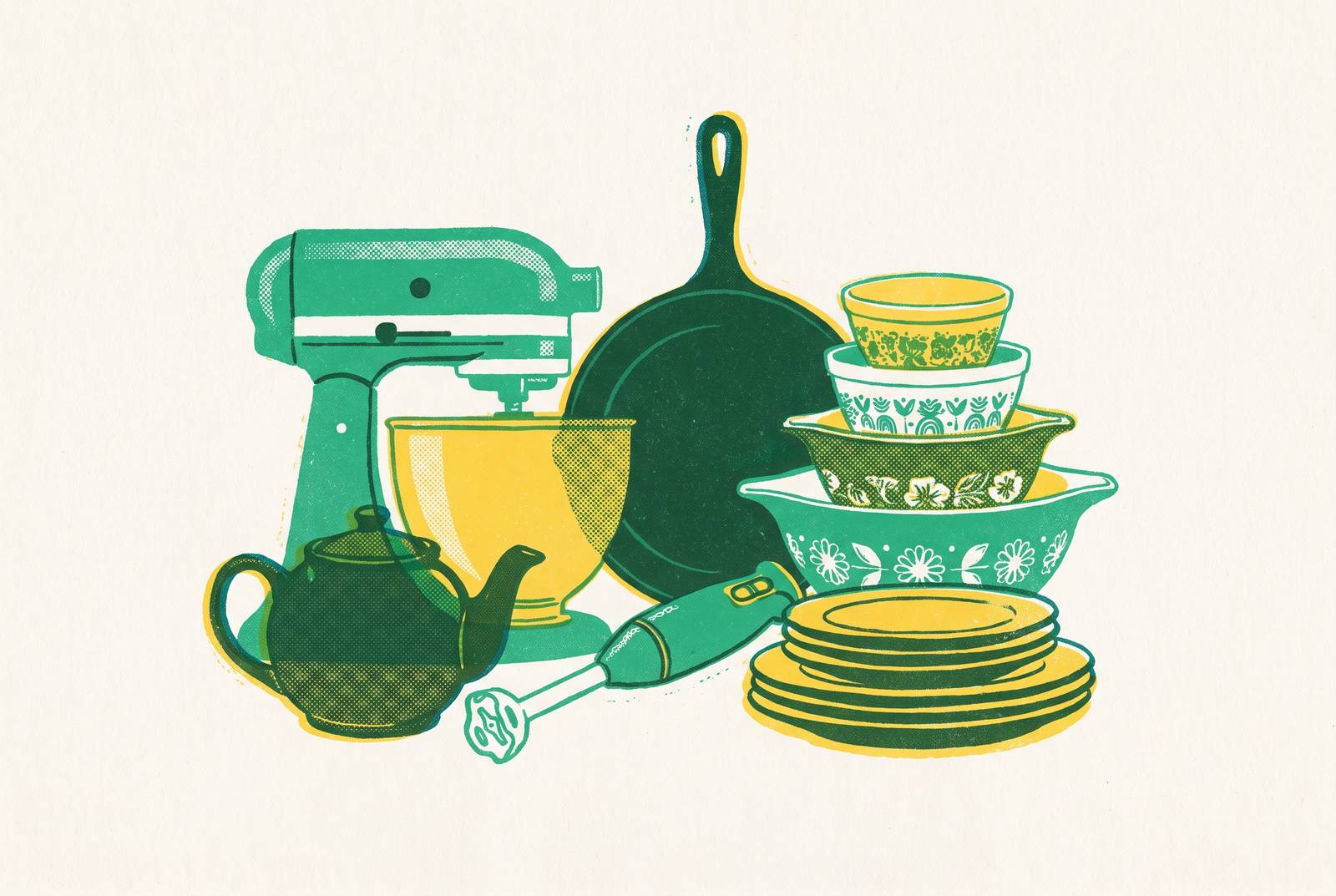
Most people see an old mixing bowl. Collectors see a payday. That gap is the whole reason to check before the next donation run, and skipping the check is the actual mistake people make here.
The valuable stuff is opal-ware made between 1945 and 1986, and the promotional patterns are where the real money sits. Take Lucky in Love, a 1959 casserole dish. Lucky in Love pieces have sold on eBay for hundreds of dollars. Rare promotional patterns like Lucky in Love can fetch four figures for exceptional pieces.
Gooseberry and Butterprint are the patterns collectors chase hardest. A rare Butterprint piece known as "Lady on the Left" sold for $3,050. Golden Sunflower Daisy and Bluebelle Delphite bowl sets have both cleared thousands at auction.
Not everything hits that high, and pretending otherwise is how people end up disappointed. A Spring Blossom butter dish and lid sold for $20.99 in December 2024. Pattern name alone doesn't guarantee a windfall. Condition, completeness, and which specific piece it is swing the number hard, sometimes by hundreds of dollars on the exact same pattern name.
The thrift-to-flip math runs about $2 to $8 at a thrift store and $30 to $400 on resale. Most complete sets are between $80 and $400, with rare or mint-condition sets pushing past $500. Younger buyers have been drawn into this market too, hunting pieces that look good on open shelving and still hold up in a hot oven.
So flip it over before it goes anywhere near a donation box. Find the Pyrex mark, name the pattern, then search eBay's sold listings. That's thirty seconds of work for a possible three-figure payout.
Le Creuset: when a casserole dish becomes a collector's item
A functional vintage Le Creuset piece typically sells for around $100 secondhand, which already beats what most people expect for a used pot. The outliers make that number look almost quaint, though, and they're the reason this section exists at all.
A "Cool Mint" green cast iron cocotte with a glass lid sold on eBay for $13,999 in February 2024. A Dutch oven in the "Palm Leaf" pattern brought in $1,725. Novelty crossover pieces and limited collaborations pull real money too. The rare Bean Pot model runs around $300, and a discontinued petite fruits pattern Dutch oven fetched $400.
Designer collaborations sit in their own tier, and this is the part people underestimate most. A pink pot from the Raymond Loewy collaboration was listed at $800. An Enzo Mari "La Mama" piece in brown was listed at $550. A name attached to a pot works the same trick it works on handbags and sneakers: same object, different signature, wildly different price.
Color drives a lot of the pricing here too. Discontinued and limited-run colors carry a premium, and colors that were discontinued tend to be worth the most, simply because fewer of them exist. Whether a piece is $600 or a fraction of that comes down to four things: discontinued status, how limited the color run was, whether a designer's name is attached, and whether the original lid survived, since missing components typically reduce what a buyer will pay.
So before that casserole dish gets passed down or dropped at a donation bin, flip it over. Check the model number and the color name first.
Cast iron cookware: why the brand stamped on the bottom changes everything
Not all cast iron is created equal, and the name stamped into the bottom does most of the pricing work. Griswold and Wagner are the two names that drive the market. If a pan doesn't carry one of those stamps, it's competing on weight and usefulness alone, and no amount of seasoning changes that math.
Skillets and Dutch ovens from those two brands sell anywhere from $35 to several hundred dollars, depending on size and condition, with rare pieces and full sets going higher still. The thrift-to-flip spread runs $3 to $15 picked up secondhand, versus $35 to $400 once resold under the Wagner, Griswold, or Lodge name.
Bare cast iron is desirable for reasons that have nothing to do with nostalgia. The weight, the craftsmanship, and the natural nonstick surface built up over decades of seasoning make these pans genuinely useful. Buyers want to cook on them, not just look at them.
To spot a valuable one, check the underside for a brand name and model number. A Griswold piece with the large block logo generally outvalues the later small-logo versions, a small stamped detail with a real dollar impact, and it's the first thing to check.
Age alone tells you nothing, and this is where a lot of sellers get it backwards. A 50-year-old skillet left to rust in a damp garage can be nearly worthless, while a 30-year-old pan that was cared for outsells it easily. Rust, pitting, and seasoning level decide the outcome, well ahead of the birth year stamped on the bottom.
KitchenAid stand mixers, Fiesta Ware, and the other kitchen items worth a second look
Stand mixers made before 1986, before Whirlpool acquired the KitchenAid brand, get called "Hobarts" by collectors. They carry a real premium among people who bake seriously and people who just like old machines that still run after forty years. The thrift-to-flip spread is $15 to $50 picked up used, versus $120 to $450 resold. To date one, flip it over and check the serial number stamped on the bottom, which ties back to a specific model and production year. Colorful vintage finishes and limited runs follow the same logic as Le Creuset: scarcity plus nostalgia equals a buyer willing to pay up.
Fiesta Ware runs on a similar engine, priced at $2 to $10 at thrift versus $25 to $200 on resale, with discontinued colors driving the premium just like the cookware above. A full place setting earns meaningfully more than the same pieces sold one at a time, so don't break up a set to sell it faster.
Retro small appliances, Sunbeam toasters and old blenders especially, are having a moment too. Collectors want the color, the shape, the era. But the heating element has to actually work; a dead toaster is basically a paperweight with good branding. Swapping a frayed cord is a cheap fix that can raise the resale number by a real margin, and it's worth doing before listing rather than letting a buyer discover a dead unit after the sale.
Enamelware and old-school kitchen décor are seeing a clear uptick too, including cutting boards and cabbage-shaped plates. Pieces that sat untouched on shelves a few years back are now moving fast, as buyers lean into what amounts to an everyday-special-occasion mindset around the kitchen table. Antique silverware rides the same wave, no longer reserved for holidays but pulled out for regular table styling.
Nostalgia plus utility is the thread running through all of it. A piece that looks good on a shelf and still earns its keep in daily use is the sweet spot buyers pay extra for.
Vintage audio equipment: the kitchen-adjacent category with the biggest price swings
Old stereo equipment doesn't belong in a kitchen article on paper, but it appears constantly in the same basement cleanouts and estate sales where the Pyrex and the cast iron get found. It earns a spot here mostly as a warning: don't let it walk out the door for $20.
The vinyl revival has been building for years, and the resale numbers back it up now. Between October 2024 and January 2025, 23 vintage receivers sold for more than $3,000 on eBay. Seven of those were Sansui G-9000s, most going for over $4,000, while the Sansui 9090 trades around $3,500. The Marantz 6300 sold for roughly $1,000 about a year and a half ago; some units now clear $2,500 or more, close to doubling in a short window. Other sought-after vintage audio equipment has followed similar pricing trajectories.
Condition and storage history set the price on this list. A receiver kept in a climate-controlled room commands a real premium over one that spent a decade in a damp garage soaking up moisture and dust, and that gap alone can run into the thousands.
What determines whether any of these items is worth money
Rarity by itself doesn't pay the bills. Value needs a buyer on the other end, not just scarcity, and that's the single most common thing people get wrong here. An obscure pattern nobody's searching for stays worthless no matter how old it is, because scarcity on paper means nothing without demand behind it.
Condition often beats age. A 50-year-old piece left in rough shape can be worth nothing, while a 30-year-old piece kept in excellent shape sells for real money. For Pyrex, chips, cracks, and faded color knock the price down fast. For cast iron, rust and pitting hurt, though some of it can be restored, so note the condition honestly when listing rather than guessing. For Le Creuset, enamel chips and a missing lid both cut deep into what a buyer will pay.
Completeness multiplies value across every category here. A full set, a matching lid, original packaging, any paperwork that came with it: all of it adds up. Discontinued status is probably the single clearest signal in this whole list. Colors, patterns, and models that stopped being made are what collectors hunt for, across Pyrex, Le Creuset, Fiesta Ware, and KitchenAid alike.
Designer collaborations add a layer nothing else replicates, whether that's Le Creuset's Raymond Loewy pot or the Pikachu cocottes. It's provenance, plain and simple, and provenance sells. But the real sweet spot across every category here is nostalgia paired with actual function: something that still works in a kitchen today while also pulling someone back to a specific decade.
How to find out what your item is worth before you list it
Set aside asking price. Forget gut feeling. Forget whatever number a platform guesses for an item it's never seen in person. The only number that matters is what similar items actually sold for recently, full stop.
eBay's sold listings are the closest thing to a gold standard available. Filter any search to "Sold" and the completed sale prices are visible there, distinct from the wishful asking prices sellers post and never get. eBay's own Product Research tool inside Seller Hub includes prices accepted through Best Offer. Given eBay's volume, there's almost always a comparable sale for anything covered in this piece.
Once 10 to 20 sold listings are pulled up, ignore the top 10 percent (usually misidentified rarities or one lucky bidding war) and ignore the bottom 10 percent too (usually rough condition or a badly written listing). Price in the 40th to 60th percentile of what actually sold. For anything trending, treat comps older than 90 days as stale and work off recent data only.
For everyday used goods without a collector premium attached, a reasonable baseline runs 20 to 40 percent of original retail price, adjusted up or down for condition and demand. If nothing happens in two weeks, drop the price by about 10 percent and try again. Don't wait a month to find out the number was wrong.
Fees change whether listing something is even worth the effort. eBay runs about 13.6 percent as a broad rate, though some subcategories vary. Facebook Marketplace charges nothing for local pickup, making it attractive for bulky items. Etsy takes 6.5 percent plus a small listing fee, which matters for vintage kitchenware with a craft-market crowd. Depop currently charges zero seller commission for US sellers in 2026, one of the cheapest setups around. A quick net formula covers the rest: sale price minus the platform fee percentage, minus shipping, minus packaging, minus whatever it cost to acquire the item. If that number lands below a seller's minimum, reprice it or walk away.
AI-powered listing tools can identify an item from a photo, judge its condition, and draft a listing automatically. That cuts out most of the research friction that keeps kitchen clutter sitting in a box in the garage instead of turning into cash.
Which platform to list kitchen items on for the best net proceeds
The category should decide the platform, ahead of personal preference, and that's the part sellers get backwards most often, picking whatever app they already have open instead of whatever fits the object. Kitchen goods are heavy, often fragile, and frequently cheaper to sell locally than to ship, so Facebook Marketplace's zero percent fee on local pickup is hard to beat for a bulky Dutch oven or a stand mixer nobody wants to box up.
eBay earns its keep on anything collectible. Its sold-listing data and its sheer buyer volume make it the best place to find the one person hunting a specific Pyrex pattern or a Griswold skillet with the right logo. Etsy fits the craft and vintage décor crowd well, particularly for enamelware and primitive kitchen pieces leaning into that everyday-special-occasion look buyers want right now. Depop's zero-commission structure for US sellers makes it worth a look for lower-priced or higher-volume flipping, where fees eat into thin margins fast.
None of it works without the pricing homework first, though. Fees, shipping costs, and platform reach all change the final number that lands in the bank account, and skipping that thirty-second check is how a $13,999 Le Creuset pot ends up in a donation bin instead of a buyer's kitchen.