Donate vs Sell Decision Framework for Decluttering
Run four inputs through any item to decide between selling and donating instantly.
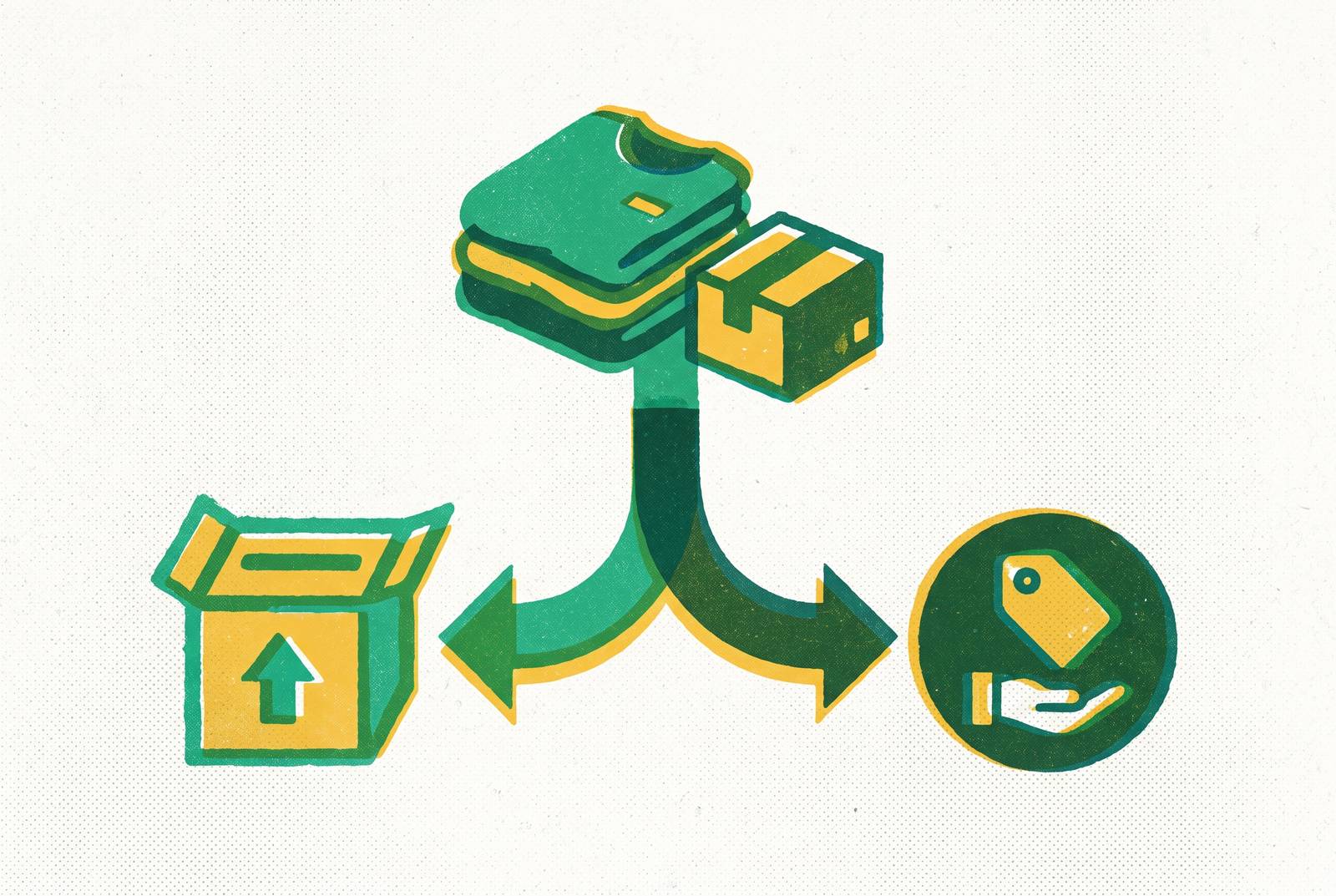
Decluttering runs on four inputs: condition, value, time cost, and urgency. Run any item through those four and "sell or donate" stops being a gut check and becomes math. Most people skip the math entirely, and that's the whole problem this piece is here to fix.
Most people pick an item up, hold it for a second like they're weighing its soul, then feel guilty enough to keep it or guilty enough to donate it. That's item-by-item emotional negotiation, and it's exhausting in a way that has nothing to do with the actual physical work of clearing a closet.
Two mistakes cause almost all of the bad routing, and they pull in opposite directions. People overestimate what a used couch or a stand mixer is worth on the resale market, which builds a bloated "maybe sell" pile that never actually sells and just becomes permanent clutter with better lighting. At the same time, people badly underestimate how long clothing and furniture take to sell, so good stuff gets dumped at the donation bin because listing it felt like taking on a second job. The fix: check sold prices before deciding anything, and stop treating "I'll list it eventually" as a real plan. Fix those two errors and most of the framework below takes care of itself.
The four inputs that determine every routing decision
Treat these four as a quick diagnostic, not a rulebook to memorize.
- Condition. Can it even be sold, or is it torn, stained, or broken enough that donation or trash are the only real options?
- Value. What do actual sold listings say it clears, not what got paid for it new.
- Time cost. How long it really takes to photograph, list, answer buyer questions, and hand it off or ship it.
- Urgency. How fast the space needs to be empty.
A professional organizer rule worth pinning to the fridge, cited by cnbc.com: if an item is going to bring in $10, it's probably not worth the time to sell. That's the whole framework in one sentence, weighing return on time against return on feelings.
The four inputs argue with each other, and that's the point. A high-value end table with a cracked leg still routes to donate, because condition overrides value every time, no exceptions. A low-value lamp that takes five minutes to list and gets picked up by a neighbor down the street is worth selling despite the small dollar amount, because time cost is basically zero. Marie Kondo's method has a phrase for the underlying move: a "let-go strategy," decided before anyone touches a single box. Set the rule in advance, and no fresh decision gets made for every object picked up. The framework does the deciding.
How to find out what an item will actually sell for before committing to a path
Here's the part almost everyone skips, and it's the single biggest source of bad decisions in this whole process: check sold listings, not active ones. Active listings are people guessing out loud. Sold listings are what buyers actually paid, and that's the only number that matters.
eBay's sold and completed listings are the most reliable public data for this, and they cover nearly every category worth checking. Look at the sell-through rate too. Above 50% means real demand and a fast sale. Below that, expect weeks, sometimes months, of waiting on a buyer who may never show up.
Facebook Marketplace is worth a cross-check, though sold price data isn't public everywhere. The workaround: search the exact item name, filter to sold listings if that option exists, note the range, and throw out the outliers. That inflated listing for a low-value chair that sat for three months is noise; treat it as one, and ignore it completely. No local sold data available? Fall back on eBay comps as a stand-in.
A few condition details move the number more than people expect. Original chargers, remotes, manuals, and boxes can add 10 to 20% to what a buyer pays. Electronics lose value fast, month over month; collectibles often do the opposite and gain value with age. Five minutes on this step, before any decision gets made, is the single move that prevents most mis-routing. Apps that scan a photo and pull sold comps automatically shrink that five minutes down to about five seconds, which matters when opening eBay for every random drawer item sounds like a chore nobody's signing up for. Reclaim, for instance, is a mobile app that generates a priced listing from one photo and publishes it to eBay and Facebook Marketplace in a single tap.
Items that consistently earn the sell route
Some categories sell themselves, almost literally.
Electronics with strong brand recognition move fast and hold value. Apple gear, iPhones, MacBook Air and Pro models, AirPods, Apple Watch Series 6 and newer, sells consistently. Sony's PS5 and PS4 consoles, digital cameras, and audio gear do just as well. There are surprise winners too: early-2000s point-and-shoot cameras from Canon and Nikon are riding the Gen Z low-fi photography trend, and a working VCR from Sony or Panasonic can fetch $50 to $100, a strange sentence to type in this decade but here it is.
Clothing and accessories are another strong lane, as long as the brand name is doing some work. Coach, Nike, Michael Kors, Lululemon, and Kate Spade lead resale demand in this category. Luxury handbags and designer sunglasses sell reliably, and small leather goods move especially fast because the price barrier for a buyer is low. Y2K and 90s streetwear, vintage Nike and Adidas, baggy denim, is having a real moment right now.
Toys, games, and collectibles round things out. Retro consoles, the NES, Game Boy, early PlayStation, carry serious profit potential riding pure nostalgia. Pokémon and Magic: The Gathering cards multiply in value fast once graded through PSA. High-end baby gear like UppaBaby strollers sells briskly too, since new parents are actively hunting for a deal. Add power tools, name-brand kitchen appliances, LEGO sets, vintage Pyrex, and furniture that's local-pickup only, and the pattern is obvious: strong brand, decent condition, all the original parts, and a buyer audience that already exists on some platform. That combination is what "sell" actually looks like. Everything else on this list is a maybe, and most maybes should lose the coin flip.
Items that belong in the donate pile regardless of how they feel
Condition disqualifies things before value even enters the room. Stained, torn, broken, or missing pieces, no buyer pays enough to make listing worth the effort. The IRS backs this up on the tax side too: Publication 526 disallows a deduction for items that aren't in good used condition or better. Missing an accessory that can't be replaced cheaply drags the value down the same way, pulling the item below the point where selling makes any sense.
Then there's the low-value bucket: generic household goods, no-name clothing, ordinary paperback books, basic kitchenware. These are the items where sold comps cluster near or under $10. Back to Lori Reese's rule. Under $10, it's not worth anyone's time, and pretending otherwise is how the "maybe sell" pile becomes furniture.
Sentimental items deserve their own note, because the math there isn't about dollars at all. When the actual goal is a lighter house rather than a maximized bank account, donation clears the item cleanly, with none of the drawn-out back-and-forth a sale requires. Some organizers push donation for sentimental objects specifically for that reason: someone else gets real use out of it, and the person letting go gets a clean break instead of a lingering negotiation with a stranger online.
Donations can also be a tax deduction, but only if itemizing on Schedule A. The Goodwill donation value guide gives defensible price ranges by category, built on thrift-store resale prices, which lines up with the IRS's own standard under Publication 561. That only helps if itemizing was already part of the plan, so don't donate a box of sweaters expecting it to move a tax bill built on the standard deduction. It won't, and that surprise shows up every April.
Donate-first is the right call whenever urgency is high, a move, a deadline, a house suddenly overflowing, and whenever the friction of selling would stall the whole project before it starts.
How the time cost of selling changes the math
Time cost breaks into two pieces: the effort of listing and the wait for a buyer.
Listing effort covers the photos, the write-up, answering "is this still available" three times, and either boxing it for shipping or coordinating a pickup time that somehow never works for either person. Wait time is the other half, and it tracks straight back to sell-through rate. Anything below that 50% mark can sit for weeks, sometimes months, taking up space the whole time.
The real reason so much stuff never gets sold traces back to friction more than to laziness. The task feels bigger in the head than it is on the desk, so the item just stays on the pile, silently judging everyone who walks past it.
One fix is quick-sell pricing: drop meaningfully below fair market value on purpose to move an item within about a week. That's a real tradeoff, giving up some revenue for speed and certainty, and it's worth making whenever the cost of waiting, storage space, mental clutter, outweighs the price gap.
Storage availability changes this calculation directly. A garage or closet where things can wait for a listing to gain traction makes selling first the reasonable move. But if the whole reason for decluttering is that space is already maxed out, the cost of holding onto items is immediate, and donation wins on logistics alone. Tools that cut listing effort, apps that identify an item from one photo, write the description, and pull pricing from sold comps automatically, shift this math too. Once listing takes two minutes instead of twenty, that $30 item that wasn't worth the hassle before suddenly is.
Choosing the right marketplace for items that clear the sell threshold
Once something clears the sell bar, the next decision is where, and this is where a lot of people leave money on the table by defaulting to whatever app is already on their phone.
eBay reaches buyers nationally and is strong for branded electronics, collectibles, and fashion, but the fees add up: a 13.6% final value fee plus a flat $0.30 or $0.40 per order, charged against the full sale total, including shipping and tax. That headline percentage feels smaller than it turns out to be once the total lands. Facebook Marketplace, by contrast, charges 0% on local cash sales, which makes it the better fit for furniture, anything bulky, or anything where local pickup skips shipping entirely. A $75 item sold locally nets the full $75. That same item on eBay, after fees, nets closer to $64. That gap alone should decide where most furniture goes, full stop.
Match the category to the platform. Electronics and collectibles belong on eBay, where the buyer pool and the sold-data history both run deep. Furniture and anything heavy belongs on Facebook Marketplace: no shipping headache, no fee. Fashion does better on platforms built for it specifically, Poshmark is one example, where prices often run 15 to 30% higher than general marketplaces because the buyer audience is already shopping for exactly that kind of item. For speed, Facebook Marketplace wins outright. For the highest price on something with real resale history, eBay wins.
Listing across multiple platforms at once, rather than picking just one, has become the standard move for anyone doing this regularly. Tools that post from a single photo to several marketplaces at once take the "which platform" decision off the table entirely. Pricing discipline stays consistent no matter where the item lands: start at the median sold price, and drop 15 to 25% if nothing happens within a week.
Running the framework as a repeatable habit rather than a one-time project
The framework gets faster with repetition, and that's not a throwaway line. The first declutter session always drags, because every single item feels like a decision that matters. By the third or fourth session, the routing criteria are second nature, and the whole thing moves at a completely different pace.
One practical shortcut: set the routing rule by category before touching a single box. Clothing gets one rule, electronics another, sentimental items a third. That's the KonMari "let-go strategy" idea, applied with a spreadsheet instead of a mood. It kills the item-by-item deliberation for the bulk of ordinary stuff, which is most of it.
Timing the sale matters too, especially mid-way through a big purge. Selling the nicer items after the bulk of the decluttering is done, once things have settled into what's basically maintenance mode, means more attention and a lot less decision fatigue. A common and completely reasonable sequence: donate aggressively first to get the space back, then circle back and sell the handful of items that are actually worth the effort.
The habit itself fits in one breath: before anything lands in any pile, run the four inputs, condition, value, time, urgency, and let the answer do the routing. Apps that turn a photo into pricing research and a finished listing make the sell path just as fast as the donate path for most items now, which removes the last real excuse for defaulting to the donation bin when selling would've put actual money back in a pocket. Clutter doesn't care how the decision gets made. The bank account does.