Whole-House Declutter Strategy That Skips the One-Item-at-a-Time Trap
Sort a house by batches of fates, not item by item.
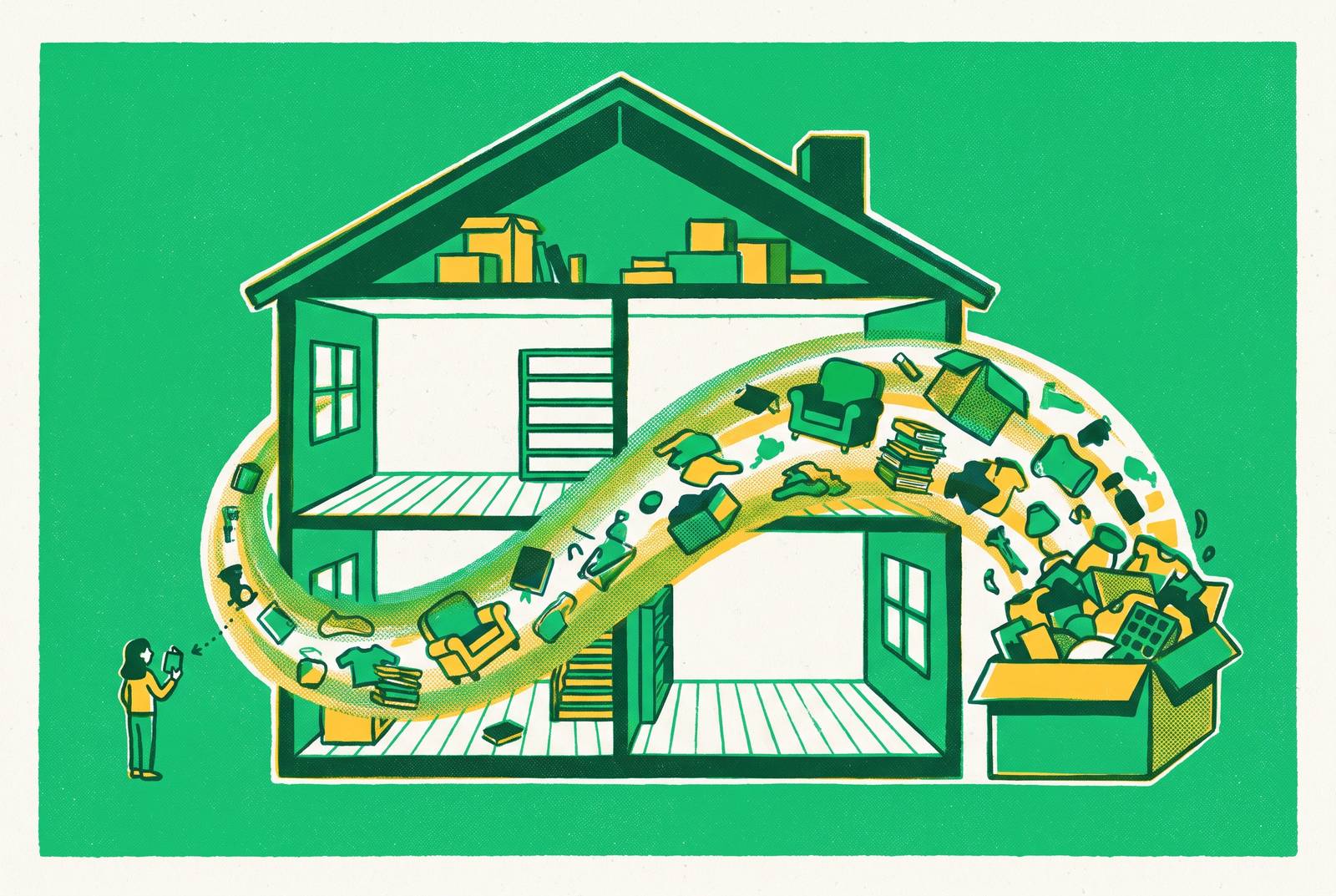
Whole-house decluttering works when you decide destinations in batches, then turn the sell pile into live listings before it becomes permanent storage. Work room by room with five fixed fates, price from actual sales, and use photo-to-listing tools to cut the writing work.
Why whole-house decluttering stalls before it starts
You are standing in a full room, holding something you have not used in ages, genuinely unsure what to do with it. Keep it because it might be useful? Sell it because it probably cost something? The rest of the room is waiting its turn.
That is decision paralysis. Listing an item on its own works well when it is worth enough to spend time researching it and writing a detailed description. But applying that same attention to every object makes a whole-house clear-out expensive in mental effort. Donating or tossing then becomes the easy answer, even when an item has real resale value. The solution is to set decision rules before sorting, then stay in one room until that session is finished.
The five-fate system that pre-assigns every item's destination
Give everything one of five fates, which are keep, sell, donate, recycle and toss. Use two shortcuts to avoid reopening the debate. Keep what you used in the last 12 months, including seasonal gear you will use this year. Sell what offers enough return for the effort and will actually get listed this month, and donate suitable items that fail that test. Set a fixed donation date for unsold items before starting.
Recycling and tossing need separate destinations for good reasons. Electronics, batteries and paint usually cannot go in household trash, though the rules differ from place to place. Clear personal data from electronics, take out the batteries and use a certified recycler, and keep batteries and lithium-ion devices out of household bins. Paint, solvents, pesticides and motor oil need to go to household hazardous waste collection and must never go down drains. Worn textiles a charity will not take can go to textile recycling bins.
Leave sentimental things until you have made the easier choices. One bin per person is a workable limit. For general information, IRS Publication 526 for 2025 returns says donation deductions require itemizing and clothing and household goods generally must be in good used condition or better. Noncash gifts above applicable thresholds require Form 8283, with an appraisal needed above a higher threshold for a single item or group.
Room-by-room order and what each space demands
Start in the kitchen, where cleared surfaces show progress immediately. KitchenAid stand mixers, Vitamix and Blendtec blenders, Breville and other branded espresso machines, and Le Creuset and All-Clad cookware usually justify individual listings. Bread makers, air fryers, Instant Pots, and Cuisinart and Ninja food processors are worth handling in batches. Mismatched plastic containers, novelty gadgets and no-name small appliances can go in the donation pile without time spent researching them. If preparing for showings, keep one daily appliance on the counter and remove at least a third of cabinet contents.
Next, move into the living room and common areas. Remove at least half the decorative items and any furniture that makes the room feel tight, leaving only one or two objects on coffee tables. Route bulky pieces toward local selling, with their likely return deciding sell versus donate. Then move on to bedrooms and closets, and check the labels. Patagonia, Lululemon, North Face, Nike and other outdoor and athletic brands have resale value, while Madewell, Free People and Levi's sell reliably.
Check Gucci, Prada and Louis Vuitton before donating. Bundle H&M, Zara and Forever 21 by size and style. Nike, Adidas, New Balance and designer sneakers merit a sell check, while worn generic shoes do not. For showings, pack off-season clothes away, keep closet rods no more than two-thirds full and clear under the bed. Nightstands need only a lamp and one book.
Entryways and bathrooms are small enough to tackle as the next jobs. Limit entryway shoes to one or two pairs and hooks to one jacket per person, then clear the paperwork. In bathrooms, clear the counters, put toiletries in an under-sink caddy, take out medicines that have expired and use fresh towels in neutral colours.
Leave the garage and storage until later, but do not make them a warehouse for unresolved decisions. DeWalt, Milwaukee, Makita and Bosch power tools deserve price checks, as do vintage Craftsman, Snap-on and Stanley hand tools. Honda, Stihl and Toro lawn equipment also belongs on the resale radar. Check rideable Trek, Specialized, Cannondale and Giant bikes, Titleist, Callaway, TaylorMade and Ping golf clubs, Yeti coolers and North Face camping gear. Other sporting goods may need steep discounts or donation, with the attic saved for the final cleanup pass.
What the electronics drawer and media shelf are actually worth
An electronics drawer can contain money or recycling disguised as money. Model and condition decide which. A cracked phone screen can cut value by roughly a third to half, yet the phone may still deserve an eBay listing marked “for parts or repair”. Dead or truly ancient phones belong in electronics recycling after personal data is removed.
Laptops need the same check of the model before they are sorted. Working machines from 2019 or newer with an SSD and adequate RAM have resale value. Older Windows machines with spinning drives and very little RAM are worth next to nothing for resale, but still need to go to electronics recycling. Books and media usually return cents on the dollar, with exceptions including rare first editions, vintage vinyl and sealed video games. Check BookScouter for books, the free PriceCharting app for video games and trading cards, Discogs for vinyl sales data, and WorthPoint for antiques before assigning a fate.
How to price the sell pile without guessing
Other sellers' asking prices show what they hope to receive. eBay recommends checking completed listings to see how items have recently ended. Search the specific item, filter to sold or completed listings, and anchor the price on actual sales within those results. Look for the cluster of recent sales in comparable condition. One ambitious listing does not turn an ordinary appliance into a pension plan.
Use price ranges based on retail price and condition only as a rough place to start. Like-new items with boxes or tags may sit around half to somewhat below retail, while good, lightly used items may land around a third to half. Fair but functional items may fetch roughly a sixth to a quarter, and rough or parts-only items a tenth or less. Base the final price on what similar items have sold for, especially vintage and collectible pieces that can sell for more than they cost at retail.
Facebook Marketplace shows what sellers ask. Anchor on eBay sold data, then allow some negotiating room above your real minimum. Work backward from the amount you want to keep, adding applicable platform fees, payment processing, shipping, packaging and a negotiation buffer. Otherwise, the sale price can look healthy while the money you keep looks anaemic. If the listing remains unsold at the deadline, donate it.
Where to send each category: matching items to the right marketplace
Choose the marketplace after establishing the likely selling price. Electronics, parts and collectibles fit eBay because they have a national resale audience and useful sold-listing history. Branded clothing can sell there too, though fees can eat up the profit on low-priced pieces. For a beginner with mixed inventory, eBay is a practical starting point because it combines broad reach, pricing history and AI-assisted listing tools. One starting channel keeps the first clear-out simpler.
Clothes, shoes and bags also suit Poshmark, Depop or Vinted. Vinted has zero seller fees, making it the first route to consider for fast-fashion bundles. Depop charges no selling commission but does charge a payment-processing fee on each sale. Those distinctions affect what you keep from the sale.
Furniture, appliances and other bulky pieces can sell locally on Facebook Marketplace or OfferUp. A nationally searchable listing is useful for a collectible, but local pickup is the practical advantage for a large piece of furniture.
How can you list a room's sell pile without spending days typing?
Reclaim: Sell with AI is a photo-to-listing option that identifies an item, grades its condition, writes and prices the listing from real market data, and publishes to eBay and Facebook Marketplace in one tap. It replaces manual typing and app-switching with a picture-led workflow, while shipping and payouts stay with the marketplace.
That addresses the work between deciding and actually selling. Manual listing requires photographing, identifying, grading, writing and pricing each item, which becomes a substantial queue across a whole house. Batch the work, but keep each item's identity and condition clear.
A do-it-yourself workflow remains an option for more hands-on sellers. Combine eBay's listing tools and sold comparisons with the free specialist pricing tools where relevant, accepting that research and publishing remain separate steps. Photograph in natural light against an uncluttered background, with PhotoRoom Pro offering batch background processing for higher-volume work. Use searchable titles, expanding “cute shirt” into “Women's Medium Loft Floral Blouse”. Photograph and list during the same weekend you sort, before “later” becomes a bag with a postcode.
Scams to know before the first buyer shows up
A listing with all the details gives real buyers less reason to ask for more. Include brand, model, condition, dimensions, pickup area, payment preference and defects. Avoid “DM for details” on expensive items, which forces every buyer into a conversation and creates room for phishing or off-platform payment requests. Specifics help keep the exchange about the item. They do not replace payment precautions.
The Federal Trade Commission says fake payment notifications and bogus requests for refunds are common scams when selling online. Never accept personal checks, cashier's checks or money orders, which can be forged and take weeks to bounce. Reject overpayments followed by requests to return the difference. A payment screenshot is not a reason to abandon those rules. Keep the transaction straightforward rather than accommodating a buyer's elaborate financial subplot.
For eBay items that are worth more, use tracking with signature confirmation. Ship only to the address on the transaction, never an alternate address, and photograph the packaged item and shipping label. As of March 2026, Meta shows an AI-generated Marketplace profile summary with the account's age, number of friends, past listings and seller ratings. Treat those details as context. A two-week-old account deserves more scrutiny.
When donating beats selling and how to make that call honestly
Selling everything that could sell is the wrong target. A worthwhile local sale involving a photo, listing, one message and porch pickup can justify the effort. A trivial fast-fashion sale requiring the same work may not. Compare the likely net return with the whole job, including messages and handoff. Your spare evening is part of the cost.
Donation can also have tax value for people who itemize. IRS Publication 561 describes fair market value in terms of what a buyer would pay, such as at a consignment or thrift shop. Clothing and household goods in good used condition or better may therefore offer an alternative to hours spent listing low-value pieces.
Sell an item if it clears your effort threshold and you will list it this month. Otherwise, donate suitable items and move on. Batch decisions protect your attention, accurate pricing protects the return, and photo-to-listing tools remove work from the final step.