Best Apps for Reselling Clothes Online
Match each clothing resale app to your closet, not its fees.
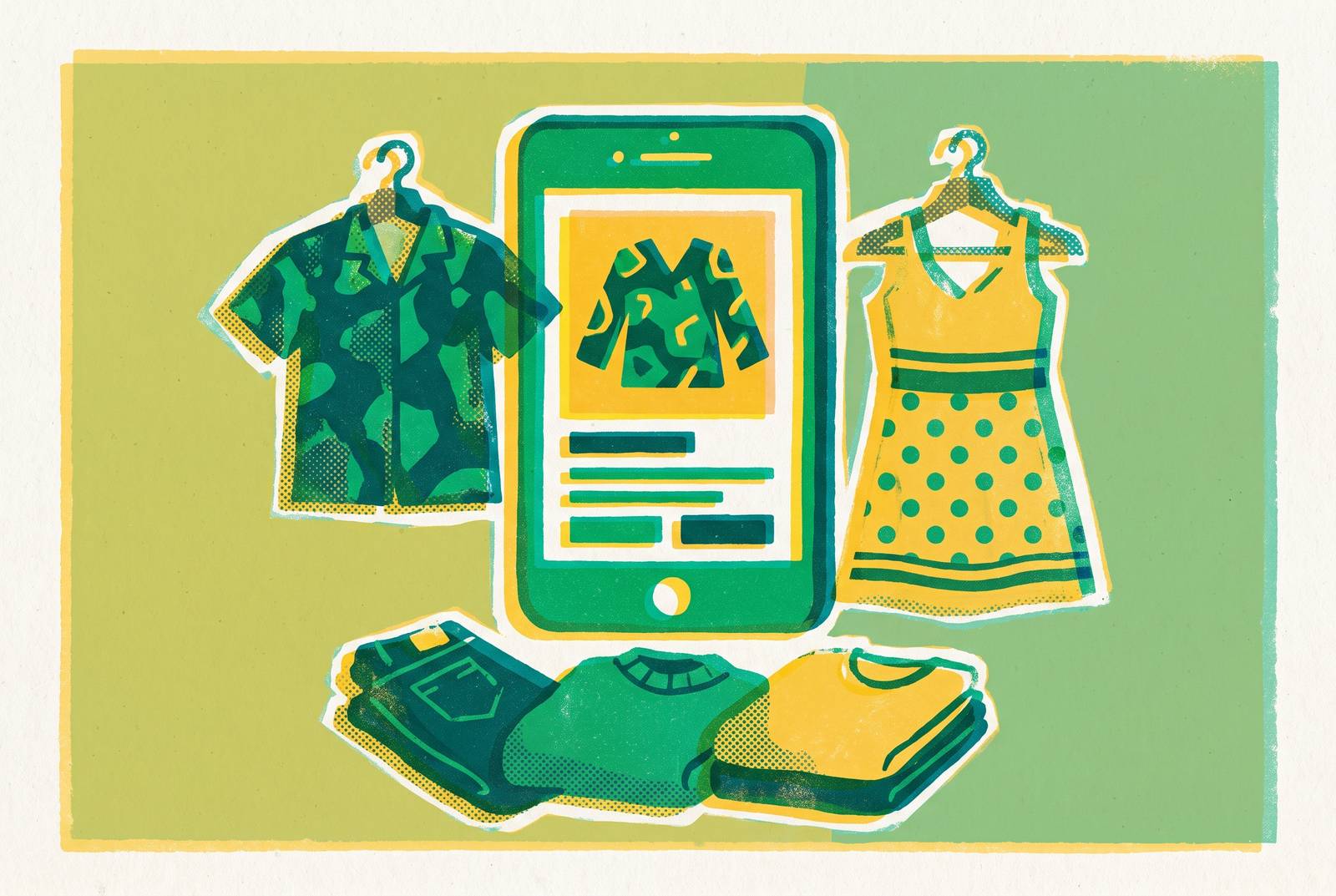
No single app wins "best for reselling clothes," because no single app serves every closet. Sending the right item to the right crowd makes it sell fast. Sending it to the wrong one means it just sits there, no matter how nice the photos are.
The Cost of Picking the Wrong Platform
Most people compare resale apps by fee percentage, the way you'd compare two gas stations on price per gallon. That's the wrong first question. It sits unsold while the seller pays 20% into a platform built for a different customer. Fee structure actually tells you what a platform is optimized for. Every platform decision comes down to three filters: what you keep after fees, who's actually buying there, and how much shipping work the app takes off your hands. Keep those three in mind, and the rest of this guide is just filling in the blanks for your specific pile of clothes.
Poshmark for mall and contemporary brands: how the social layer earns its fee
Poshmark takes a flat $2.95 on sales under $15 and 20% on anything $15 and up. That sounds steep until you look at what it buys. Madewell, Lululemon, Free People, Anthropologie, Nike, Zara: these are Poshmark's bread and butter, because the buyer already knows the brand and is searching by name. The math works best on higher-priced items, where the 20% cut still leaves real margin, while an item near the flat-fee threshold barely clears it.
The platform's strongest tool is "Offer to Likers." When someone likes a listing without buying, the seller can send them a private discount. Sellers who show up as part of the community, sharing listings, joining themed "parties," following other closets, tend to outperform sellers who post an item and walk away. Once a seller confirms an item belongs on Poshmark, they still have to write a polished listing and price it against real sold comps. An AI photo-to-listing tool like Reclaim: Sell with AI can handle that groundwork in seconds, a starting description and a price reference, so the seller's energy goes toward the parts of Poshmark that actually move inventory: sharing in parties and sending offers to likers. Poshmark isn't built for everything. Fast fashion priced at $5 to $15 loses too much to the 20% fee. True vintage has no audience here.
Depop for vintage, streetwear, and Y2K: why aesthetics and audience identity drive sales here more than anywhere else
Depop's buyers skew young, but the bigger difference is visual. They're shopping a specific aesthetic: Y2K, 90s throwbacks, deadstock, streetwear, band tees, one-of-a-kind thrift finds, independent designer pieces. A plain white button-down that moves fast on eBay can sit for months on Depop, because nobody's scrolling that app looking for business casual.
Fees are friendlier here than on Poshmark: 0% seller fee, plus payment processing of 3.3% plus $0.45. The bigger adjustment is how the platform behaves. Depop runs more like Instagram than a marketplace. Depop rewards sellers who can write a bit of story into a listing, mood, context, rarity, not just a list of features. That's a different skill from grading condition and setting a baseline price, and sellers who let an AI tool handle the pricing and condition-grading mechanics free up more energy for the narrative, which is what actually sells on Depop.
eBay for volume, branded menswear, and items that benefit from competitive bidding
eBay remains the biggest buyer pool in this entire lineup, and it's the best fit for branded menswear (Brooks Brothers, Ralph Lauren, Patagonia), items that do well in an auction format, and anything where bidding might push the final price past what a fixed listing would get. Exact percentages shift by category, so check before you list something unusual.
What sets eBay apart isn't just size, it's the research tools built into the back end. More on how to read eBay's sold data for pricing in the next section.
Vinted for fast fashion and everyday brands: when zero seller fees change the math entirely
Vinted charges sellers nothing. Buyers pay a Buyer Protection Fee and shipping instead, so the seller keeps 100% of the listed price. That sounds like the best deal in the roundup until you notice who's shopping there. Because buyers are the ones absorbing fees, they expect lower prices and negotiate hard to get them. Vinted has over 100 million users, strong in Europe and growing fast in the U.S., and that base skews toward people hunting a deal, not people loyal to a label.
That makes Vinted the right home for fast fashion, H&M, Old Navy, basic Zara pieces, and anything priced in the $5 to $20 range where even a small seller fee would wipe out the margin. It's the wrong home for a $500 designer piece, which would fetch far more on The RealReal or Vestiaire Collective, where buyers expect to pay for authentication, not avoid fees. Vinted isn't built for community engagement or social sharing the way Poshmark is; it's built to clear low-priced inventory fast, with minimal friction on either side.
The RealReal and Vestiaire Collective for luxury: why authentication infrastructure changes what buyers will pay
Luxury clothing behaves differently from everything else in this guide, because the buyer's biggest fear isn't price, it's getting scammed. Serious luxury buyers won't commit four figures without proof the item is authentic, which is the entire reason The RealReal and Vestiaire Collective exist.
The RealReal runs on a consignment model. Commission ranges from 20% to 85% depending on the item's value and the seller's tier, with higher-value pieces earning a better split. Vestiaire Collective works a bit differently. Neither one is better across the board. Vestiaire Collective suits sellers who want some say in how their items are priced and presented. Both exist to turn buyer skepticism into a willingness to pay full market value for Chanel, Louboutin, Hermès, and comparable labels.
ThredUp for hands-off selling: what you trade away for convenience
ThredUp removes every task a seller normally has to do. There's no photographing, no listing, no pricing, no shipping labels to print. A seller requests a Clean Out Kit, ships a box of clothes, and ThredUp takes it from there: photos, price, listing, fulfillment. Payment lands only after an item sells, which can take weeks or sometimes months.
The convenience comes at a real cost. ThredUp's consignment fee runs anywhere from 20% to 97% depending on the item's value, and lower-value pieces can return almost nothing once ThredUp's cut comes out. Sellers with a pile of lower-value basics they genuinely won't photograph and list themselves, or sellers who simply value their time more than the extra dollars, are making a reasonable call by choosing ThredUp with eyes open.
Facebook Marketplace and Grailed: the two platforms the roundup almost misses
Facebook Marketplace is free for anything sold locally, so it's the only platform here where a seller keeps every dollar without a buyer picking up the slack elsewhere. Shipped orders carry a 10% selling fee, or an $0.80 minimum, but you should confirm the current terms before you rely on that number. The trade-off is audience: listings compete against garage sale junk and furniture, not a crowd of style-conscious shoppers, so it suits bulky items, low-value pieces, or anything where shipping would eat the entire sale price anyway.
Grailed fills a gap that Poshmark and Depop don't cover well. Grailed draws a knowledgeable, brand-literate buyer looking for men's designer pieces and streetwear, a similar level of expertise to a Vestiaire Collective shopper, just aimed at a different category of clothes.
Etsy for true vintage: when "vintage" means something specific and the buyer knows it
Depop calls plenty of things "vintage" that are really just trend-driven secondhand pieces. Etsy's vintage category means something narrower: clothing genuinely 20 years old or older, where the age and the backstory are part of what the buyer's paying for. Etsy charges $0.20 to list an item and takes a 6.5% cut on the sale. The buyer base here searches by era, material, and style rather than brand name, so a listing's keywords and description need a different approach than on any other platform in this guide. The same logic applies to handmade or custom garments: buyers there are paying for originality, not convenience.
Reading Sold Listings Instead of Active Listings
Active listings show hope. Sold listings show reality. The number that matters is what buyers actually paid.
eBay is the strongest tool for this kind of research, simply because of how much data runs through it. Search the item with specific keywords, then filter by "Sold Items." The results show every matching sale from the last 90 days, with the date and price. A rough formula helps as a starting point: like-new items around 50% of original retail, gently used around 30%, well-worn around 10%. If comparable sold listings land consistently between $30 and $40, that's the market price for the item, even if the formula suggested $50. Tools like Reclaim: Sell with AI pull sold-data pricing directly, giving sellers a baseline value before they even decide where to list, which cuts down the risk of underpricing something that already has weak demand on a given app. Buyers across most of these platforms have also been trained to expect a small discount, so pricing slightly above the real target and sending an automated offer to interested buyers tends to close the sale faster than listing at the bottom price up front.
What Makes a Clothing Listing Convert
A listing title does two jobs at once: it gets the item found in search, and it tells a buyer enough to purchase without sending a message first. Most casual sellers manage neither. The title formula that works across every platform here is simple: Brand, Item Type, Key Details, Size. "Cute top!" Cute top!" gives a search algorithm nothing to match and shows up in zero relevant results.
The description needs the brand and item type, a size with actual measurements (not just the label size, which varies wildly between brands), the fabric content straight off the care tag, a specific color name rather than a vague one, honest notes on condition, and the original retail price if it's known. Photos matter everywhere, but the style that works shifts by platform: on Depop, modeled shots, including mirror selfies, beat flat lays; on eBay and Poshmark, a clean flat lay on a neutral background is the standard and it works. Showing a flaw up close, rather than cropping around it, builds trust faster than hiding it ever will.
Listing on One Platform vs. Several
A new seller should start with one platform. Learning one fee structure, one listing flow, and one shipping process is plenty to handle at first, and piling on complexity before the basics click just invites mistakes.
Once that workflow feels routine, cross-listing becomes worth the effort. The same North Face jacket listed only on Poshmark misses the eBay buyer who might have paid more for it in an auction. Listing across two or three platforms puts an item in front of different buyer pools at the same time. A good general rule: sell through existing inventory before buying or thrifting more, so sales keep moving and the pile doesn't grow faster than it shrinks.
Which Items Are Worth Listing Online
Not everything in the donation bag deserves a listing. Sort clothes into three piles before touching a camera: excellent condition (no flaws, recognizable brand, current style), good condition (minor wear, neutral colors, basic cuts), and fair condition (pilling, fading, heavy wear, dated looks). That fair pile belongs in a donation bin, not on an app, because the time spent photographing and writing a description for it won't be repaid in a sale.
Branded items that buyers search by name, pieces in excellent condition, current silhouettes, and neutral or broadly appealing colors sell quickly across nearly every platform in this guide. Knowing which pile an item belongs in before listing it saves real time, and pricing data earns its keep there: an AI tool that pulls real sold comps can tell a seller in seconds whether a given piece is worth the ten minutes it takes to list. For anything that's been listed 30 days without a bite, drop the price 10 to 15%, relist it fresh to reset visibility, or move it to a platform with a better audience match. Bundling a handful of slow movers together at a discount tends to clear them out faster than cutting each one individually.
Matching your inventory to the right app: a summary decision framework
The right app for any item is whichever one already has buyers looking for it. Everything else, fees, ease of use, platform size, is secondary to that single match. Vintage and Y2K pieces belong on Depop, where Gen Z buyers shop by aesthetic and the fee is near 10%. True vintage, 20 years or older, belongs on Etsy, where the fee runs $0.20 to list plus 6.5% per sale and buyers search by era and provenance. Mall brands like Madewell, Lululemon, and Free People belong on Poshmark, where the 20% fee buys prepaid shipping and a social discovery engine. Fast fashion and everyday basics belong on Vinted, where sellers keep 100% of the price because buyers absorb the fees instead. Branded menswear and streetwear belong on Grailed, with a fee around 9%. High-volume sellers, sneakers over $100, bags over $500, or anything suited to bidding belongs on eBay, with the largest buyer pool and the Authenticity Guarantee behind it. Luxury pieces, Chanel, Hermès, Louboutin, belong on The RealReal or Vestiaire Collective, where authentication is what lets buyers pay full value. Bulky or very low-value items for local pickup belong on Facebook Marketplace, free of charge. And a closet someone genuinely doesn't want to touch belongs with ThredUp, consignment fee and all.
Every one of these decisions comes back to the same habit: check the sold listings before setting a price, write the title as Brand plus Item Type plus Key Details plus Size, include real measurements, and photograph the item honestly. Applying that checklist to the actual clothes sitting in the pile, not to the platform someone happens to already have downloaded, makes the sale take care of itself.