The Procrastinating Seller's Honest Guide to Finally Turning Clutter Into Cash
Sold prices, condition grades, and the right marketplace make selling easy.
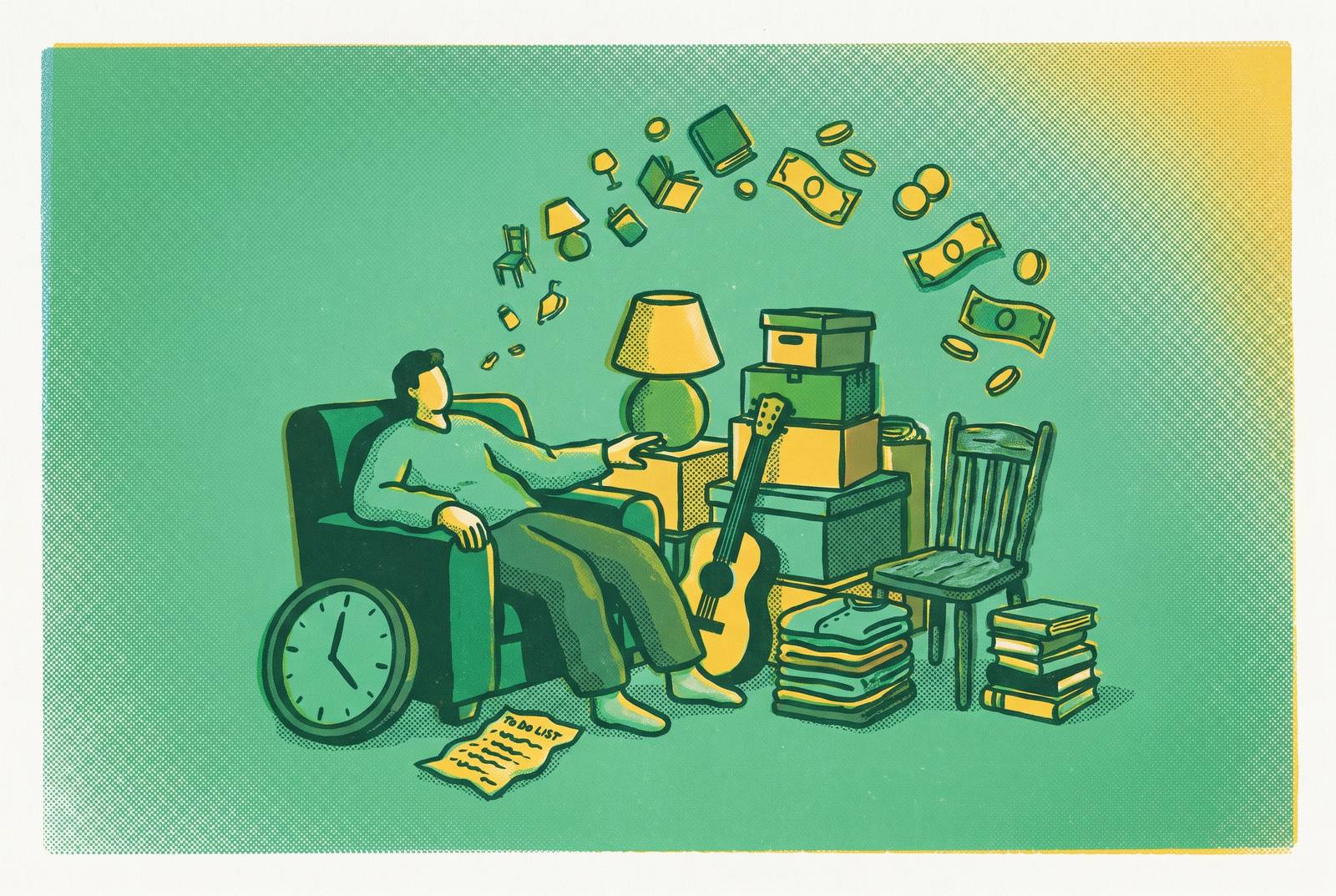
For reluctant or first-time sellers, a useful declutter-to-cash app removes the jobs that cause delay, including identifying an item, finding sold prices, grading condition, and drafting a listing from a photo. Then the marketplace should fit the item, with eBay for model-number goods, Poshmark for branded fashion, and Facebook Marketplace for bulky local sales. Turning clutter into cash takes less motivation than a method that makes the next step obvious.
Why clutter doesn't move: the real obstacle is friction, not motivation
The pile stays put because “sell this” hides several jobs. Before anything leaves, you need to decide whether it has value, what to charge, where to list it, and what to say. That is a small project wearing the disguise of an old tablet.
Kahneman, Knetsch, and Thaler’s classic study described the endowment effect, in which owners demand roughly twice what non-owners will pay for the identical object. Your memory of buying something is not a market appraisal. Pricing on that memory can leave an item sitting for weeks, getting relisted, and eventually selling for less than a sound first price would have fetched.
Rushing creates the opposite problem when you underprice without research. In both cases, you lack a price based on what buyers have paid. Replace each open-ended choice with a small task that has a clear end, starting before you open a selling app.
Doing a first pass that finds cash instead of just creating bags for donation
Make the first pass a search for sale candidates, leaving cleaning for later. Those goals compete when the easiest way to clear a shelf is to donate everything on it. Check for old phones and tablets, garage tools, small appliances tucked into cabinets, unused gift cards, and solid-wood furniture. For now, pick candidates and leave pricing for later.
Patagonia, Carhartt, Levi’s, Lululemon, and Nike clothing have steady demand, while generic no-name clothing rarely clears. Solid-wood furniture retains meaningful resale value on Facebook Marketplace, while budget flat-pack furniture does not. Working, tested phones, retro game consoles, cameras, and AV gear are also worth attention. Untested electronics introduce return risk, so “probably works” is not a condition grade.
Some categories need a closer look before you dismiss them. A single digit on a trading card or a different collectible edition can change the price dramatically. Textbooks, niche nonfiction, vinyl, and out-of-print titles have committed buyers, though small per-item margins make volume important. Research pays especially well for collectibles and trading cards.
Start by selling the items worth the most, such as gold jewelry, designer clothes, and high-quality tech. An early win builds momentum while getting the most valuable items out of the pile. Leave the comprehensive household reckoning for another day.
Why asking prices are the wrong number to copy and where to find the right one
An active listing tells you what someone wants. Copying that number is the most common reason a supposedly quick sale sits for weeks. Use a sold price, which records a transaction that actually closed, as your reference point.
eBay’s pricing guide says to use sold or completed listings to find prices that can compete with other sellers. Search for the item, then filter away from the default view of active listings. If you use completed results, distinguish actual sales from listings that ended unsold. Look at the last five to ten sold prices and use the middle of the cluster.
Thin categories may need a longer view. eBay’s Product Research tool, formerly Terapeak, provides up to three years of sales history and is free for sellers with Seller Hub access. It is also available in the eBay app to anyone with at least one active listing or who has listed and sold within the last 90 days.
Manual research takes several minutes per item. Tools that identify an item from a photo and pull real-time sold-listing data can automate that step. Facebook Marketplace does not publish sold-price history, so use eBay’s sold results as a starting point there, too. You do not need to guess just because the marketplace leaves the answer blank.
Setting the actual number: condition tiers, negotiation room, and when to drop
Use condition to place your item within the sold-price range. Most used goods sell for a fraction of their original retail price, but the receipt alone cannot tell you which fraction. Comparable sales give you the range. Honest grading determines where your item belongs and helps prevent a buyer from backing out after seeing it.
Keep the condition tiers simple enough to use at a glance. Like-new items with boxes or tags belong toward the top of the range or above it. Good items that have been lightly used and have no damage sit in the middle, while fair items with wear you can see belong near the bottom. Rough or for-parts items need a price that moves them, with function taking priority over appearance. Wishful thinking is not a fifth tier.
Collectibles, vintage items, discontinued products with active demand, and desirable clothing from the 1990s and earlier can exceed their original price when demand is strong and supply is thin. For ordinary negotiable listings, leave a little room above your target. Facebook Marketplace’s “Make an offer” feature invites negotiation, while eBay generally needs less padding because buyers mostly pay the listed price or bid.
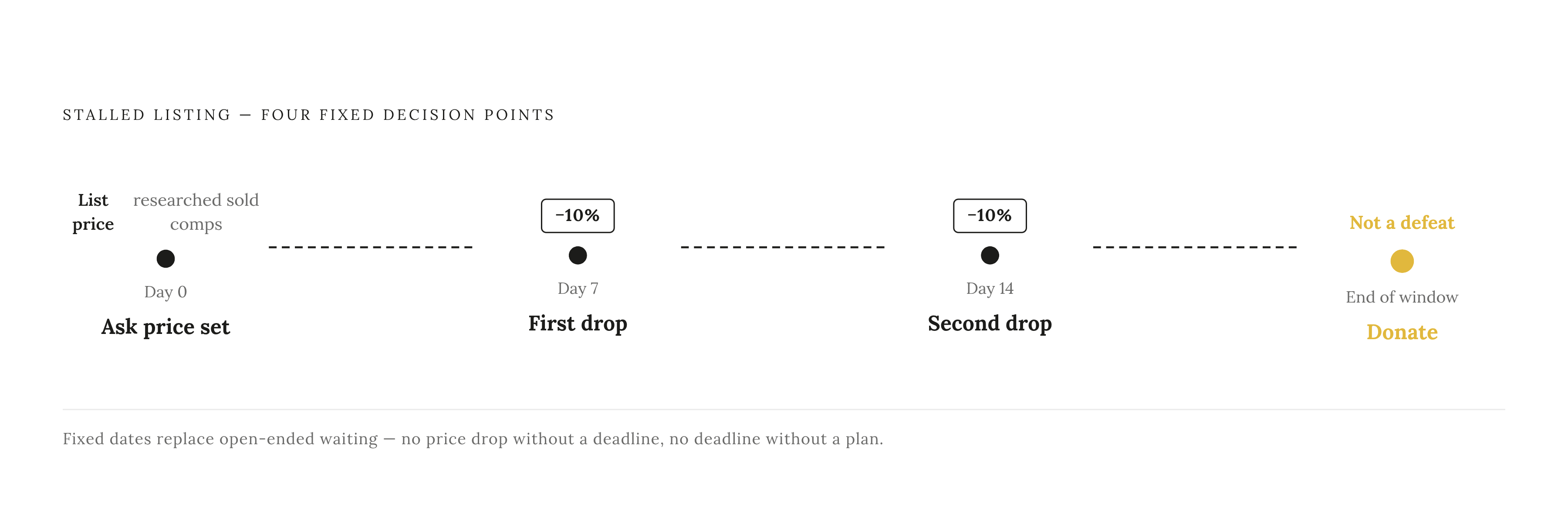
Timing changes when to list while the pricing method stays the same. Aim for early spring for lawn equipment and camping gear, the tail end of winter for winter gear, and late July and August for back-to-school items. If an item stalls, reduce it by 10 percent at seven days, make another drop at fourteen, and donate after your selling window closes.
Matching the item to the right marketplace before writing a single word of a listing
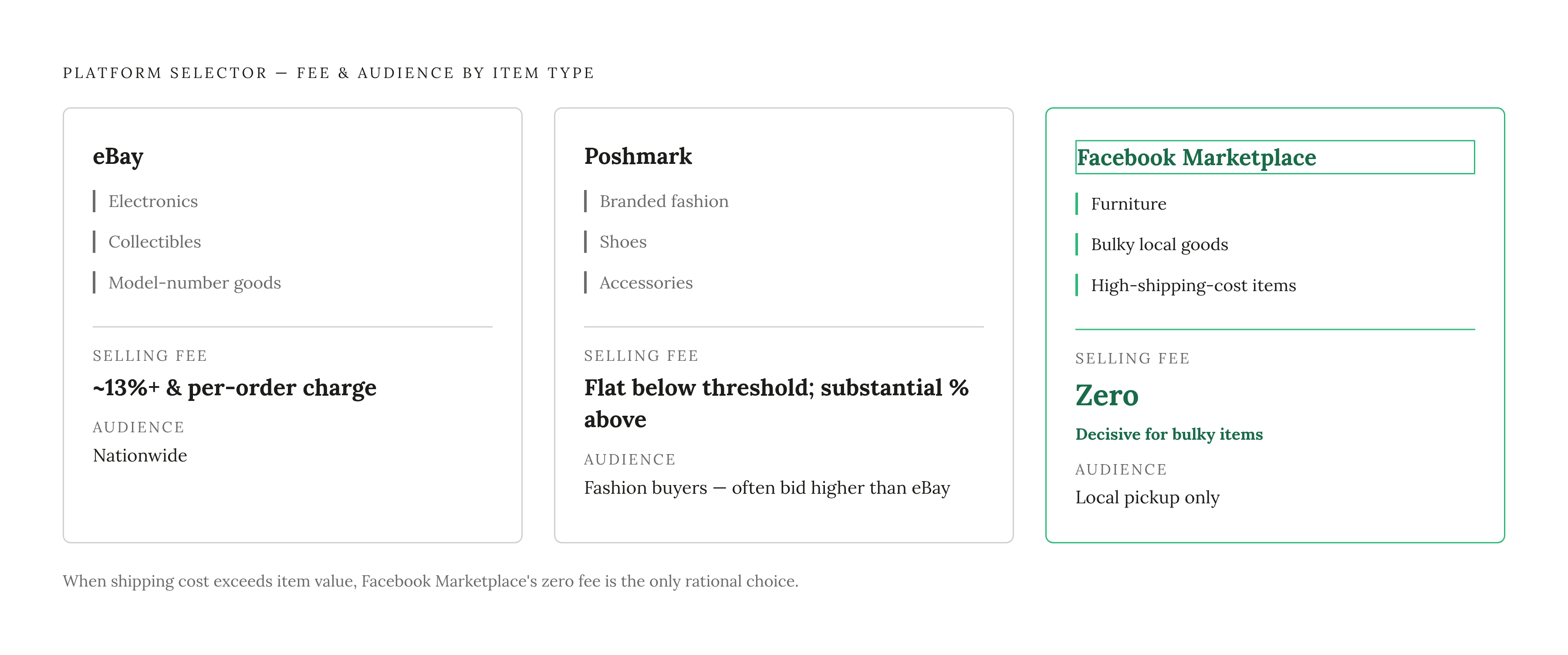
Match each item once rather than choosing a single marketplace for everything. The audience, shipping burden, and fees change what you take home from an identical sale. A good match saves more than app-switching time. It puts the item where the right buyers are looking without letting delivery eat the proceeds.
eBay suits electronics, collectibles, and other goods with a model number that benefit from a nationwide audience. When an item sells and is shipped, its fees add up to roughly thirteen-plus percent, plus a small charge for each order. Poshmark suits mid-priced branded fashion, shoes, and accessories. It charges a flat fee below a low sales threshold and a substantial commission above it.
The commission is only part of that comparison. Poshmark’s clothing buyers typically pay more than eBay buyers for the same branded item, often narrowing the fee gap. Its fashion audience can also mean less negotiation friction. Facebook Marketplace serves a different need through local pickup. A couch that costs more to ship than it is worth can still find a nearby buyer within days.
With a local sale, you pay no selling fees, and moving to the other sites lets more buyers see the item if it has not sold. Bulky furniture can stay up for sale nearby, sparing you a grand experiment in shipping. Where tools support selling across marketplaces from one photo, use that capability to avoid repeating the same setup in separate apps.
How can an app help you write a listing without spending an hour on it?
A listing needs a searchable title, honest condition details, and clear photos. It does not need a moving account of how the shelf changed your life. Missing information creates questions, low offers, and buyers who back out. The aim is to answer the questions that would otherwise arrive in your inbox.
Build the title from the brand, item type, key feature or specification, and condition. “Ikea Kallax Shelf 4x4 White Like New” and “iPhone 13 128GB Unlocked Excellent Condition” show the pattern. In the description, include dimensions, age or how long you have owned it, and any damage or wear. Photograph the defects you mention so buyers know what to expect. A reason for selling is optional but can add credibility.
Photos need good light, which you can get without booking a studio. Use natural daylight near a window and a plain, neutral background. Aim for at least five photos covering different angles and any flaws. When photos show more of the item, buyers have fewer questions and fewer surprises at pickup. A scratch disclosed before the trip is much easier to handle than one discovered after a buyer drives across town.
An AI listing app can remove the research-and-writing bottleneck by identifying the item from a photo, grading its condition, and drafting the listing. For someone who stalls at the blank text box, those capabilities are more useful than another place to post. Use the title formula, include dimensions and ownership details, disclose wear, and provide at least five clear photos.
Scams that target casual sellers in 2026 and how to spot them before money leaves your account
Fake payment screenshots make it look as though a payment went through even though the money never arrives. Confirm the funds in your own account or app before releasing the item. The screenshot is not the payment itself. Treat it as a claim you can check independently.
The overpayment scam involves a buyer who “accidentally” pays too much and asks you to send back the excess before the original, potentially fraudulent payment is reversed. Do not send a refund simply because that buyer requests one. Verification code hijacking involves a supposed buyer asking for a one-time code sent to your phone under the pretext of verifying your identity, then using it to hijack an account. Never share verification codes with a buyer. Proving that you own a chair should not require handing over an account key.
AI chatbot buyers can sound so real in a chat that you soon feel you can trust them. Treat urgency and unusual payment requests as red flags regardless of how professional or natural the exchange feels. Fast replies are not proof of a real person. Keep shipping and payouts within the marketplace’s payment system so that its dispute protections remain available.
Refuse personal checks, which can bounce days after deposit, and buyers’ cashier’s checks or money orders, which are common fraud routes. Do not use payment apps that lack buyer-and-seller protection. Moving to wire transfers, gift cards, or Zelle from strangers removes the marketplace’s protections. For local handovers, meet in a public place during daylight. Many police stations designate safe exchange zones in their parking lots for this purpose.
Turning the first sold item into a repeatable habit rather than a one-time event
The first sale gives you something beyond the payment. It proves that an object can leave the pile through a process you can repeat. Before that, selling is a collection of unanswered questions. Afterward, you have an established routine to rely on for the next item.
Trying a local sale first and setting dates to drop the price give you set times to decide what to do next. Use them instead of repeatedly wondering whether to wait another day. A listing that has reached the end of its selling window can move to donation without becoming a personal defeat. The goal is cash and reclaimed space.
If effort still stops you, choose an AI tool for the slow steps. Look for item identification, condition grading, pricing from sold data, and listing copy, with marketplace support that fits what you own. Those capabilities can compress the setup into seconds for a first-time seller.